Inverse functions
An inverse function reverses a one-to-one function by assigning each output its unique original input.
On this page 7 sections
01If , then input 3 produces output 11#
If , then input 3 produces output 11. To recover that input from 11, undo the addition first, then the multiplication.
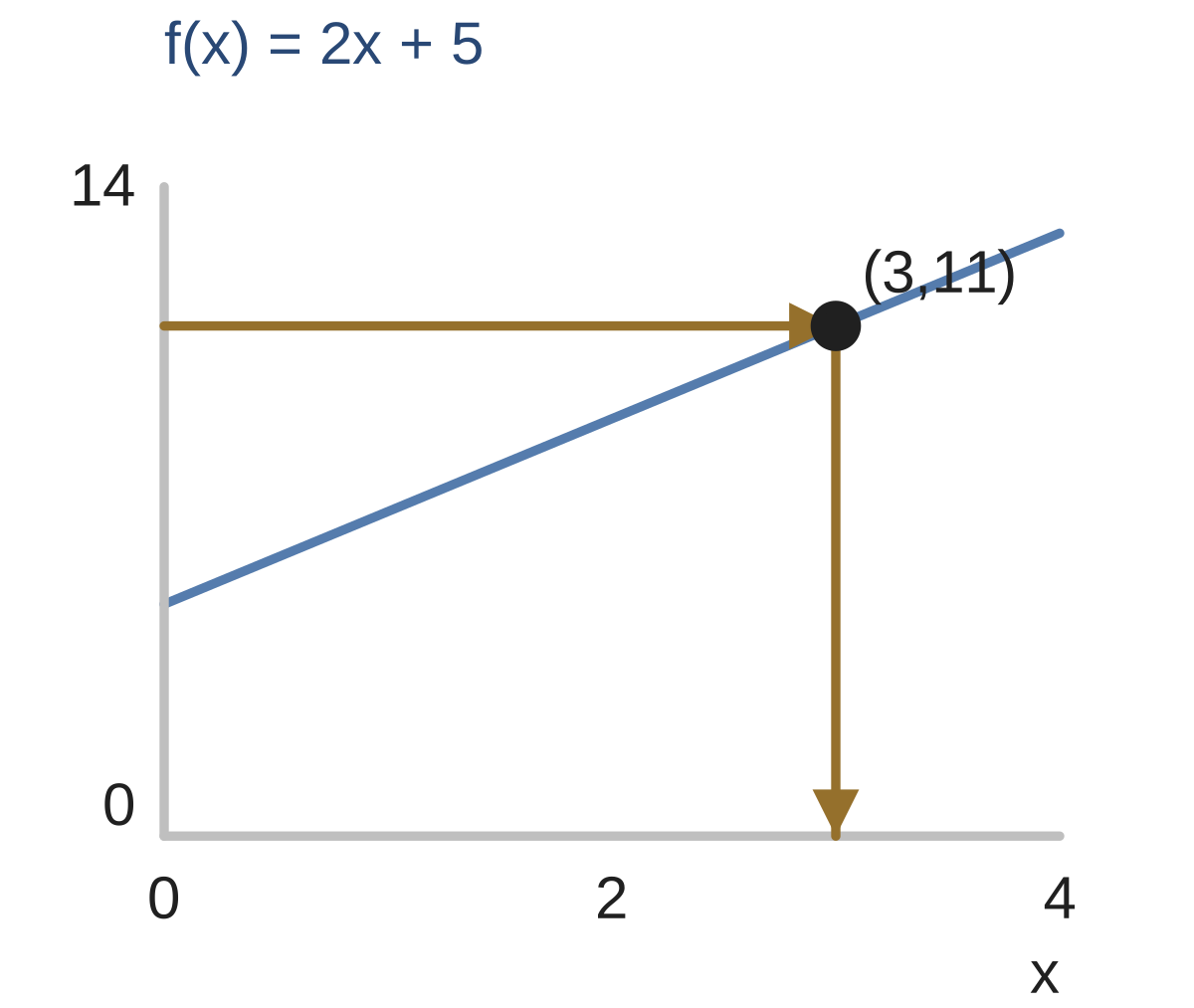
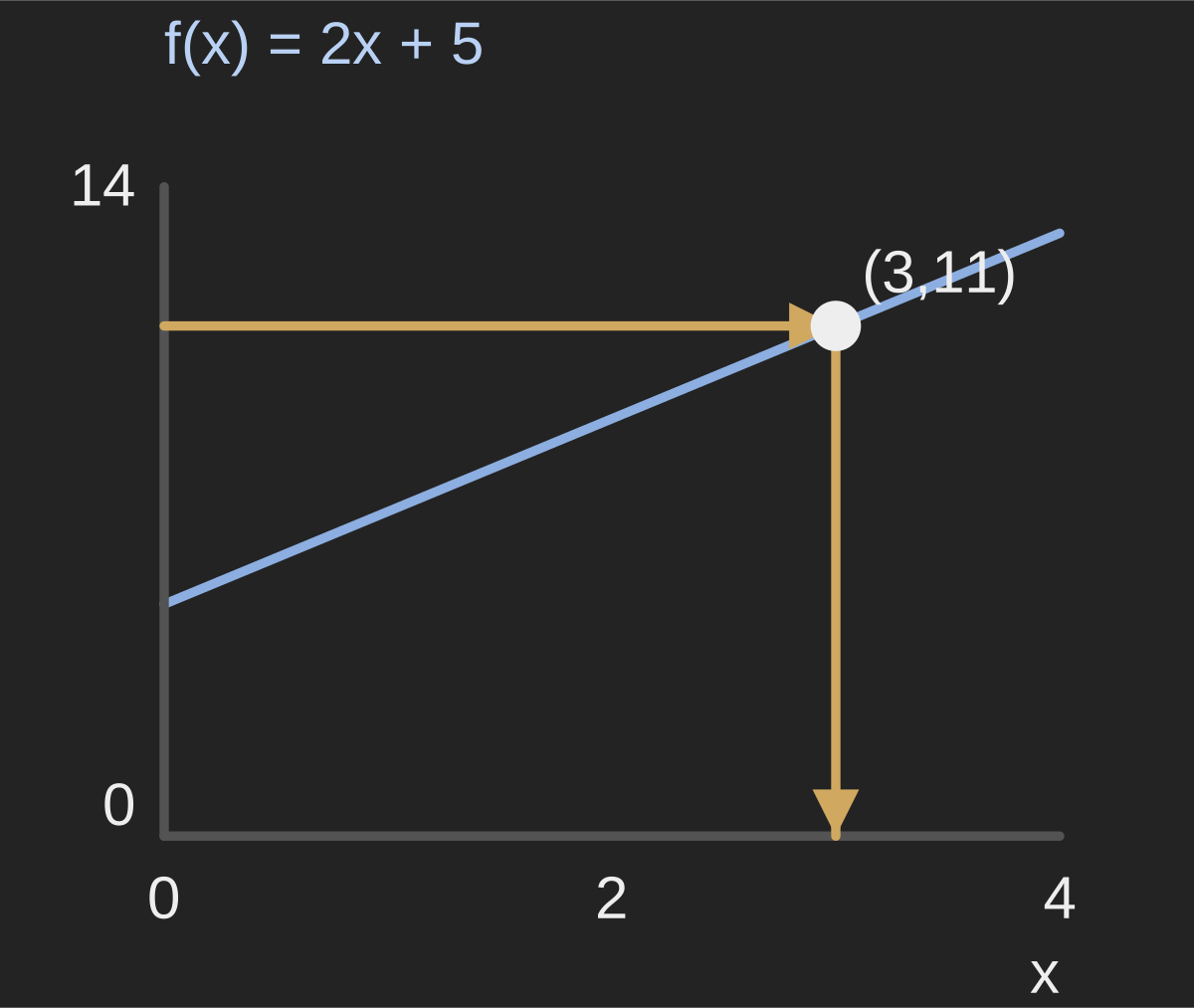
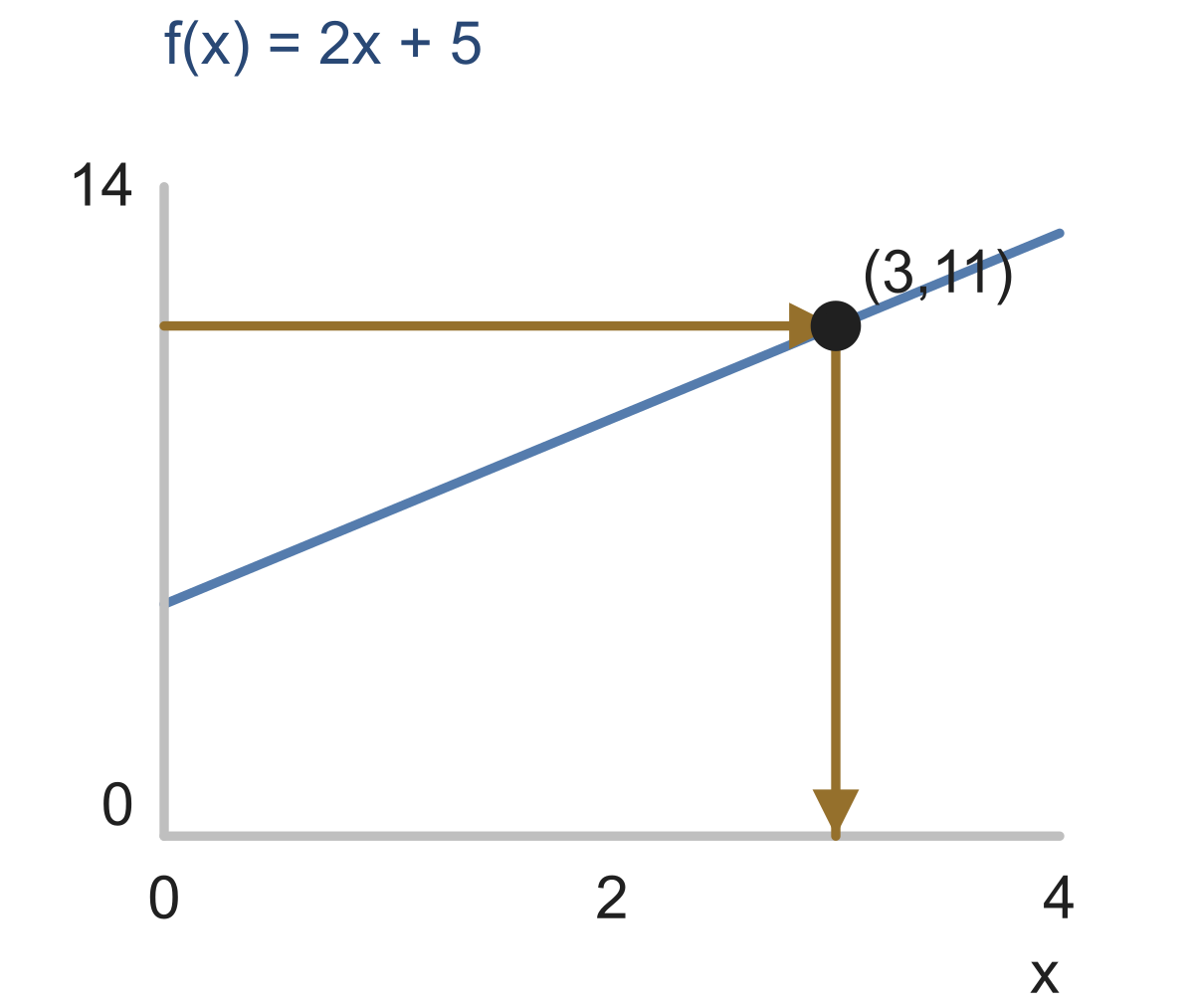
For , recover the input for output 11: , then . We write , read “f inverse of 11.” The forward check is .
For , what is ?
Show answer and explanation
Recover the input: . The forward check is .
02The superscript names the inverse rule; it does not mean the reciprocal #
The superscript names the inverse rule; it does not mean the reciprocal . An inverse needs a unique original input. A rule that sends two different inputs to the same output cannot reverse that output uniquely.
A one-to-one function has . Which statement follows?
Show answer and explanation
The inverse maps output 9 back to input 4.
03Check your understanding#
A reversible calibration multiplies raw input by 3, then subtracts 1. A calibrated output is 14. What was the raw input?
Show answer and explanation
Undo subtraction: . Undo multiplication: .
Recover the input by undoing the operations in reverse order.
- Recover an input using an invertible scalar function
Sources & further reading
- [1]OpenStax College Algebra 2e: 3 7 Inverse Functions ↗OpenStax · Book