Logarithms of products
For positive factors in one valid logarithm base, the logarithm of a product equals the sum of the factors’ logarithms.
On this page 6 sections

01A logarithm turns multiplication of positive factors into addition#
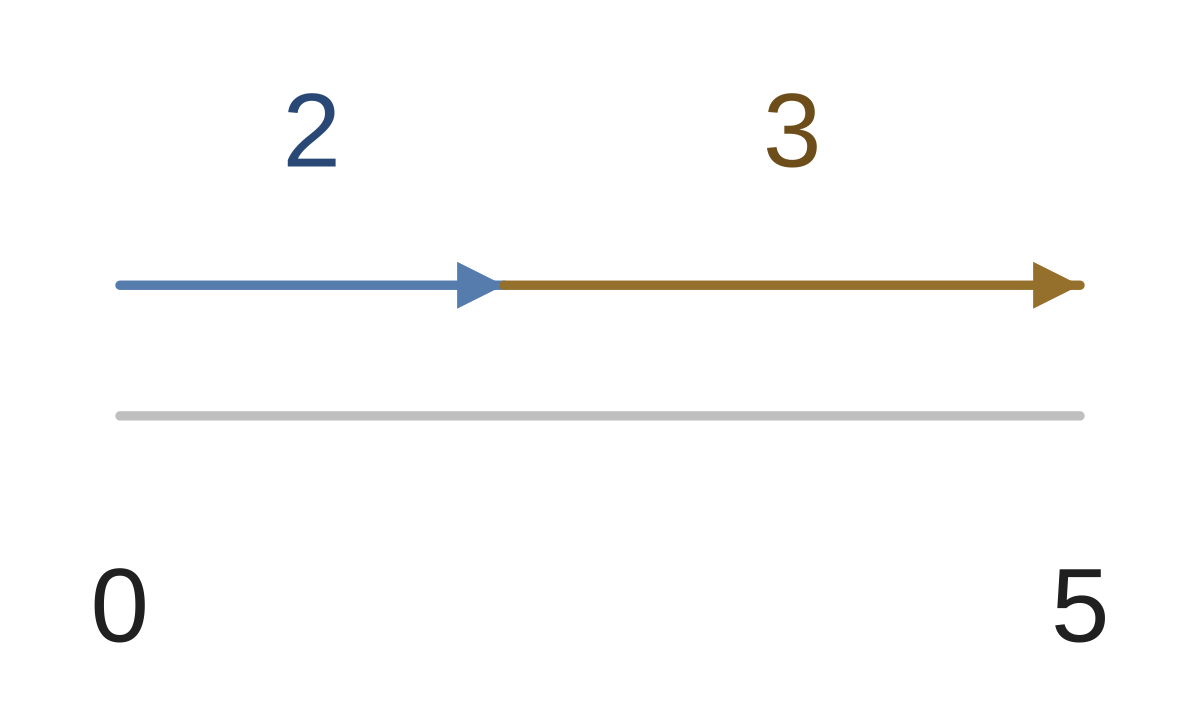
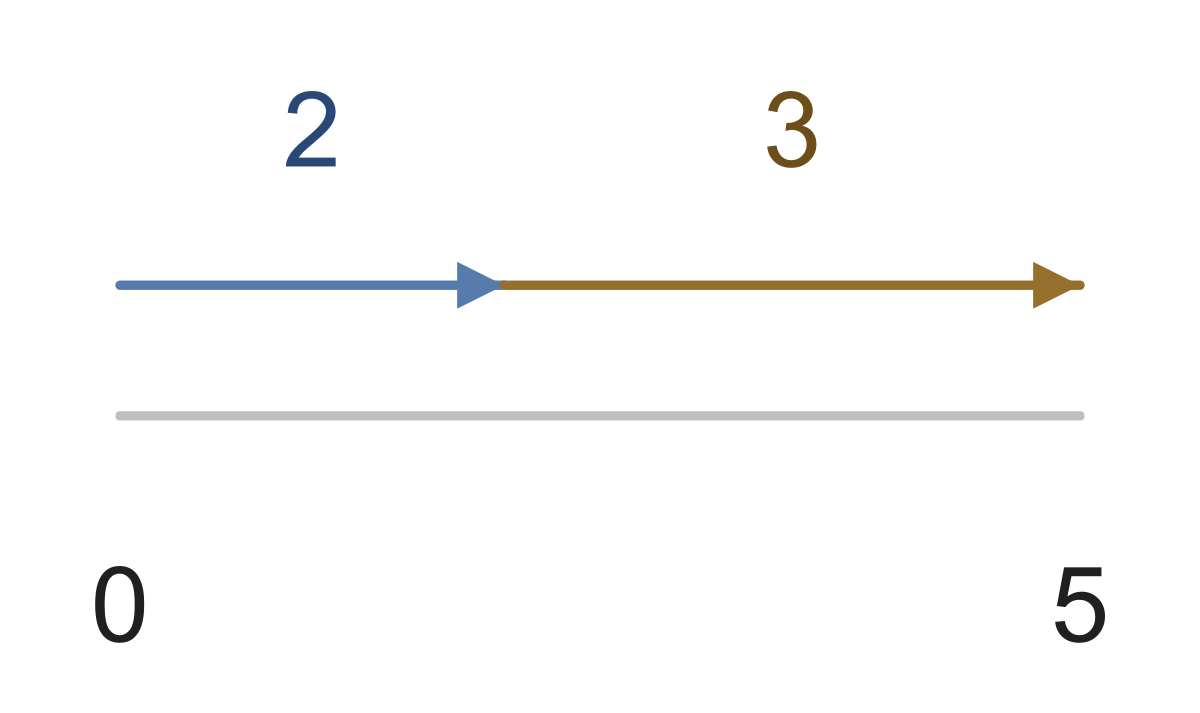
A logarithm turns multiplication of positive factors into addition. In base , and .
Multiplying adds their exponents.
The logarithms are and . Their sum is the logarithm of the product .
The product’s logarithm is the sum.
The same rule works in any one base with . Both factors must be positive so that both real logarithms exist.
The product rule.
Given and for positive , what is ?
Show answer and explanation
The common base and positive factors allow addition: .
02The rule can also collect a sum of logs into one log of a product#
The rule can also collect a sum of logs into one log of a product. It does not split a sum inside the argument.
Each is , so their sum is . But:
A positive product alone is not enough to split it. The product has a real logarithm, but the individual real logarithms of and do not exist. The rule needs positive factors individually.
For , combine .
Show answer and explanation
Add logs by multiplying their arguments.
A product inside a logarithm becomes addition outside. Use the same base and positive factors; the rule does not split a sum inside the argument.
- Rewrite a positive product using logarithms
Sources & further reading
- [1]OpenStax College Algebra 2e, 6.5 ↗OpenStax · Book