Affine maps
An affine map applies a linear map and then adds a fixed output vector.
On this page 9 sections
01An affine map applies a matrix, then adds a fixed output vector#
An affine map applies a matrix, then adds a fixed output vector. The matrix controls the linear part; the added vector shifts every output.
Write the two contributions separately.
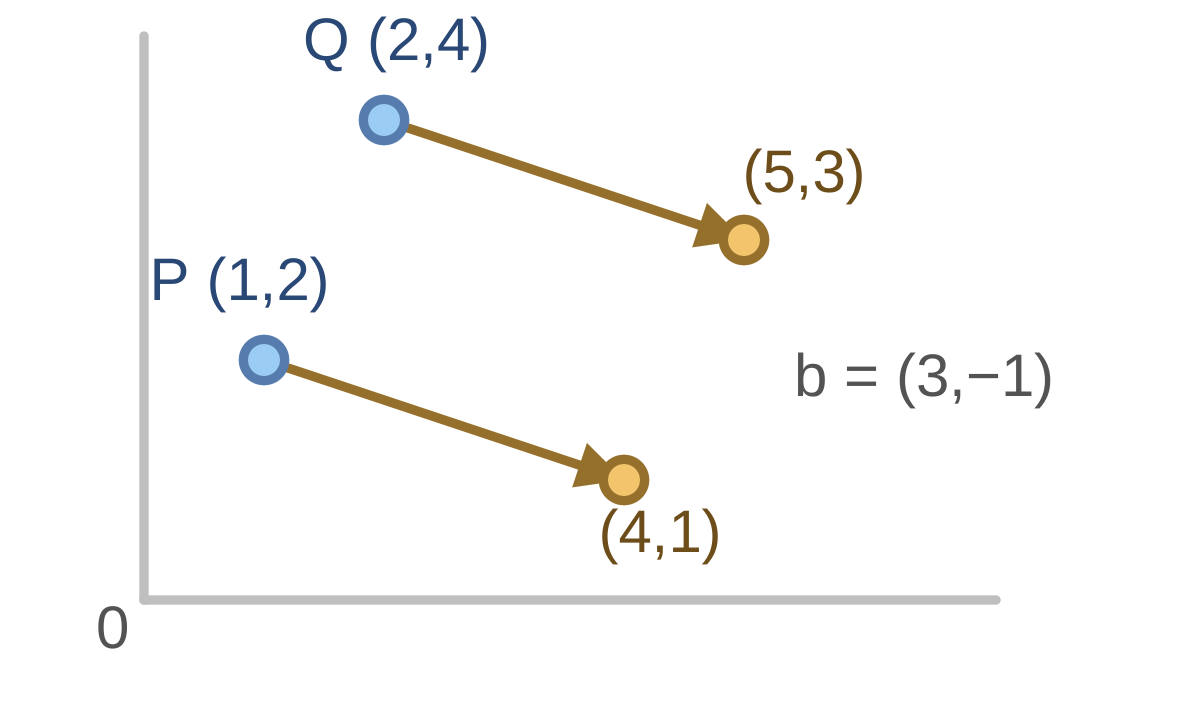
Let A have rows (2,1) and (0,1), with b=(3,-1). For x=(1,2), the row dot products give Ax=(4,2).
Add 3 to the first entry and -1 to the second.
For , which is the linear part?
Show answer and explanation
The linear part contains the input terms. The offset is (-2,3).
02After the matrix step, two outputs are P=(1,2) and Q=(2,4)#
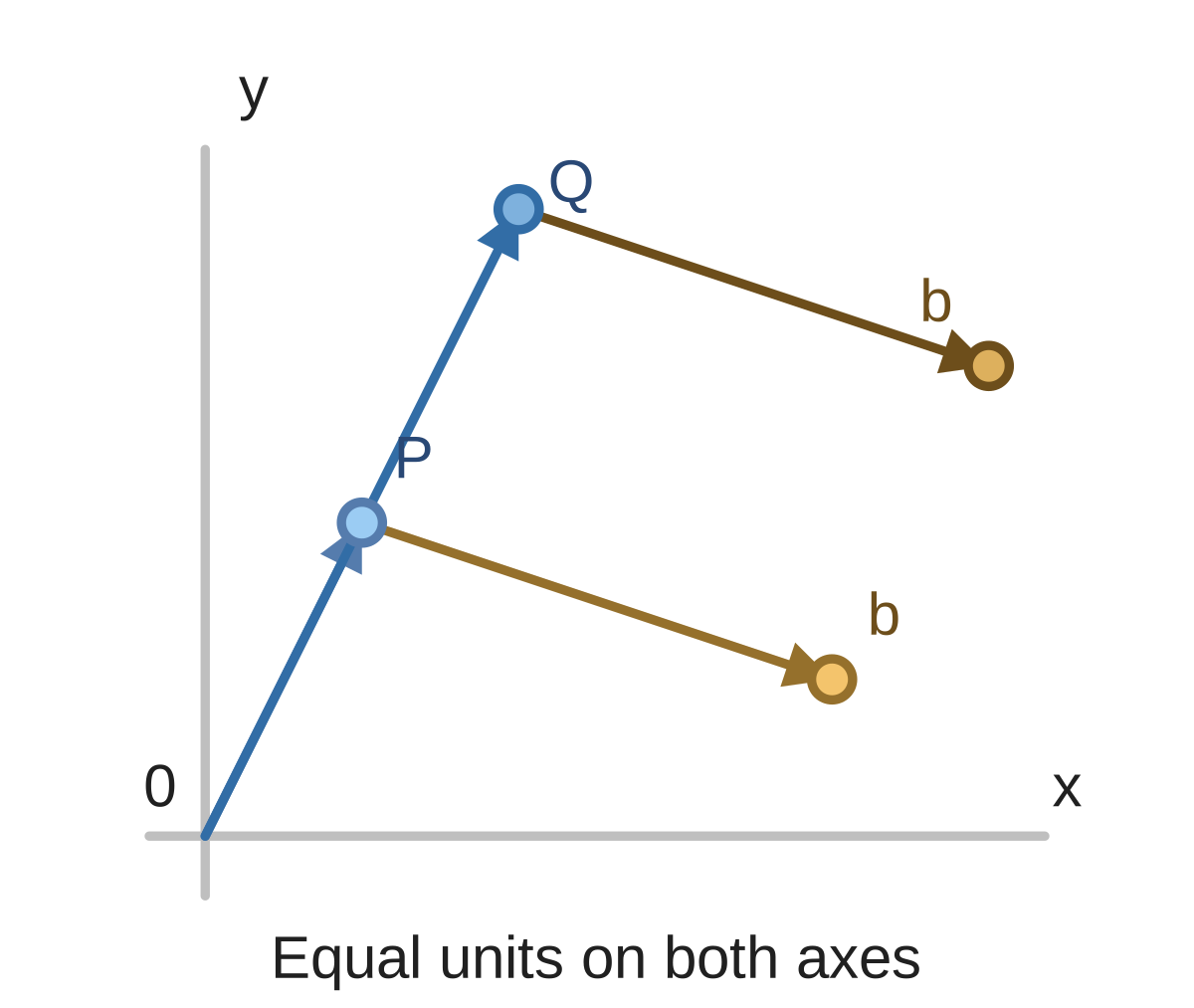
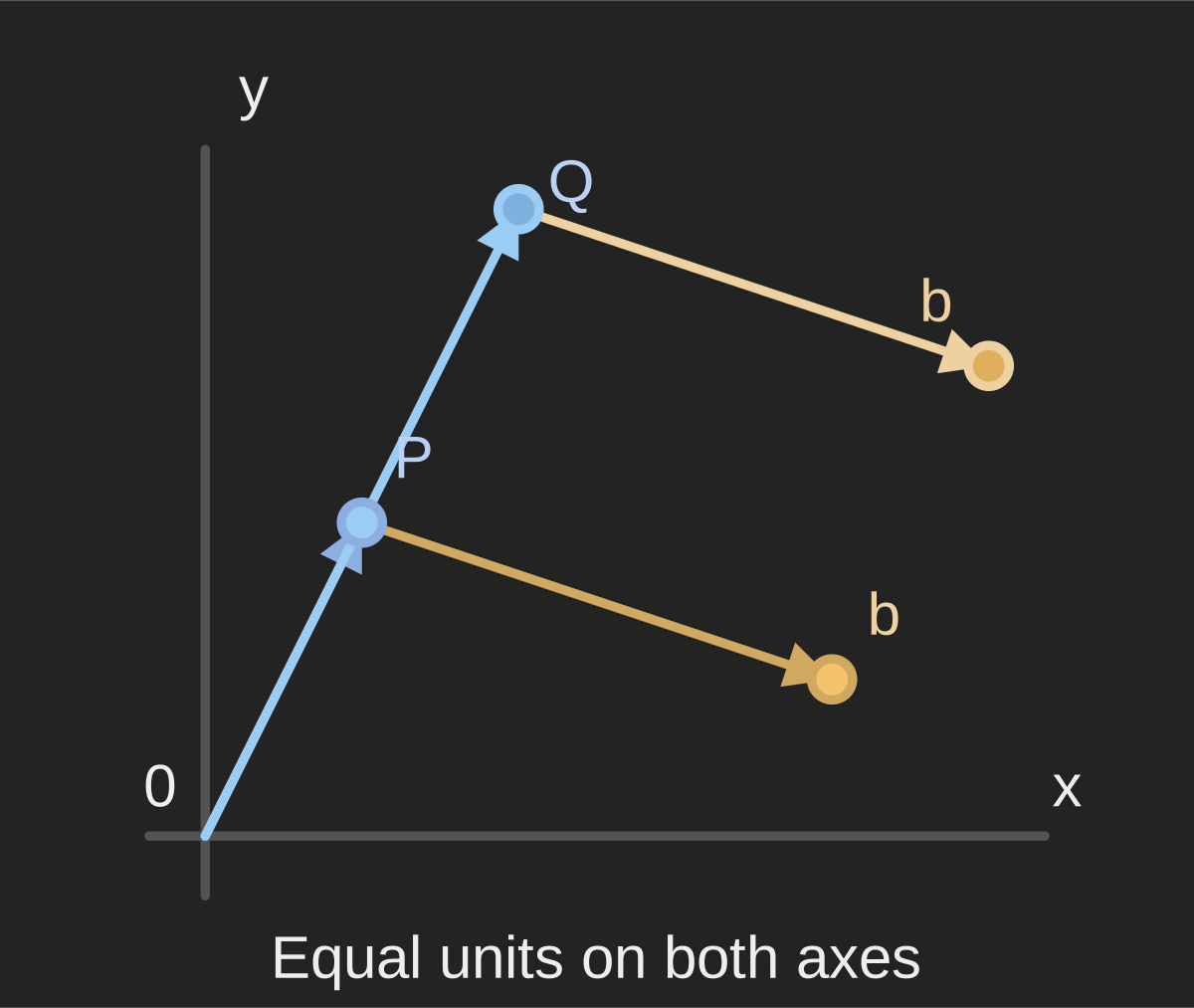
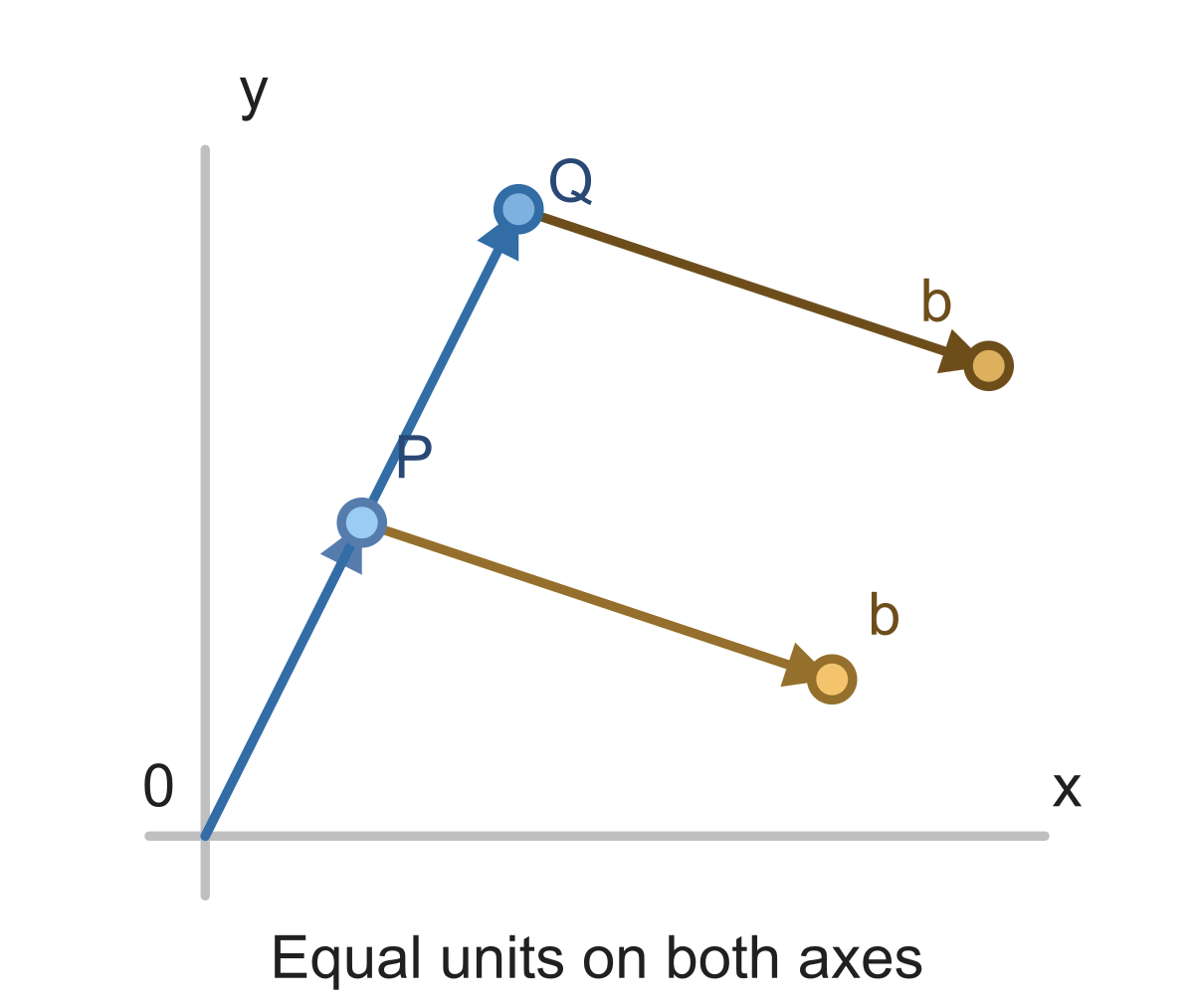
After the matrix step, two outputs are P=(1,2) and Q=(2,4). Adding b=(3,-1) moves each three units right and one unit down.
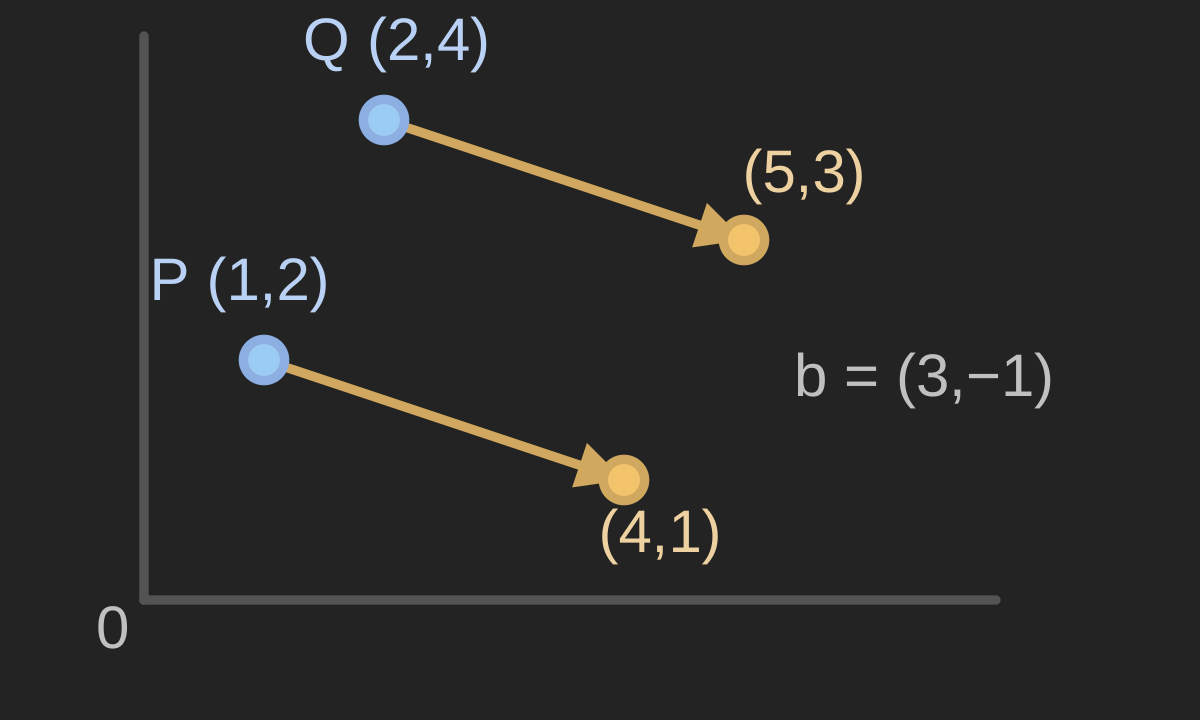
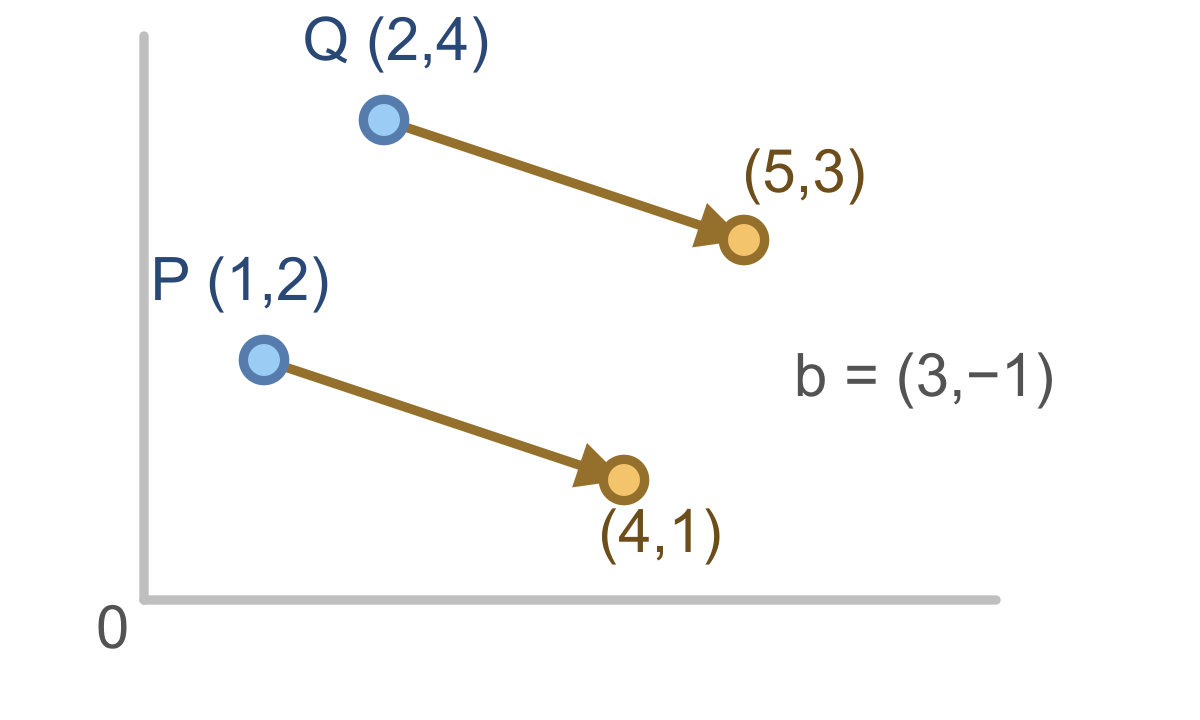
For an affine map, T(0)=b because A0=0. A nonzero offset prevents linearity. When b=0, the map is simply the linear map Ax.
T(x)=Ax+(0,5). Why is this map not linear?
Show answer and explanation
Every linear map sends zero to zero; this offset moves it to (0,5).
03Check your understanding#
A supplied score map gives Wx=(6,-2), then adds fixed bias b=(-1,4). What is the second output?
Show answer and explanation
Add the second offset to the second matrix output: -2+4=2.
04Check your understanding#
A doubles vectors; b=(1,-1). Someone uses A(x+b) for Ax+b. Which repair works?
Show answer and explanation
Keep b outside A so its value stays (1,-1).
Apply the matrix, then add its fixed output offset.
- Separate the matrix action from the translation.
Further questions
Can an affine map also be linear?
Where do I read the fixed offset?
Sources & further reading
- [1]Introduction to Applied Linear Algebra, §8.1 ↗Boyd and Vandenberghe · Book
- [2]Interactive Linear Algebra: Linear Transformations ↗Margalit and Rabinoff · Book