Convex sets
A convex set contains every weighted mixture θa+(1−θ)b of its members when 0≤θ≤1.
On this page 7 sections
- Overview
- A set is convex when every segment between two of its points stays inside the set
- A circular boundary is connected, but a chord can pass through its empty interior
- One pair of members with a segment point outside the set disproves convexity
- Key takeaway
- Sources & further reading
- Concept connections
01A set is convex when every segment between two of its points stays inside the set#
A set is convex when every segment between two of its points stays inside the set. Every weight from 0 to 1 must work:
The endpoints a and b must belong to C.
With a=(2,6), b=(6,2) and θ=0.25, the segment point is (5,3). A convex set containing both endpoints must contain this point.
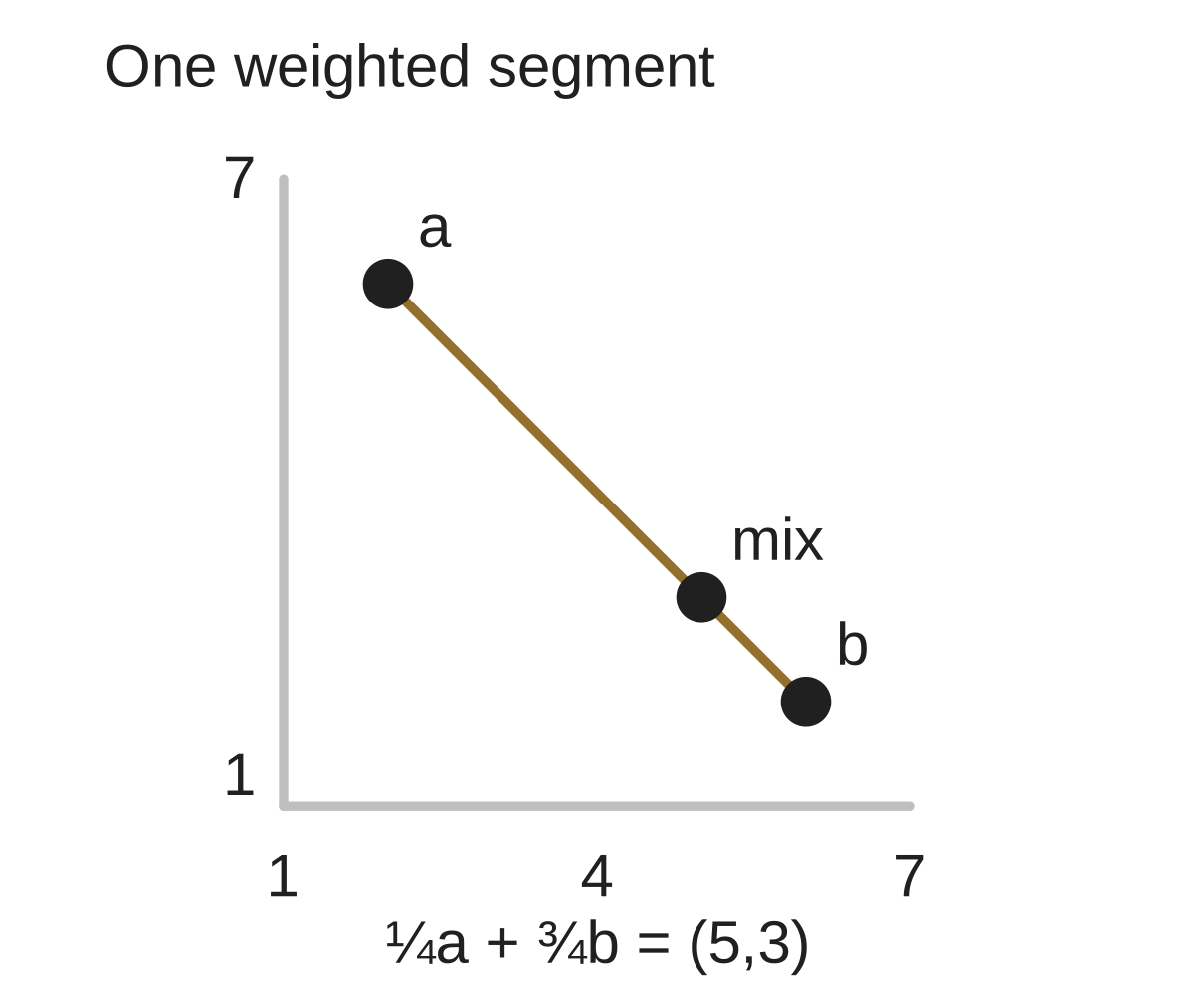
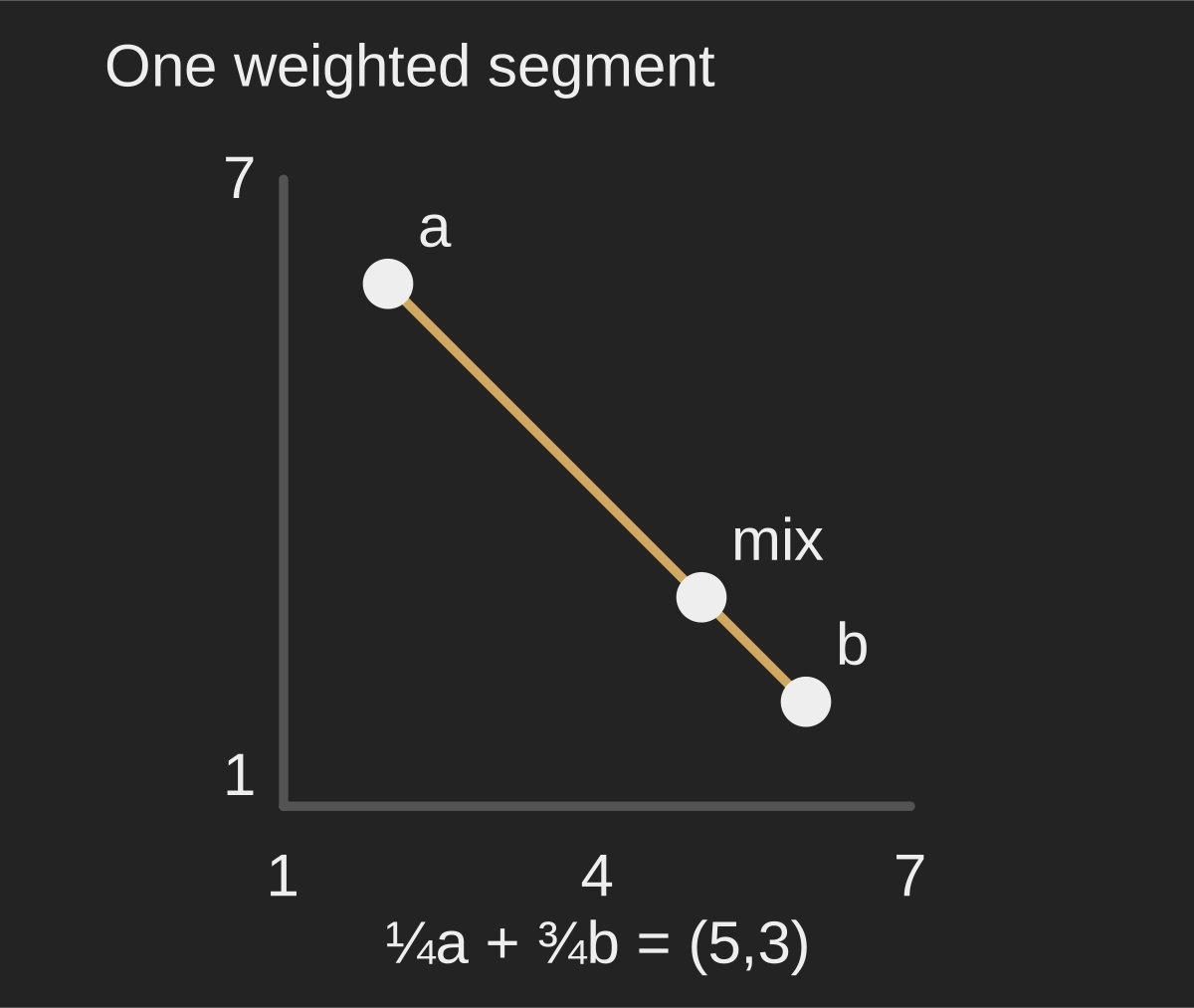
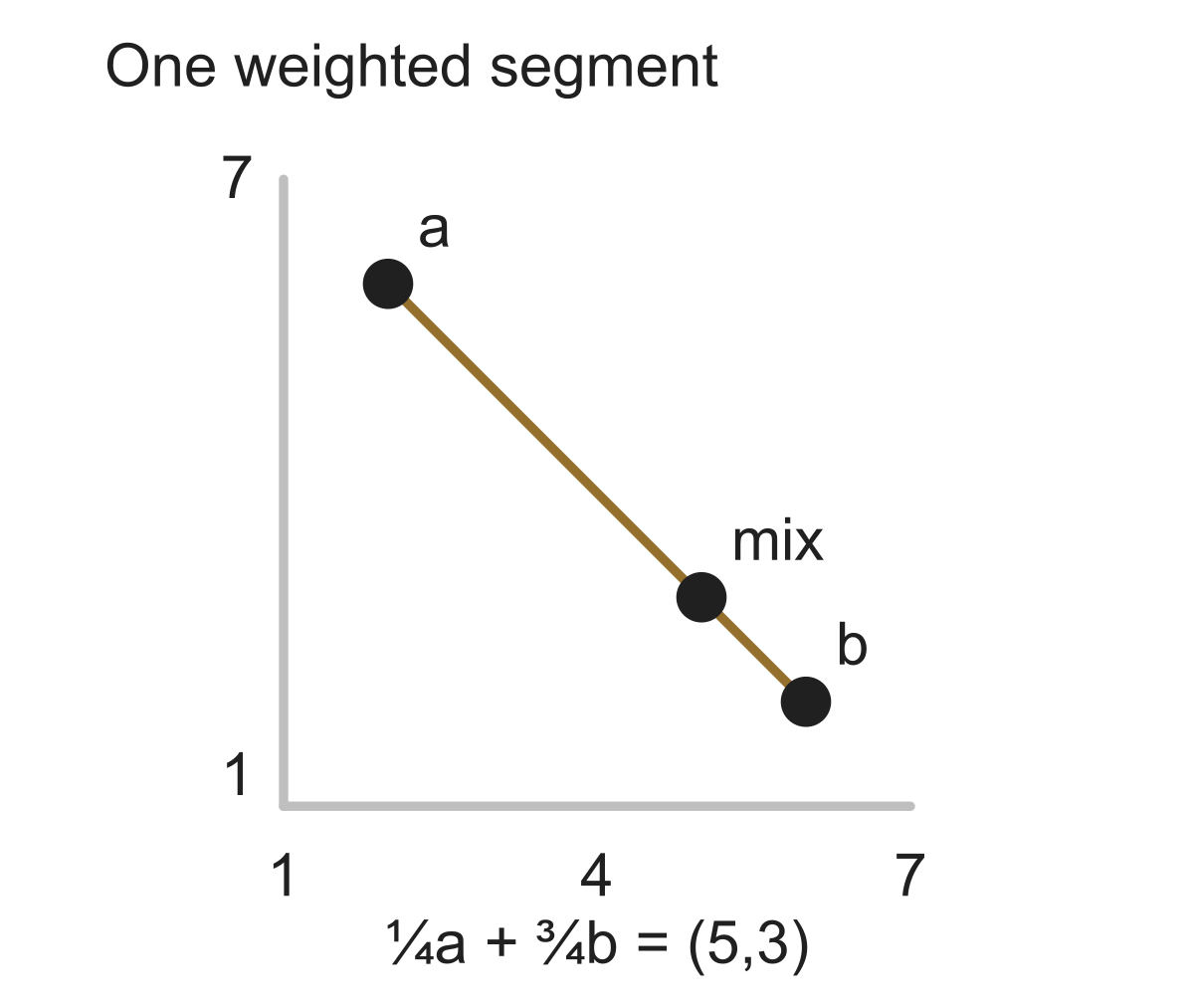
Segment endpoints a=, b=, θ=0.25. Find θa+(1−θ)b.
Show answer and explanation
Weights 0.25 and 0.75.
02A circular boundary is connected, but a chord can pass through its empty interior#
A circular boundary is connected, but a chord can pass through its empty interior. The filled disk includes those chord points; the boundary alone does not.
For x²+y²=R², membership requires equality. For the filled disk x²+y²≤R², a smaller squared norm also belongs.
C: x²+y²=289. a=(8,15), b=(-8,15). Give (midpoint norm²; in C?).
Show answer and explanation
Midpoint (0,15); 225≠289.
03One pair of members with a segment point outside the set disproves convexity#
One pair of members with a segment point outside the set disproves convexity. It is a concrete counterexample to an all-pairs claim.
Two separate intervals can each be convex while their union has a gap. Passing some segment checks does not fill that gap.
C=. Draft: C is convex. Endpoints 0,4 belong to C. Give (midpoint; in C?).
Show answer and explanation
2∉C: not convex.
Use the same weights for every coordinate; one missing segment point disproves convexity.
- Check whether a line segment between feasible points remains feasible.
Sources & further reading
- [1]Boyd & Vandenberghe §2.1.4 ↗Boyd & Vandenberghe §2.1.4 · Article