Factoring
Factoring a common scalar rewrites a sum as that scalar multiplied by the sum of the remaining factors.
On this page 7 sections
01Factoring collects a repeated multiplier outside parentheses#
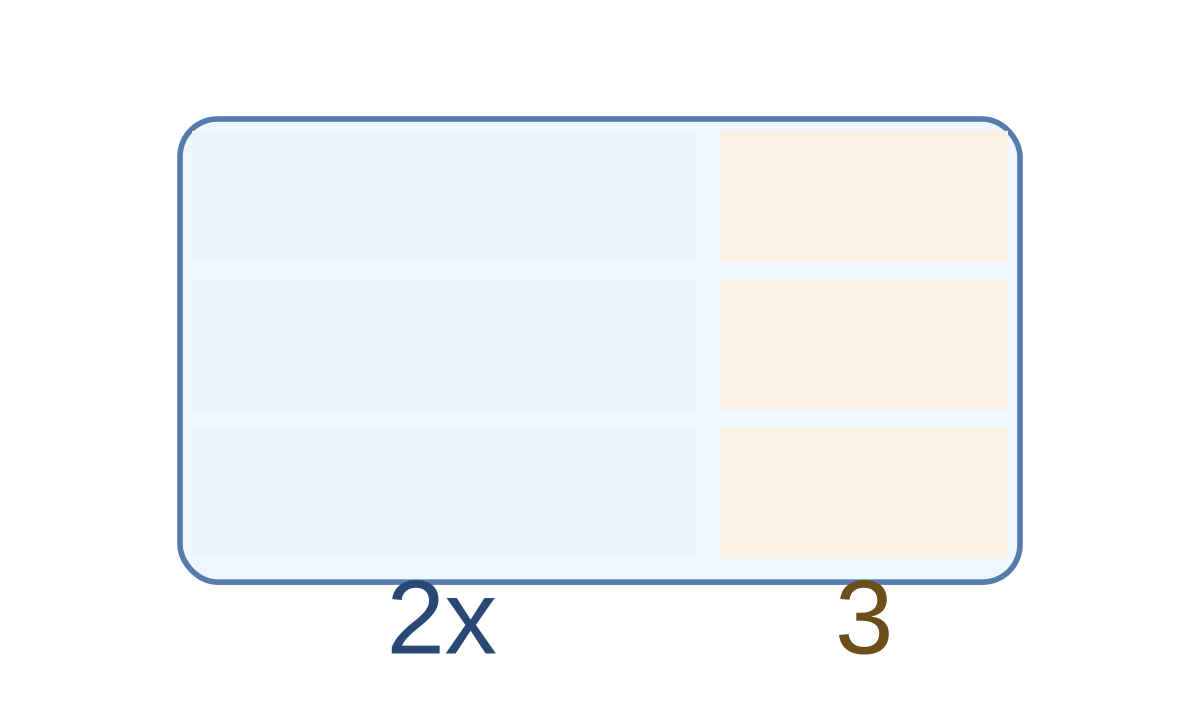
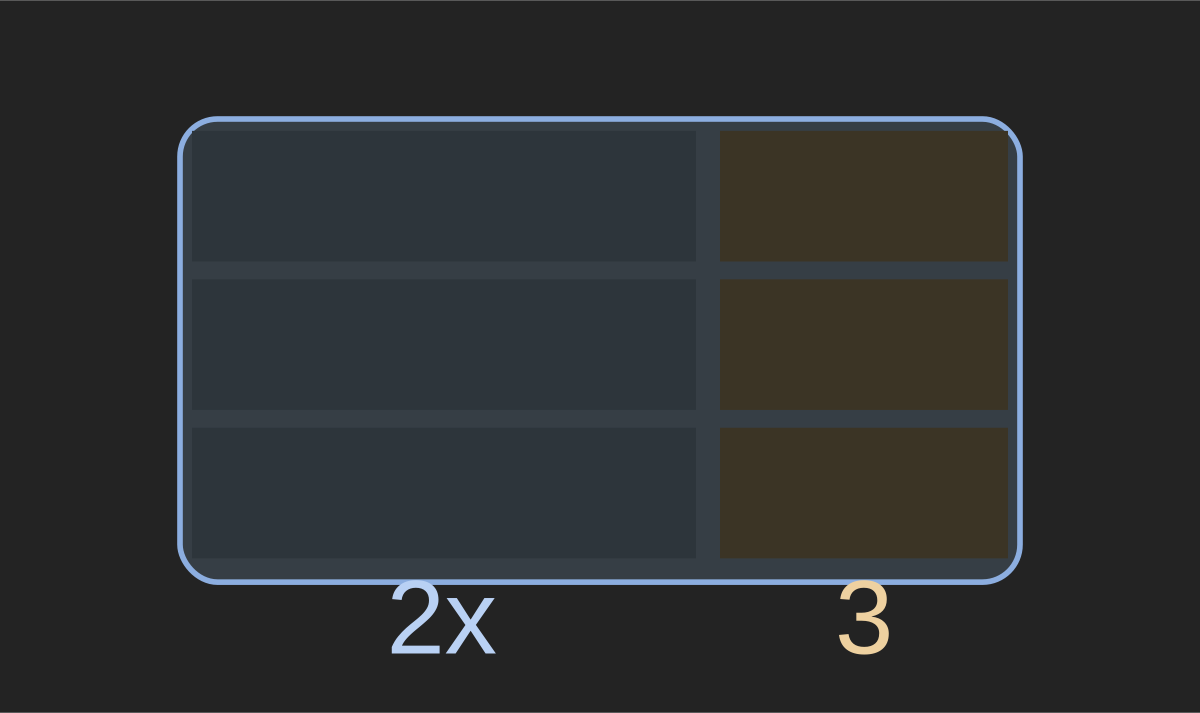
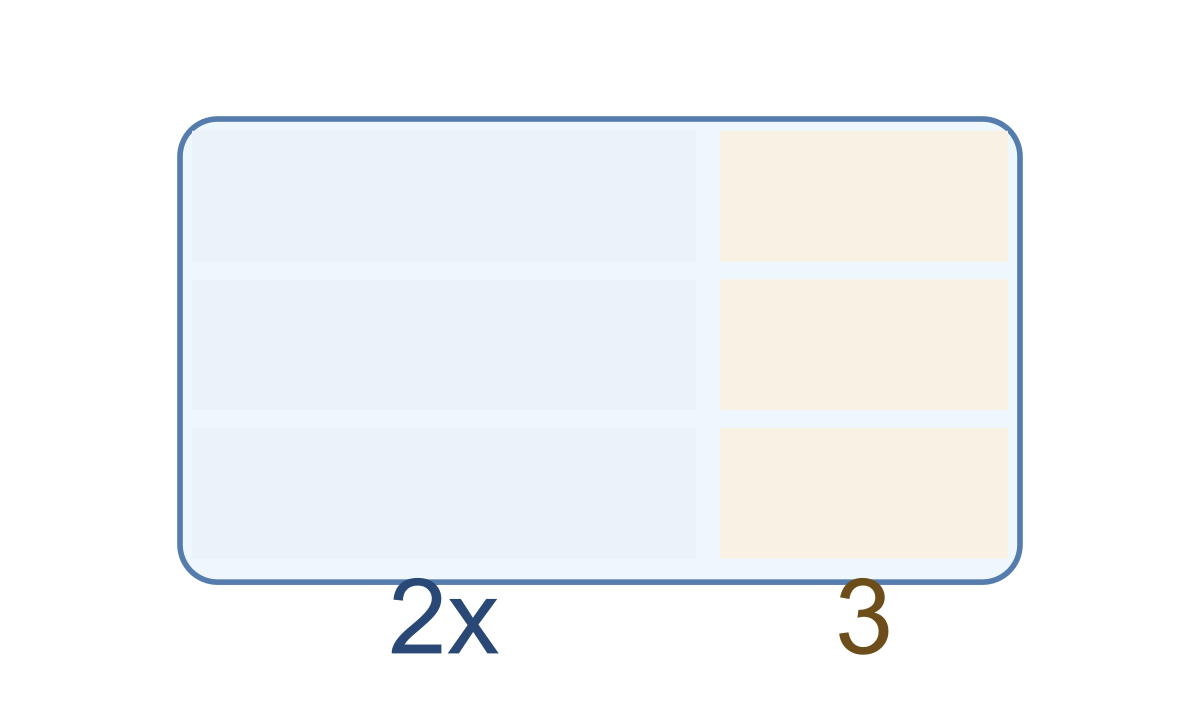
Factoring collects a repeated multiplier outside parentheses. Start with . Both terms contain a factor of .
Write that factor in each term.
The distributive rule works in reverse: the common multiplies the whole sum left inside.
Collect the common factor.
Check by distributing. The outside factor must multiply every term, including the constant.
The original expression returns.
Factor from . Complete .
Show answer and explanation
The constant must be : . Putting inside would produce .
02A common factor need not be the largest one#
A common factor need not be the largest one. Both and equal . A specified nonzero factor tells you what to divide out of each term.
A fixed scalar can multiply several terms.
Pack into groups of . Which form works?
Show answer and explanation
Divide both terms by : the group is .
03Check your understanding#
Repair .
Show answer and explanation
The inside constant is . Keep the outside .
Divide every term by the chosen factor inside parentheses. Distribute afterward to check that the value is unchanged.
- Factor a common scalar factor from a sum
Sources & further reading
- [1]OpenStax Intermediate Algebra 2e, 6.1 ↗OpenStax · Book