Product notation
A finite indexed product combines the values of a stated rule at each integer index in an inclusive range by multiplication.
On this page 7 sections
01Indexed product notation tells you which values to multiply#
Indexed product notation tells you which values to multiply. The capital pi symbol is followed by a rule for each factor.
Read the starting and ending indices.
In , the index takes the integer values , including both ends. Substitute each value into the rule.
Write one factor per index.
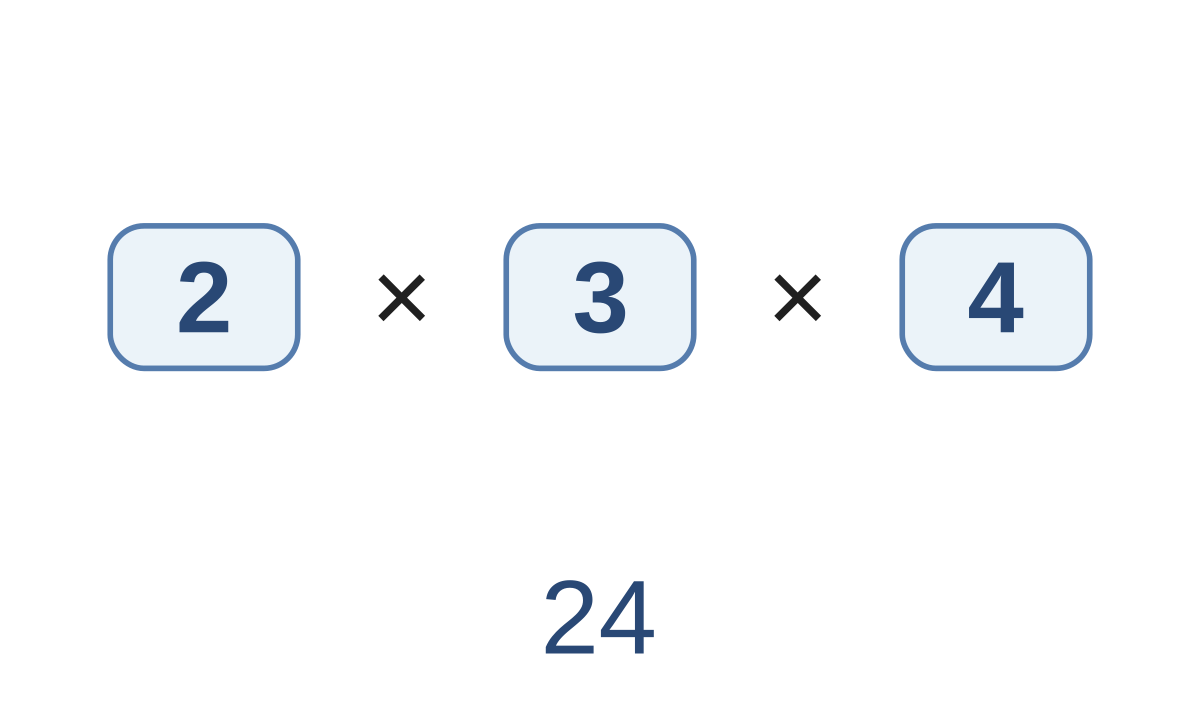
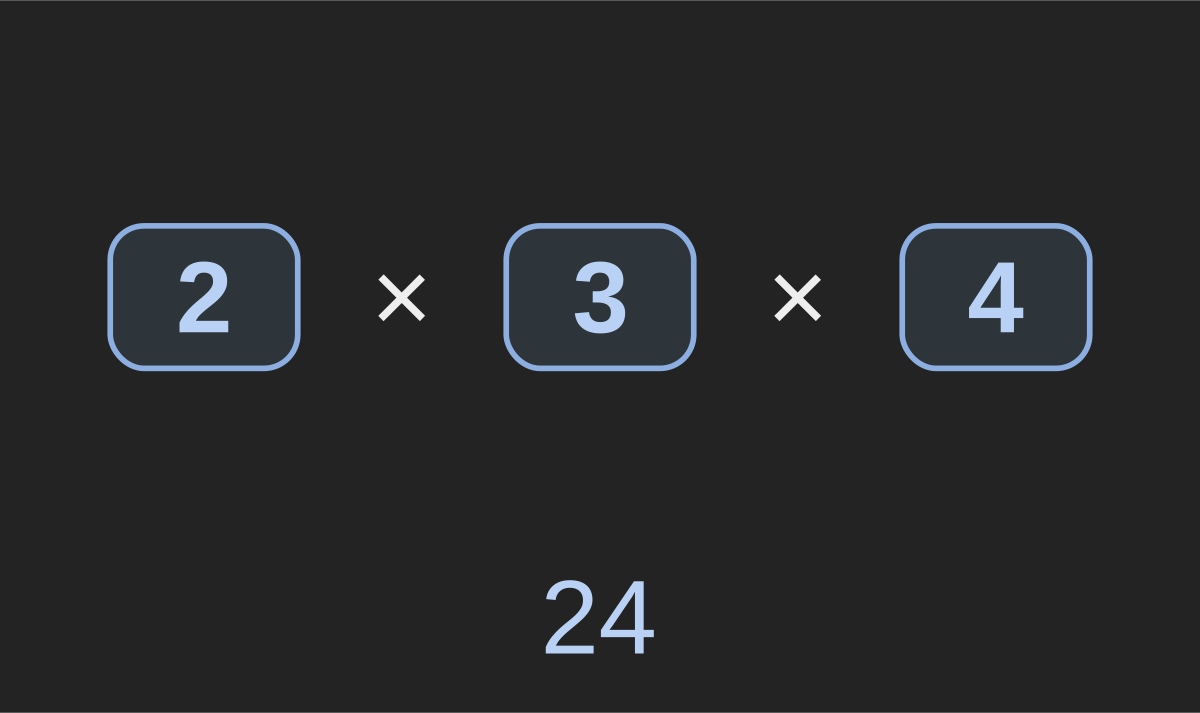
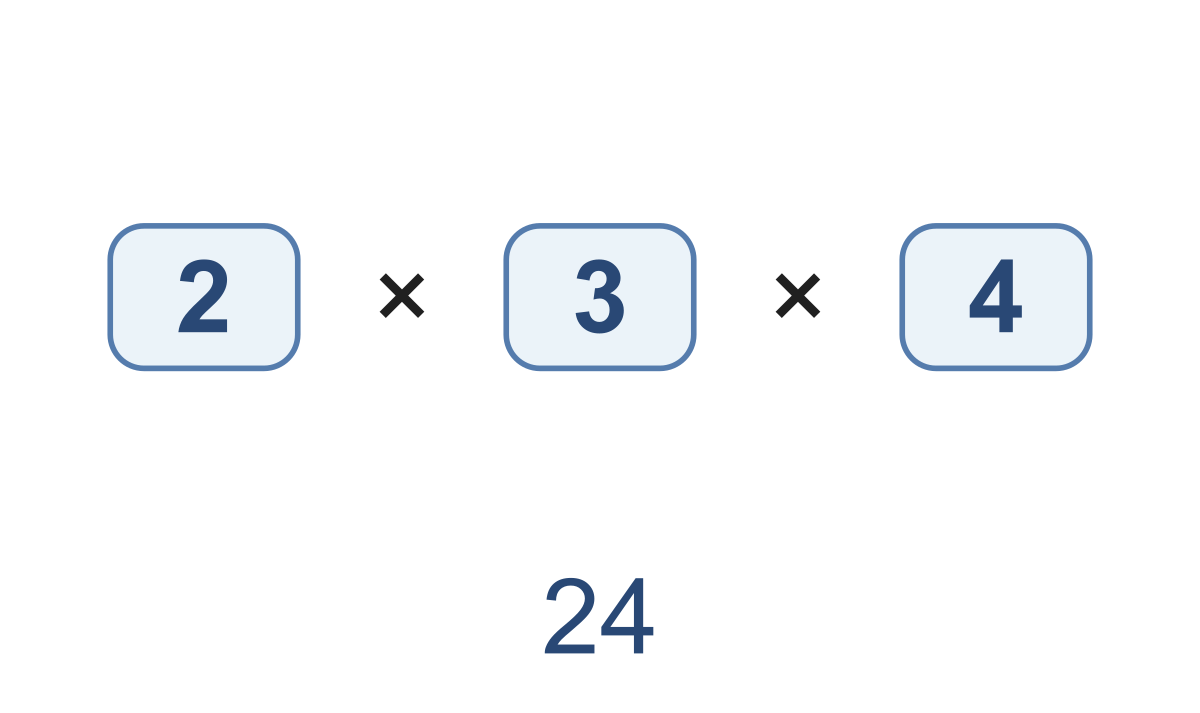
The product includes the factors . Multiply them. The index moves through its range; it is not one fixed unknown to solve for.
Evaluate the expansion.
Evaluate .
Show answer and explanation
The factors are and , so .
02The lower limit need not be #
The lower limit need not be . The index letter is only a local label: changing to consistently changes nothing. If the rule is constant, include one copy per index.
Three copies of a constant.
A log has , , . Evaluate .
Show answer and explanation
Read the listed entries in the given range, then multiply: .
03Include zero factors: one zero makes the product zero#
Include zero factors: one zero makes the product zero.
For , evaluate .
Show answer and explanation
.
List the integer indices from the lower through the upper limit. Substitute each into the rule, then multiply the resulting values.
- Expand and evaluate a finite indexed product
Sources & further reading
- [1]University of Western Australia, Summation and Product Notation, Chapter 10 ↗University of Western Australia · Book