Stopping criteria
A stopping decision compares specified gradient and progress metrics with their supplied tolerances.
On this page 7 sections
01A stopping rule makes a numerical decision using stated tolerances#
A stopping rule makes a numerical decision using stated tolerances. A gradient-norm rule checks how close the current gradient is to zero.
Use the specified norm and comparison sign. Equality passes a ≤ rule but fails a < rule.
For gradient (0.03,0.04), the Euclidean norm is 0.05. A ≤0.05 rule stops at this boundary.
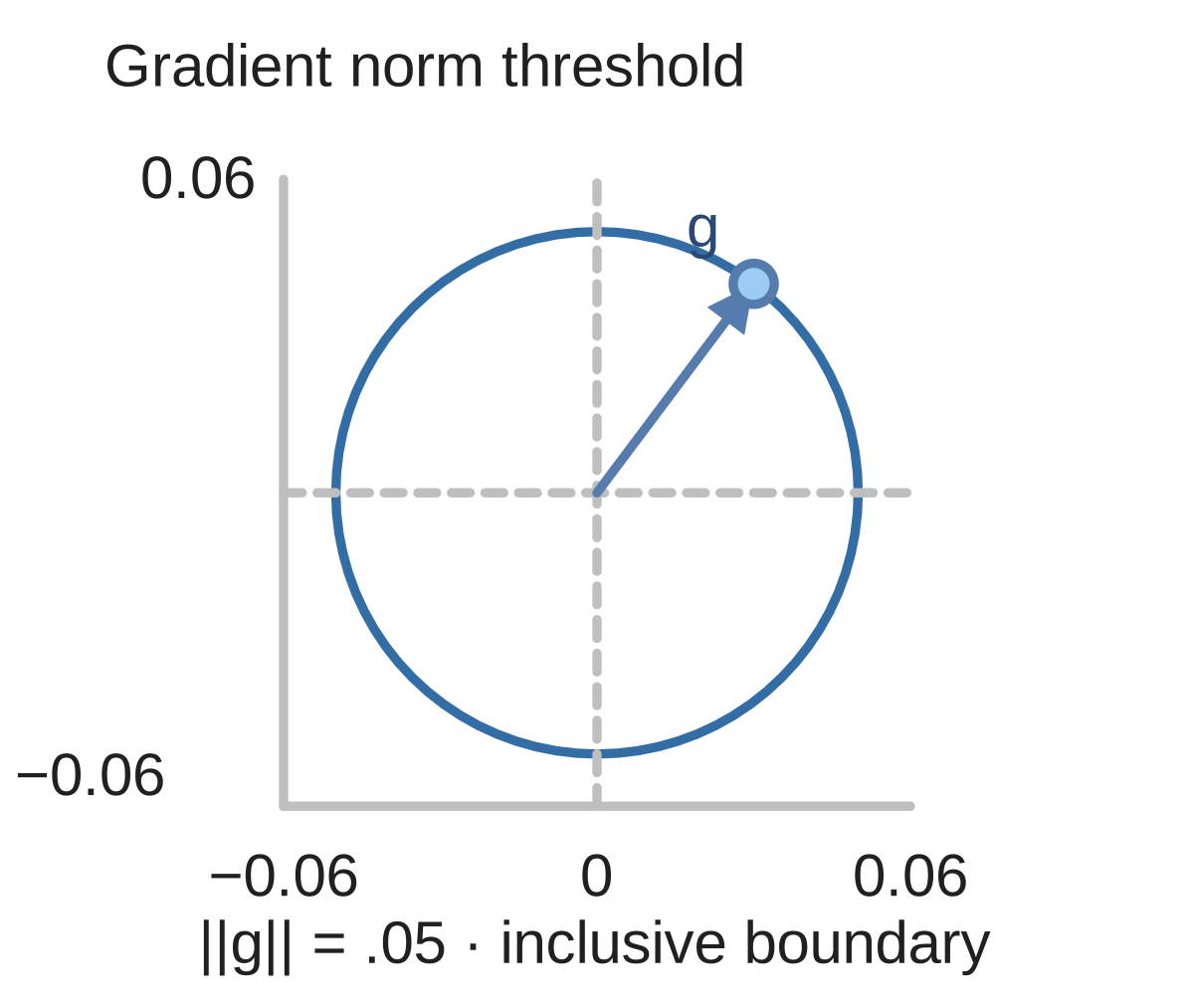
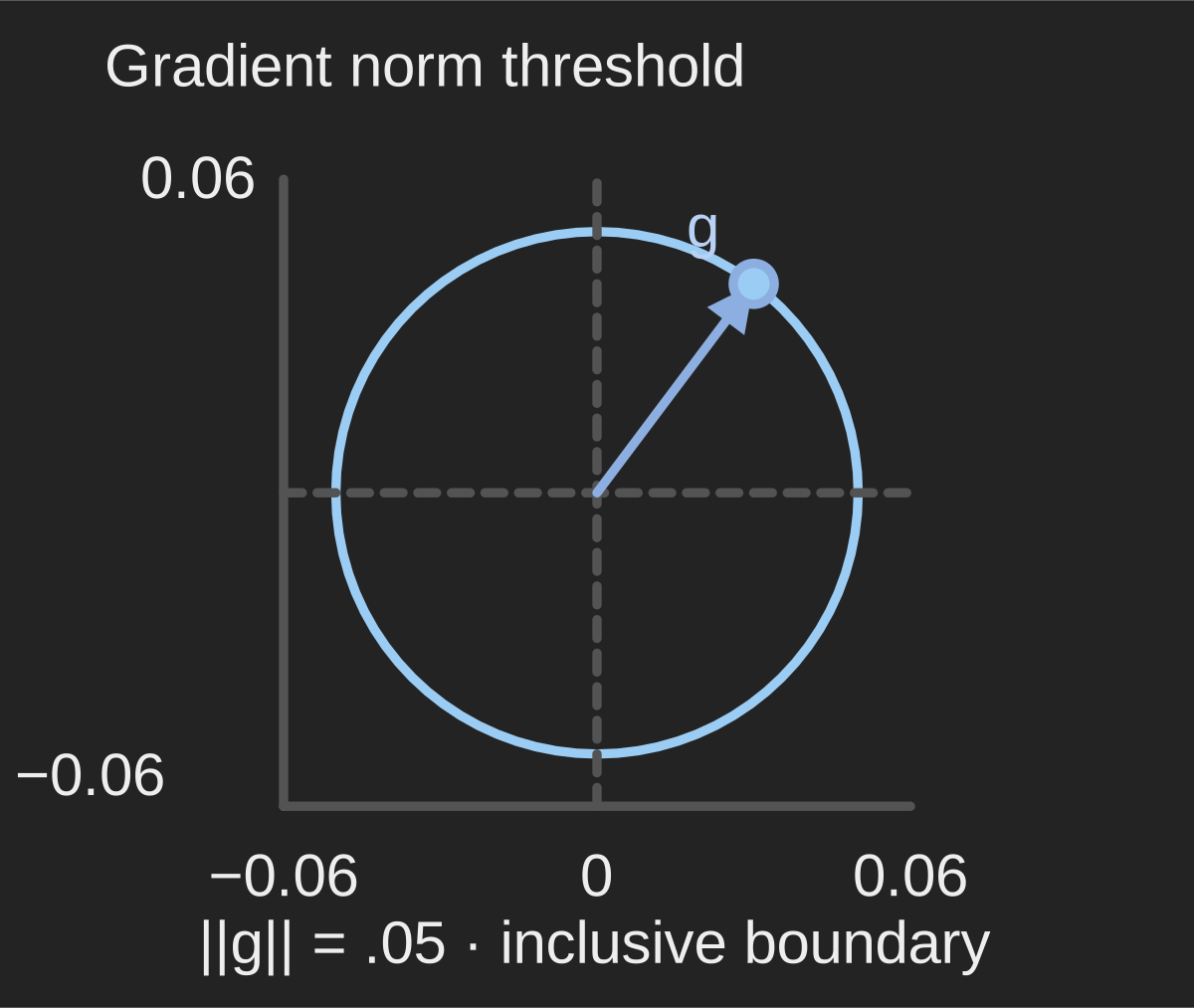
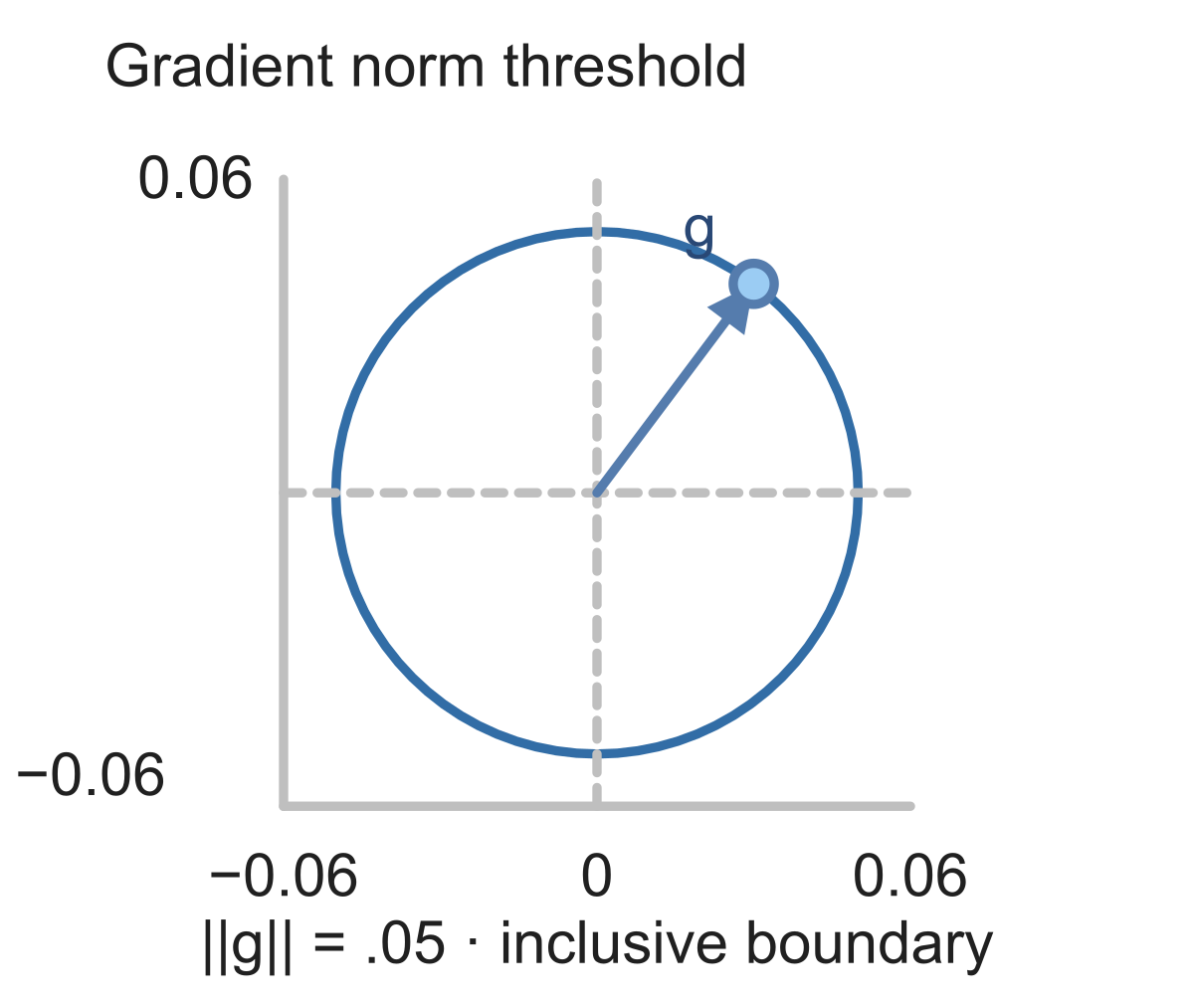
Stop exactly when Euclidean . Given : stop?
Show answer and explanation
Norm equals tolerance.
02A combined rule may require several conditions at once#
A combined rule may require several conditions at once. If it says AND, every comparison must pass.
Check the stated metrics directly. Small loss change and small gradient norm are different facts.
Stop exactly when gradient norm AND loss change . Given norm , change : stop?
Show answer and explanation
Change 0.004>0.003.
03A tiny parameter change may come from a tiny learning rate#
A tiny parameter change may come from a tiny learning rate. It does not establish a small gradient or proximity to a global optimum.
Even satisfying a gradient tolerance is a stopping decision. Global-optimality guarantees need additional assumptions.
Stop exactly when gradient norm≤0.02; norm is 0.01. Report: rule met, global optimum unproved. Verdict?
Show answer and explanation
A rule, not a proof.
Apply every required comparison exactly, and keep a stopping decision separate from a global-optimum certificate.
- Assess a proposed stopping decision using gradient size and supplied tolerances.
Sources & further reading
- [1]Boyd & Vandenberghe, Convex Optimization §9.3, p466 ↗Boyd & Vandenberghe · Article
- [2]Dive into Deep Learning §12.3.1.2 ↗Dive into Deep Learning · Article