Reading probabilities from a CDF
For a<b, P(a<X≤b) equals F(b)−F(a).
On this page 7 sections
01Understand the idea#
An interval probability can be the part left after one cumulative event is removed from another. For , subtract all values at or below from all values at or below .
If and , the probability above and at most is .
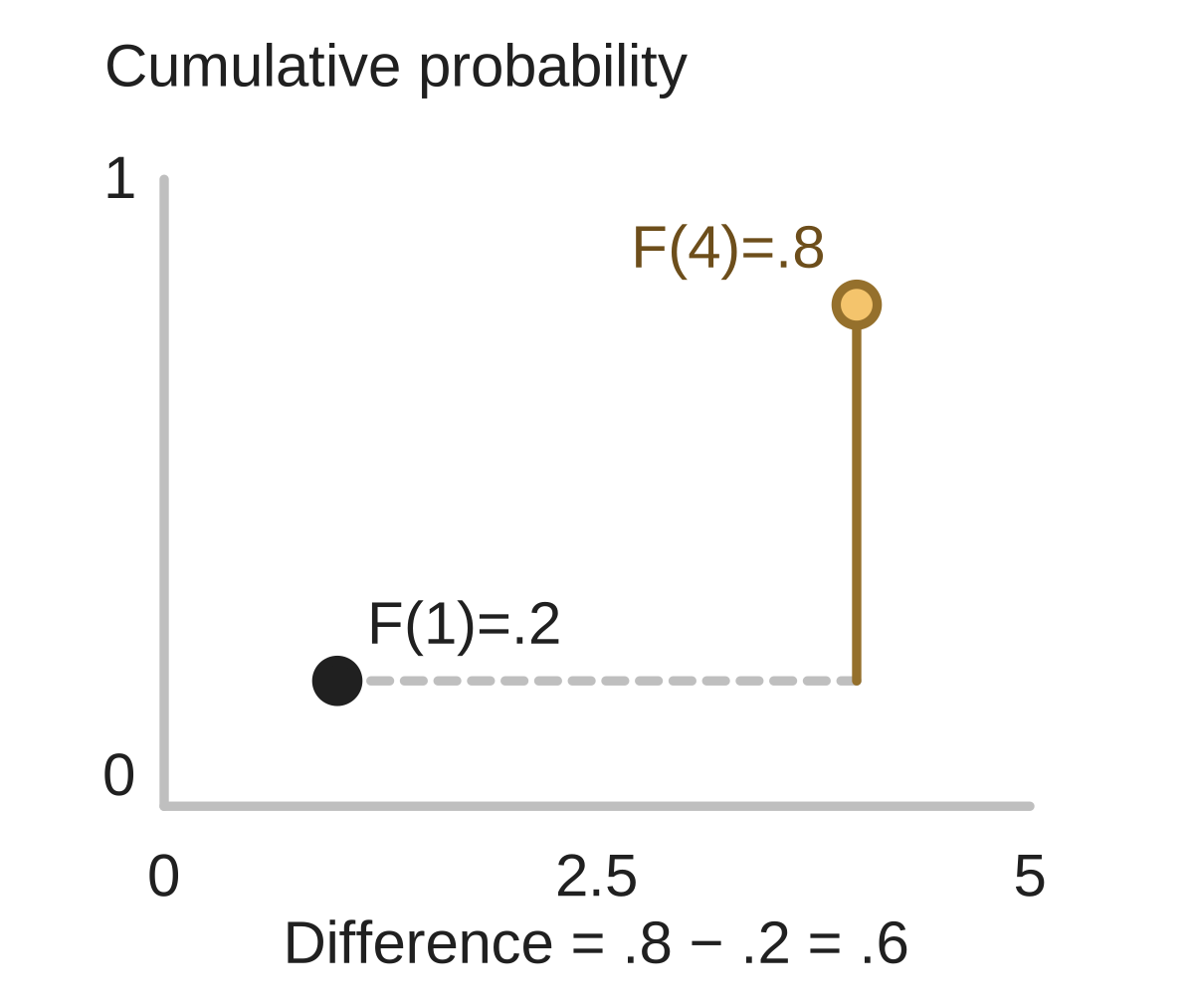
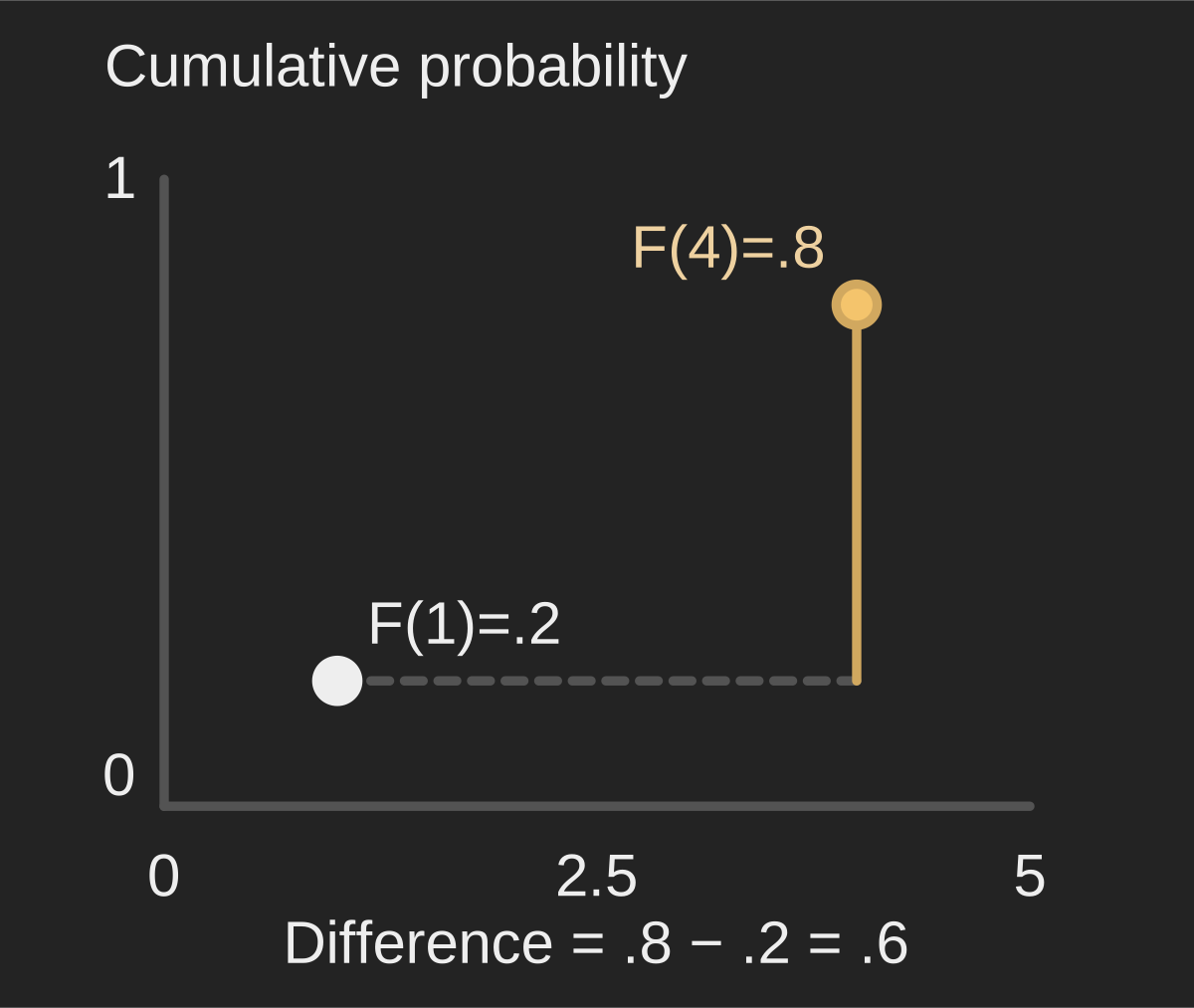
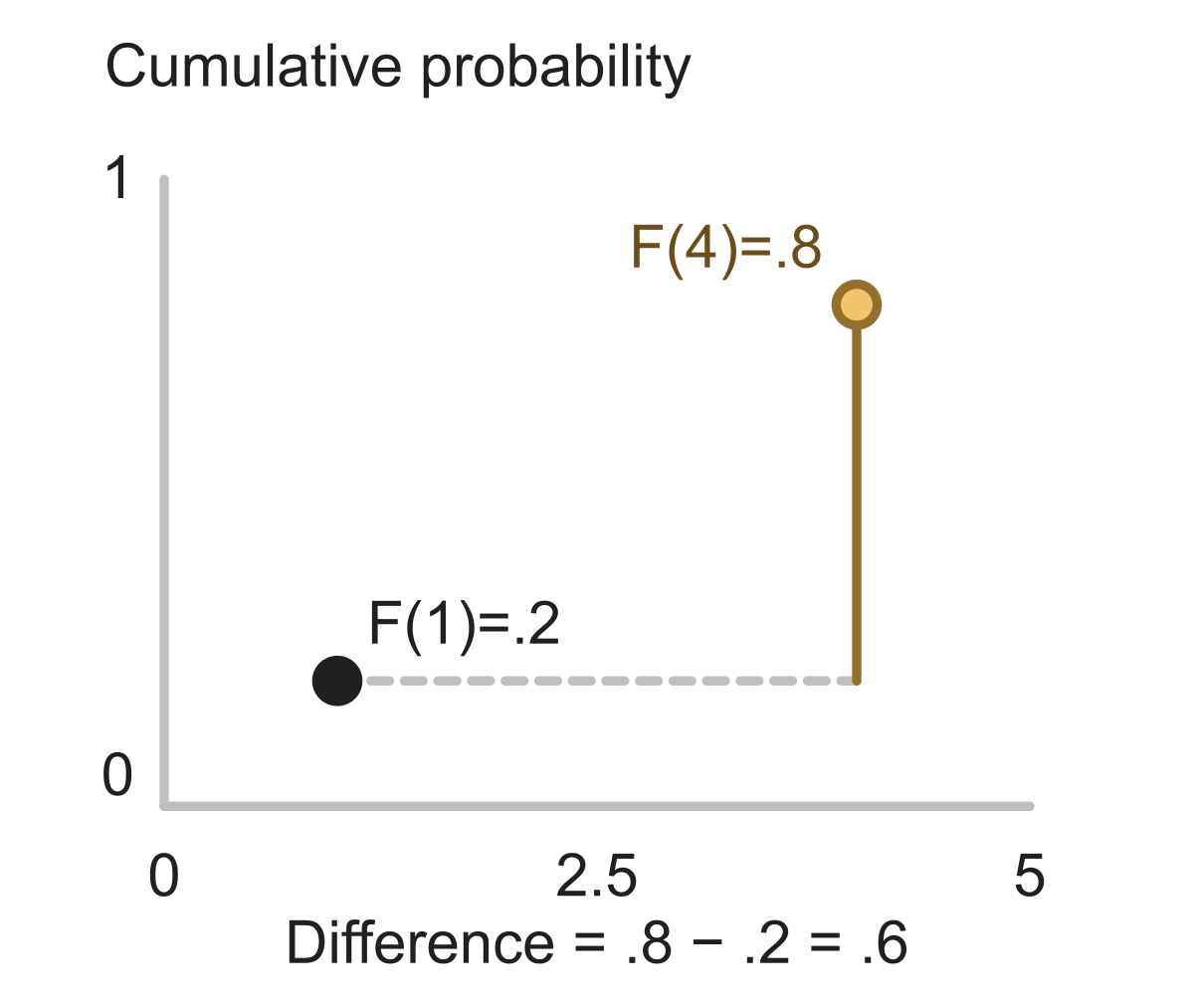
and . Find .
Show answer and explanation
Subtract the nested totals: . The lower endpoint is excluded.
02The lower endpoint is removed because includes #
The lower endpoint is removed because includes . The upper endpoint stays because includes .
Translate the interval wording before subtracting. “Above” is strict; “at most” includes equality.
A score has and . Find the probability it is above and at most .
Show answer and explanation
Subtract the nested totals: . The lower endpoint is excluded.
03A closer look#
Adding back would answer a different question, one that includes the lower endpoint.
If the two CDF values are equal, there is no probability in this band. Their difference is zero even when the endpoints are different.
, , . A draft adds the lower point mass to the CDF difference. Repair .
Show answer and explanation
Subtract the nested totals: . The lower endpoint is excluded.
Subtract the lower CDF from the upper; exclude the lower endpoint and include the upper.
- Compute P(a < X ≤ b) by subtracting supplied CDF values at the endpoints.
Sources & further reading
- [1]Pishro-Nik, Introduction to Probability: Cumulative Distribution Function ↗Pishro-Nik: Introduction to Probability · Article