Variance of sums
The variance of a sum equals the two variances plus twice their covariance, when these second moments are finite.
On this page 9 sections
- Overview
- The variability of a total depends on how its parts move together
- Negative covariance reduces the variance of the sum
- When covariance is zero, the two variances add
- This matters when averaging correlated measurement errors or combining model errors
- Key takeaway
- Further questions
- Sources & further reading
- Concept connections
01The variability of a total depends on how its parts move together#
The variability of a total depends on how its parts move together. Two individually noisy quantities can reinforce each other or partly cancel. Variance therefore needs a covariance term unless a stated assumption makes that term zero.
The variance of a sum includes two cross terms. Covariance is symmetric, so both contribute the same value.
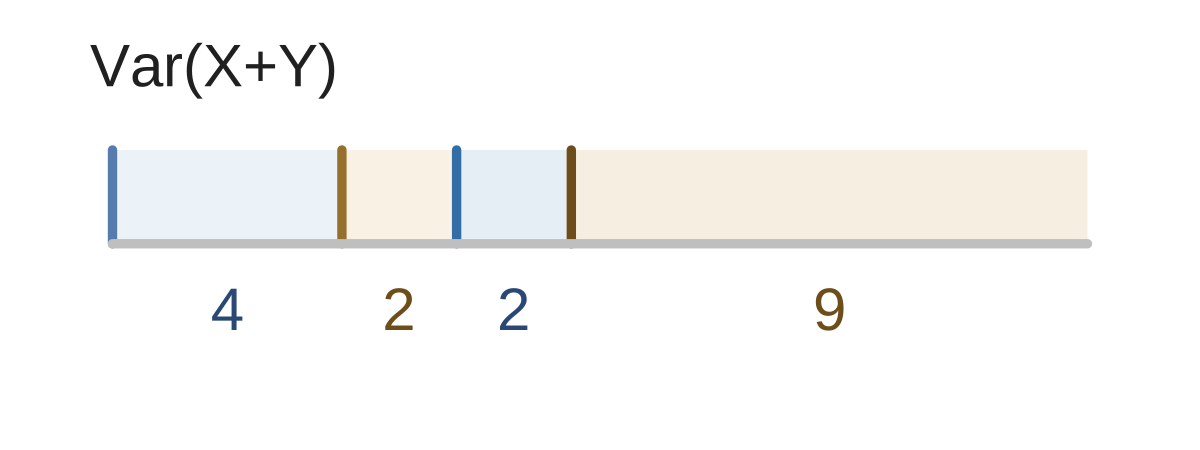
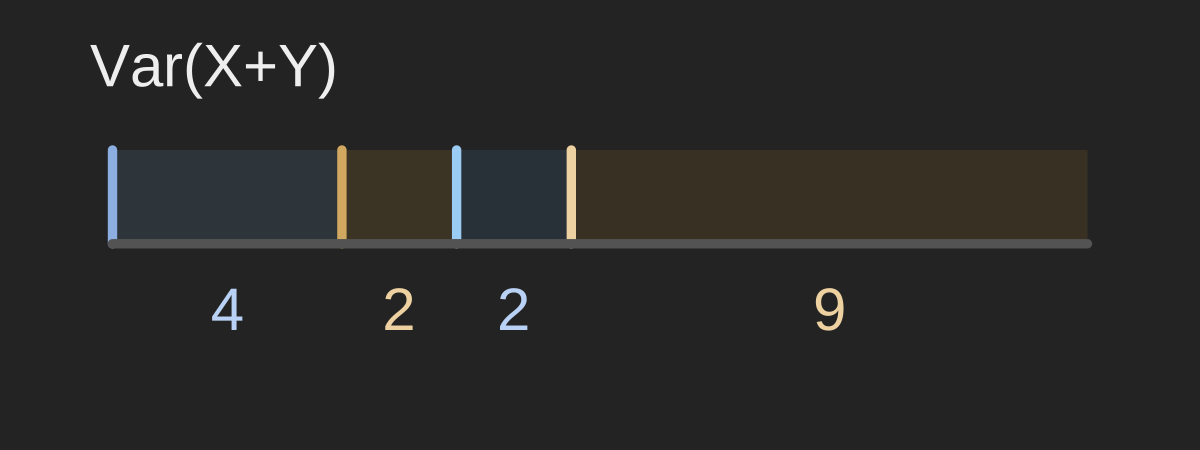
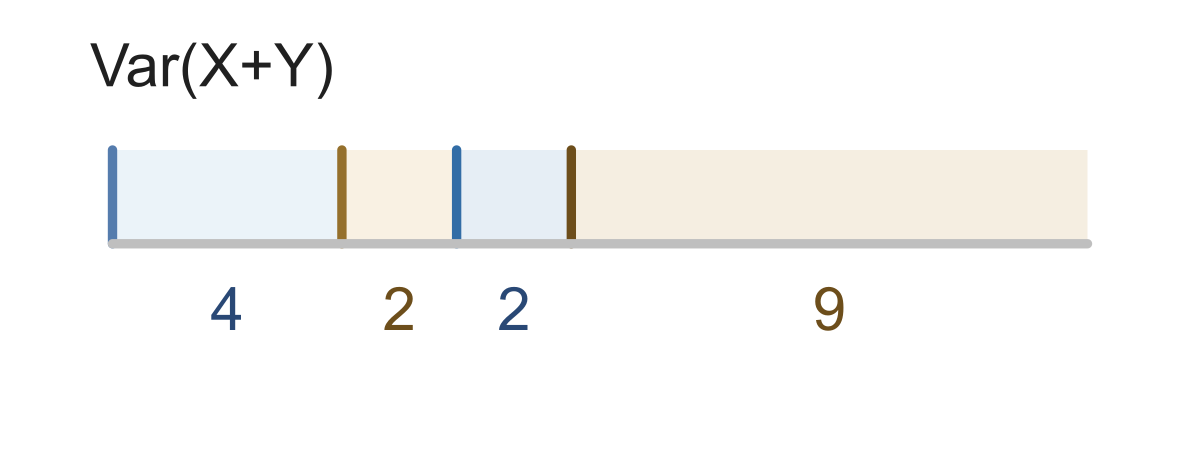
With variances 4 and 9 and covariance 2, adding twice the signed covariance gives .
If , , and , then . Ignoring covariance would give 13. The negative covariance reflects deviations that partly offset each other in the sum.
, , . Find .
Show answer and explanation
.
02Negative covariance reduces the variance of the sum#
Negative covariance reduces the variance of the sum. With variances 1 and 1 and covariance , the total variance is . In that case the sum is constant with probability 1.
, , . Repair including covariance once. Find .
Show answer and explanation
.
03When covariance is zero, the two variances add#
When covariance is zero, the two variances add. Independence is sufficient for zero covariance when these variances are finite, but zero covariance alone does not prove independence.
Total delay is X+Y. , , . Find .
Show answer and explanation
.
04This matters when averaging correlated measurement errors or combining model errors#
This matters when averaging correlated measurement errors or combining model errors. More observations do not automatically deliver the independent-sample variance reduction if the errors tend to move together. Always check which covariance or independence assumption the task supplies.
Add both variances and twice the signed covariance.
- Compute variance of a sum with a supplied covariance.
Further questions
Can negative covariance make the total variance negative?
Sources & further reading
- [1]