Sample mean variability
The mean of n IID observations with finite variance v has variance v divided by n.
On this page 7 sections
01For IID observations with finite individual variance , the average has variance #
For IID observations with finite individual variance , the average has variance . Here is a positive integer. The formula concerns variation across fresh samples.
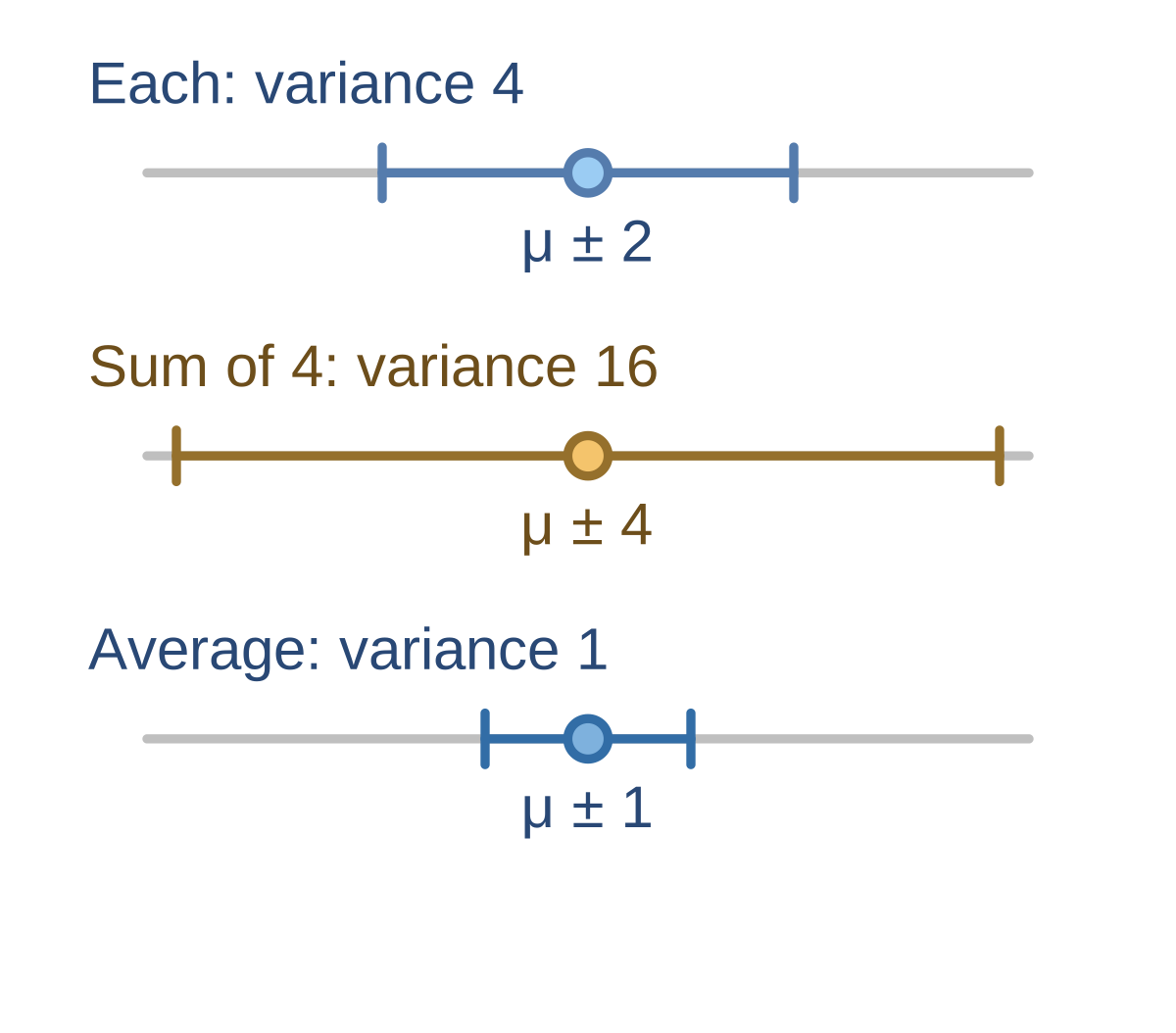
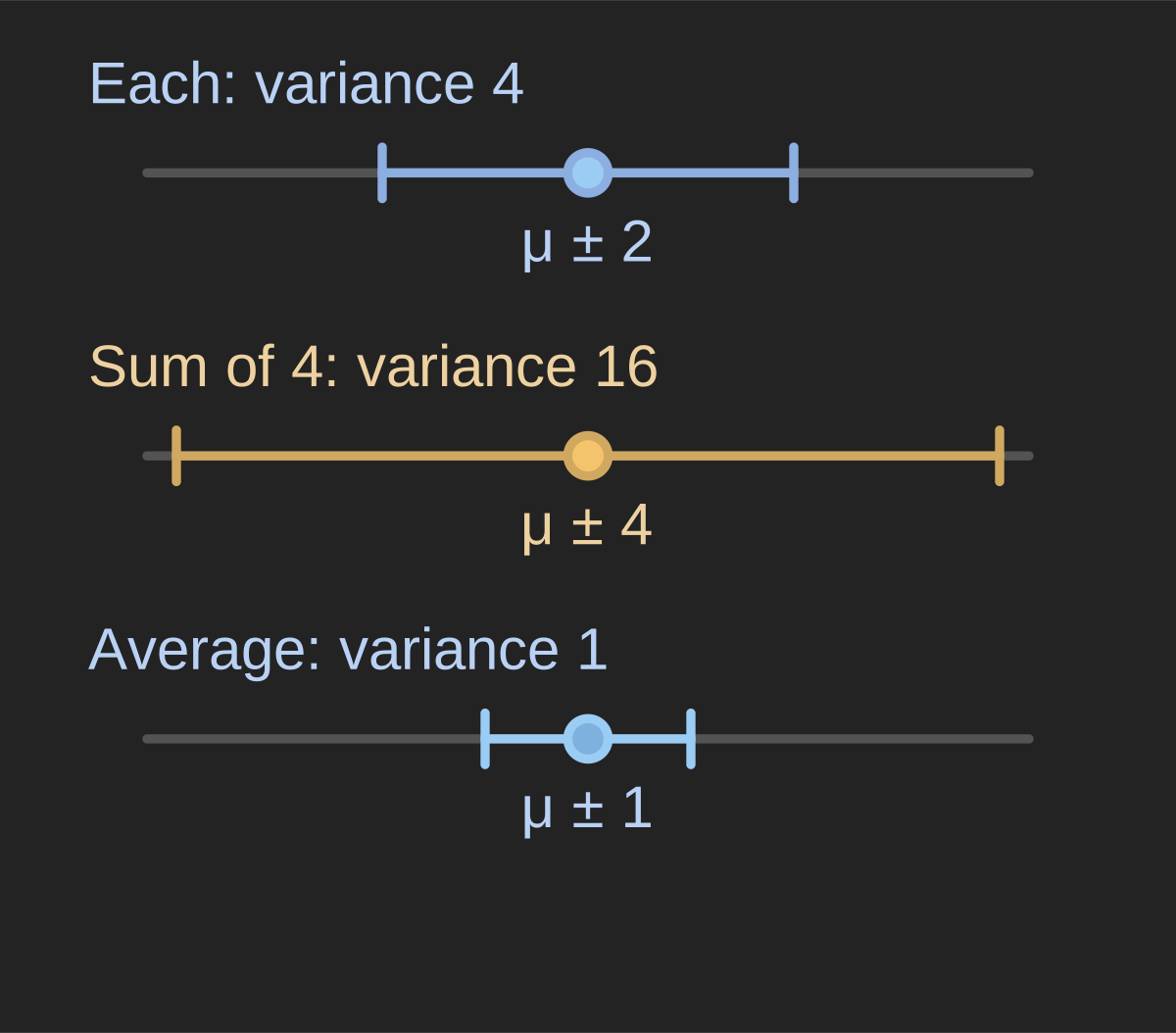
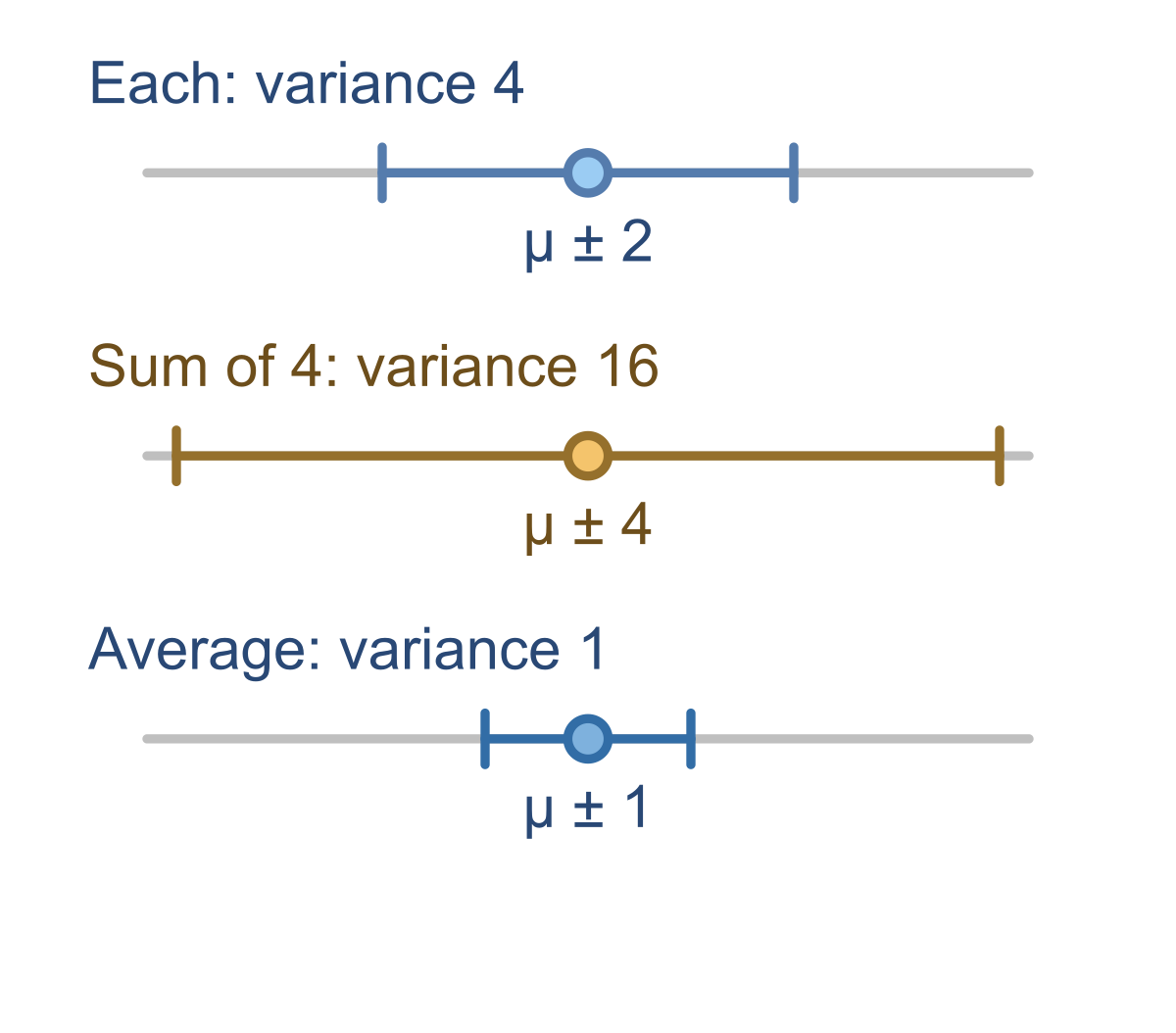
The sum of independent observations has variance . Dividing that sum by multiplies its variance by .
With four observations of variance , the sum variance is . Averaging multiplies it by , leaving variance .
IID observations: n=6, finite variance of each=18. Variance of the average?
Show answer and explanation
18/6 = 3.
02If an individual standard deviation is supplied, square it to obtain #
If an individual standard deviation is supplied, square it to obtain . For standard deviation and , mean variance is . Variance uses squared measurement units.
IID readings: n=4, individual standard deviation=6. Finite variance. Variance of the average?
Show answer and explanation
36/4 = 9.
03At , the variance stays #
At , the variance stays . At , it stays zero for every positive . Copies of a nonconstant random variable are dependent; the IID shortcut is unjustified.
IID observations: n=4, finite variance of each=8. “Divide by n squared.” Repair mean variance.
Show answer and explanation
8/4 = 2.
Independent variances add, then averaging scales variance by the square of 1/n. The result is v/n.
- Compute IID sample-mean variance.
Sources & further reading
- [1]Pishro-Nik, Introduction to Probability, 8.1.1 Random Sampling ↗Pishro-Nik, Introduction to Probability · Book