Average rate of change
The average rate of change is the difference in function outputs divided by the corresponding nonzero difference in inputs.
On this page 8 sections
01From to , the output rises by 9 over an input increase of 3#
From to , the output rises by 9 over an input increase of 3. The secant joins these two graph points.
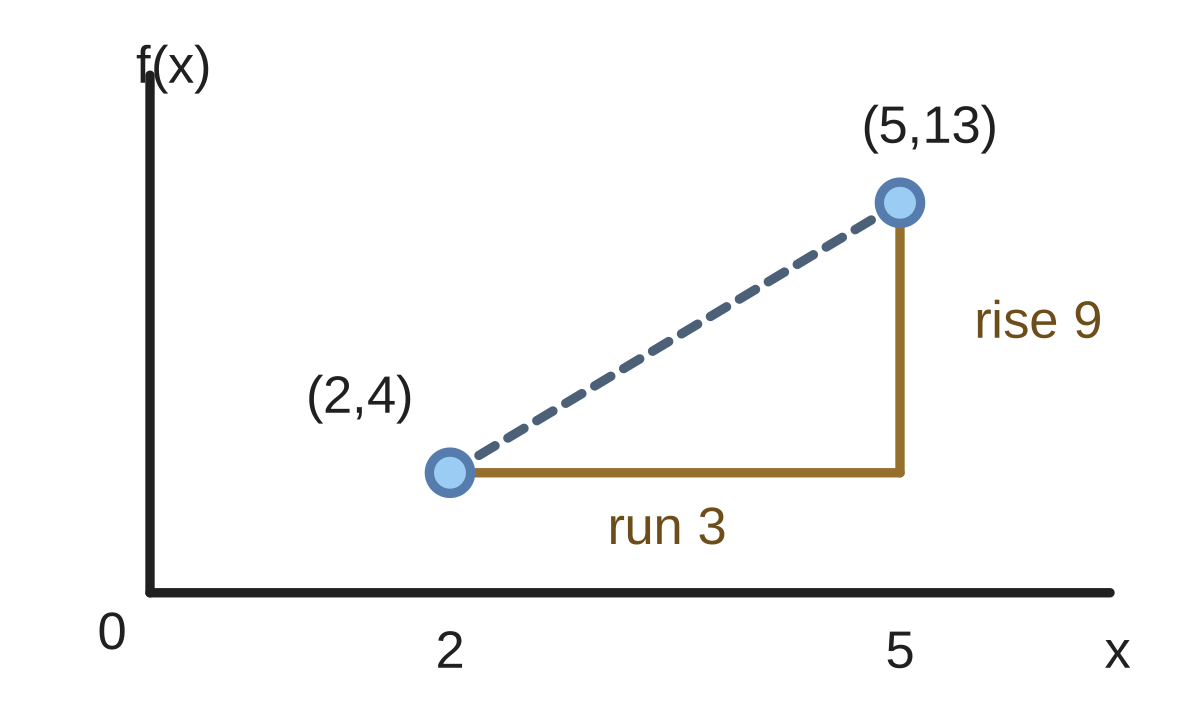
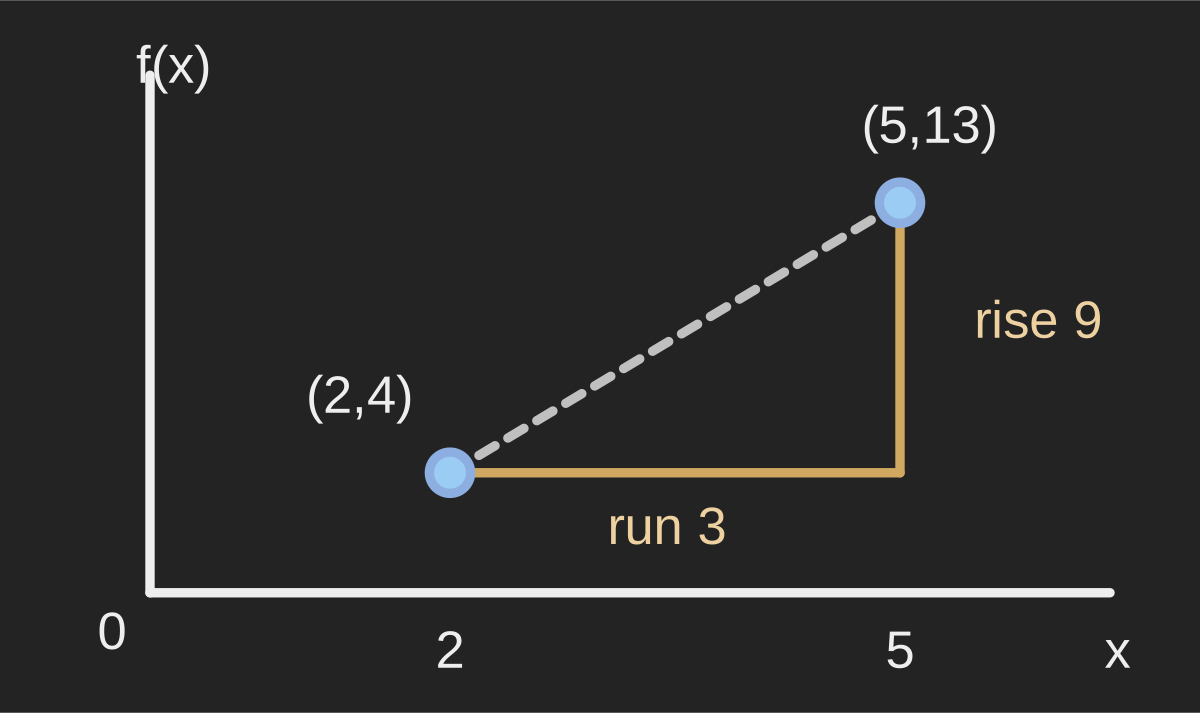
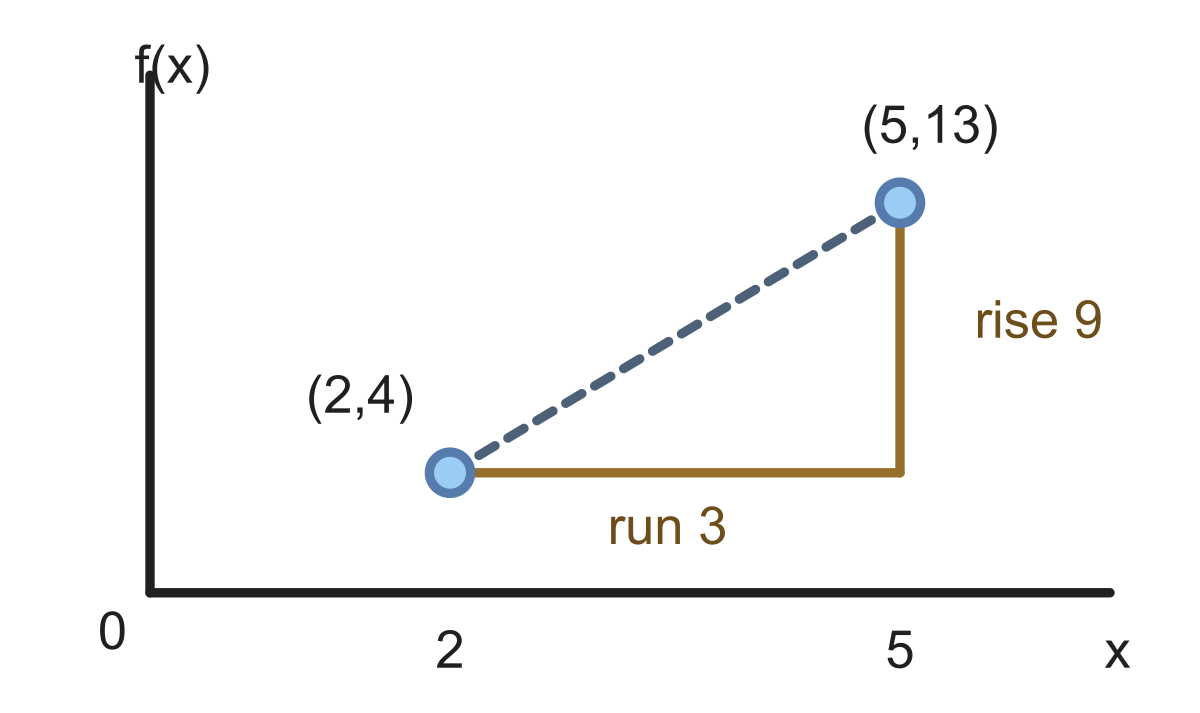
For and , divide by . The average rate is 3 output units per input unit.
, . Average rate on ?
Show answer and explanation
Divide the output change 12 by the input change 3.
02Keep both subtractions in the same order#
Keep both subtractions in the same order. If and , the output change is and the input change is 3. The rate is .
, . Average rate on ?
Show answer and explanation
Equal endpoint outputs give zero net change.
03An average rate describes the whole interval#
An average rate describes the whole interval. It is neither an average of the outputs nor a rate at one instant. Equal endpoint outputs give zero net change, even if values vary between them.
A reading is 10 units at minute 1 and 4 units at minute 4. Average change in units per minute?
Show answer and explanation
The change is over 3 minutes.
Output change divided by input change.
- Compute an average rate of change over an interval
Further questions
Can the average rate be negative?
Sources & further reading
- [1]OpenStax Calculus Volume 1, 2.1 A Preview of Calculus ↗OpenStax · Book