One-sided limits
A one-sided limit is the output value approached when the input approaches a target using only inputs on the specified side.
On this page 8 sections
01On this graph, approaching from the left means following inputs smaller than 2#
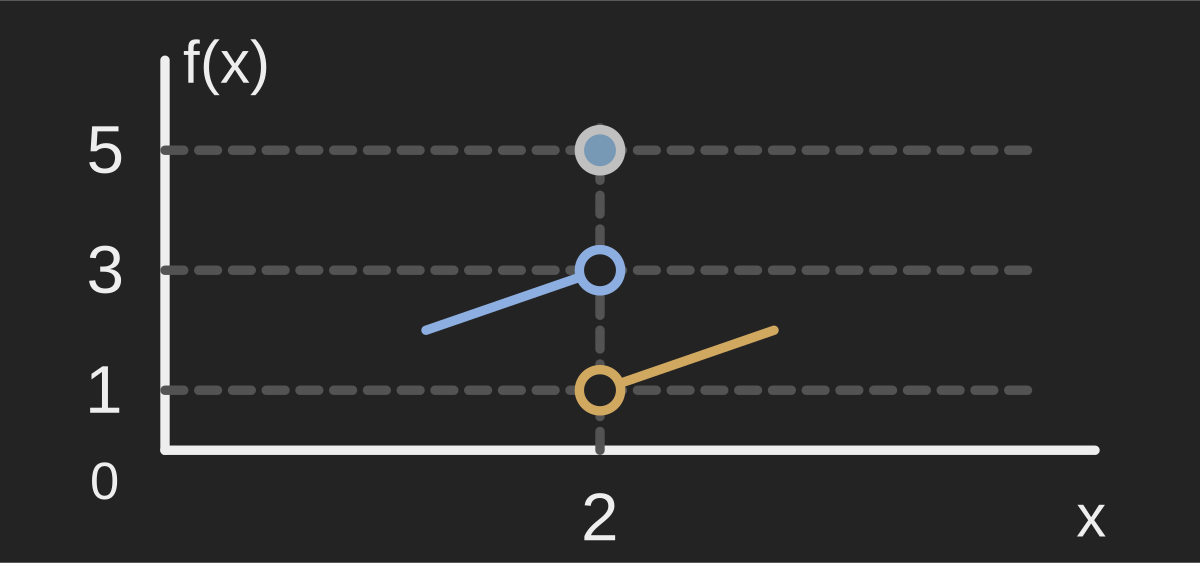
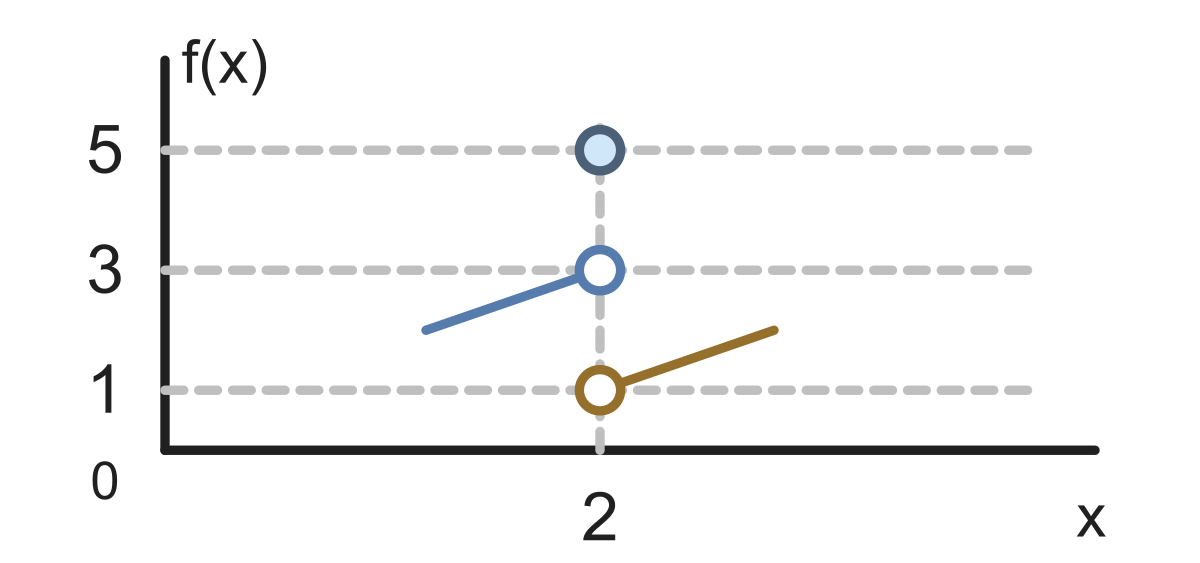
On this graph, approaching from the left means following inputs smaller than 2. That branch approaches height 3, even though the filled point has height 5.
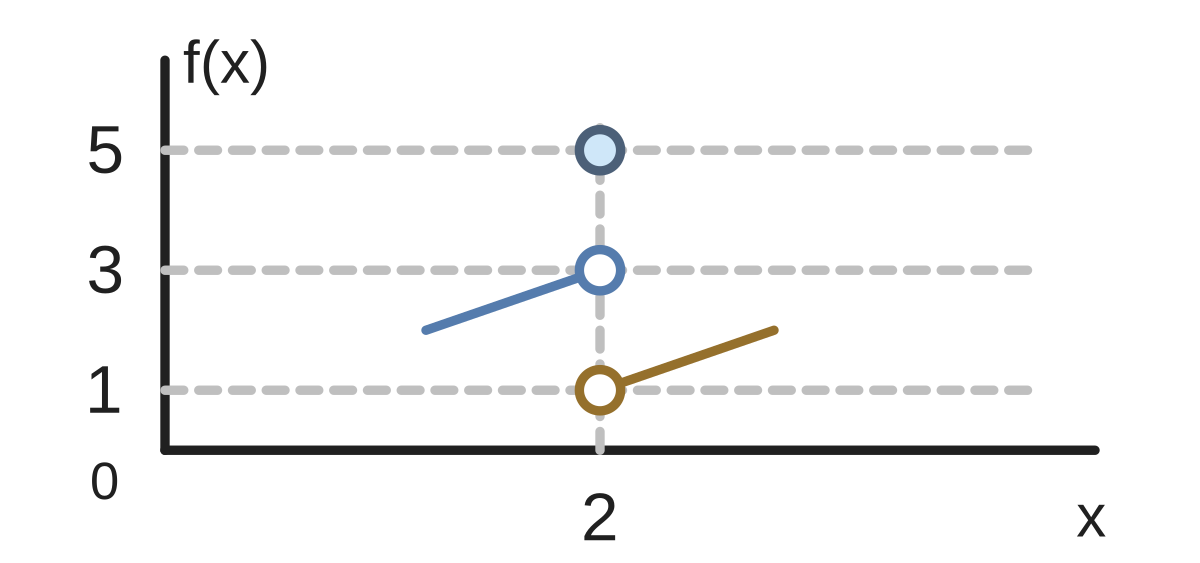
The superscript minus means inputs below the target. The superscript plus means inputs above it. Read the branch on that side; an open circle can mark the height it approaches.
Read .
Show answer and explanation
Left branch: 5.
02A filled circle tells you the value at the exact input#
A filled circle tells you the value at the exact input. A one-sided limit follows nearby inputs. Ignore a detached filled point when tracing the branch toward its endpoint.
Read .
Show answer and explanation
Right branch: 5.
03Left and right refer to input positions, not positive or negative outputs#
Left and right refer to input positions, not positive or negative outputs. The two sides may approach different heights. A filled endpoint on the chosen branch is also compatible with its one-sided limit.
Sensor: approach setting 3 from below. Limit?
Show answer and explanation
Left branch: 1.
Choose the input side, then follow its graph.
- Determine a one-sided limit from a piecewise graph
Further questions
Must the left and right limits match?
Sources & further reading
- [1]OpenStax Calculus Volume 1, 2.2 The Limit of a Function ↗OpenStax · Book