Column space
The column space of a matrix consists of all linear combinations of its columns.
On this page 7 sections
01The column space of A contains every output Ax: all combinations of A’s columns#
The column space of A contains every output Ax: all combinations of A’s columns. A basis keeps enough independent columns to produce those same outputs.
For this A, elimination gives pivot columns 1 and 3. Keep (1,2) and (0,1) from the original matrix. Column 2 is twice column 1.
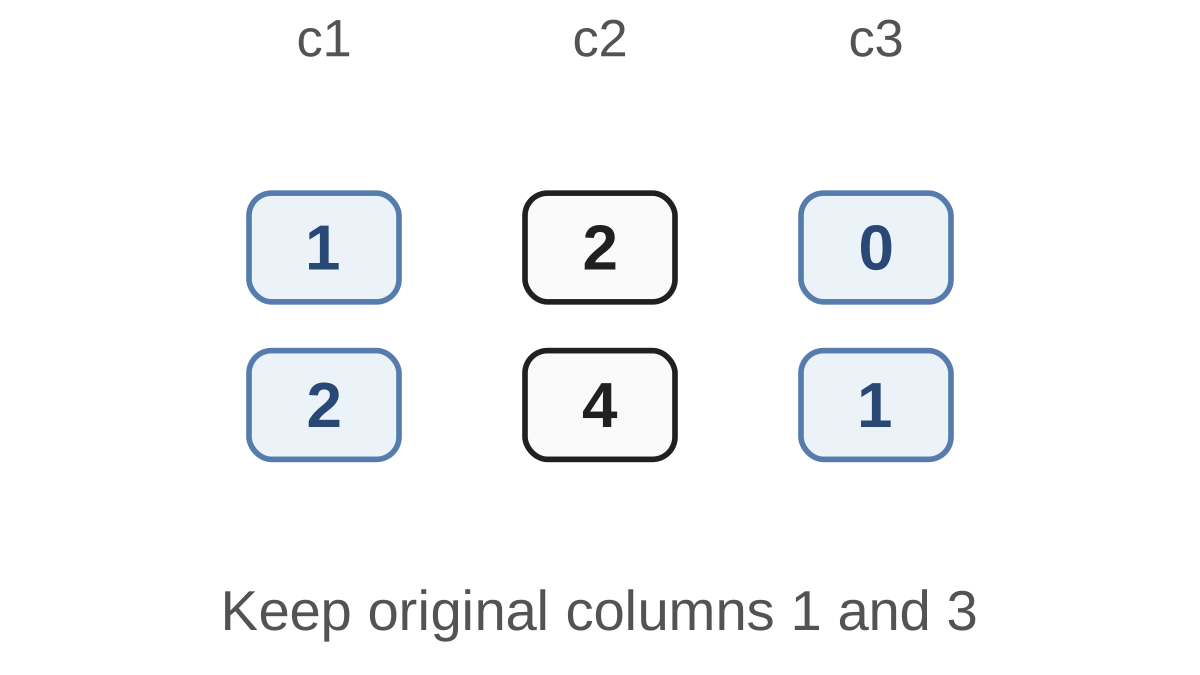
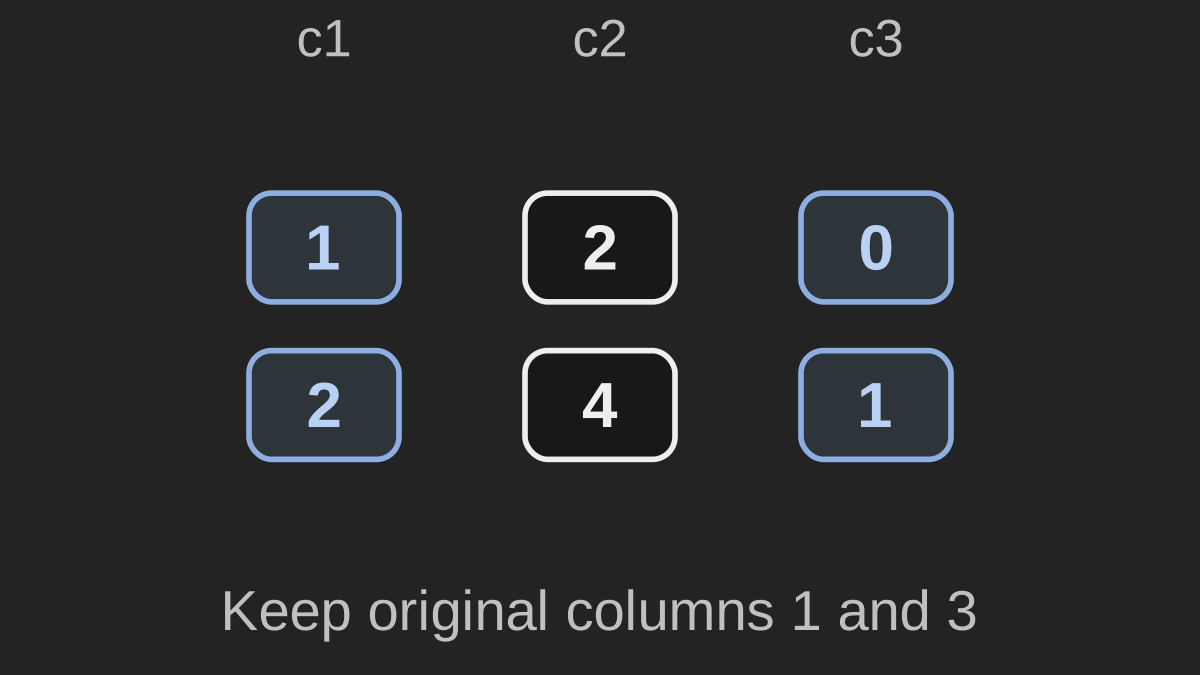
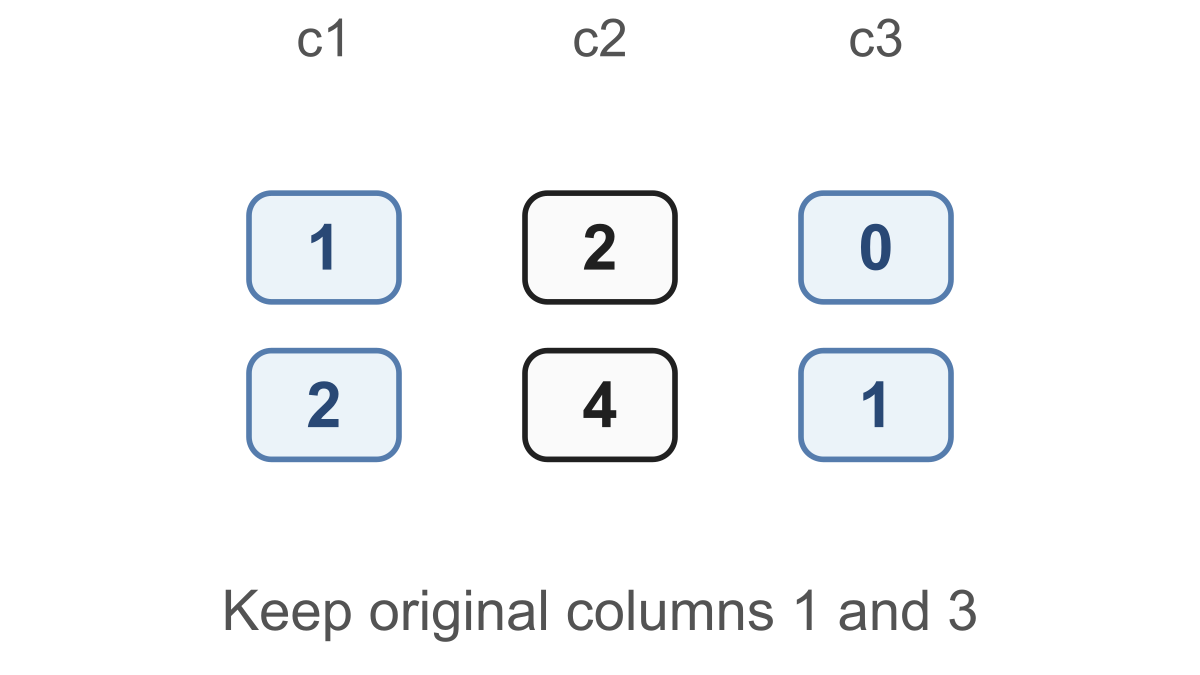
Select original columns 1 and 2.
Show answer and explanation
Use columns 1 and 2 from A.
02A closer look#
Row reduction preserves column-dependence relations, so pivot positions identify which columns to keep. It can change the column vectors themselves. Use the positions from reduction and the values from A.
RREF column 1 was copied. Choose the original pivot vector.
Show answer and explanation
Use (1,3) from A.
03A closer look#
If columns P, Q, R are output patterns, reduction tells you which pattern indices are independent. The selected original patterns span every attainable output; the reduced vectors need not be the same patterns.
P, Q, R reduce to E. Original basis columns?
Show answer and explanation
Pivots: 1 and 3.
Find pivot positions by row reduction, then take those columns from the original matrix. Reduced columns can span a different space.
- Find a basis for the column space of a matrix.
Sources & further reading
- [1]Interactive Linear Algebra, section 2.7: Basis and Dimension ↗Georgia Tech · Article