Bases
A basis of a subspace is a linearly independent list of vectors that spans that subspace.
On this page 7 sections
01A basis spans a specified subspace and is linearly independent#
A basis spans a specified subspace and is linearly independent. Every vector in that space can be built from it, with no redundant direction.
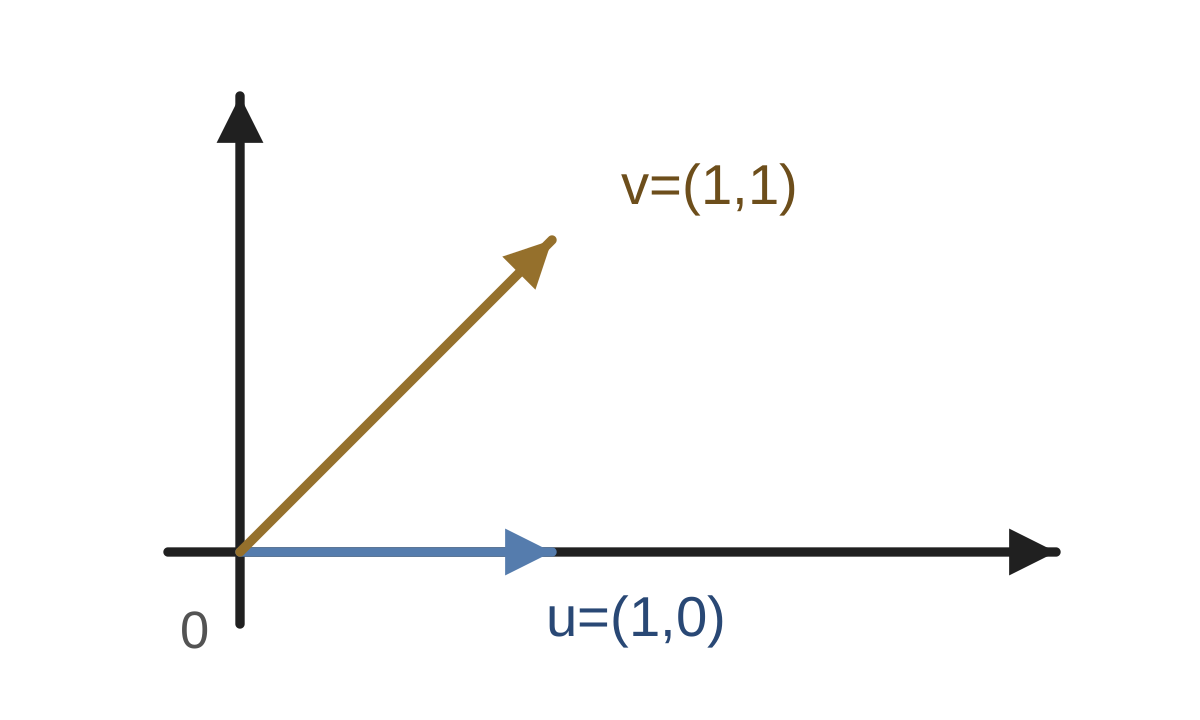
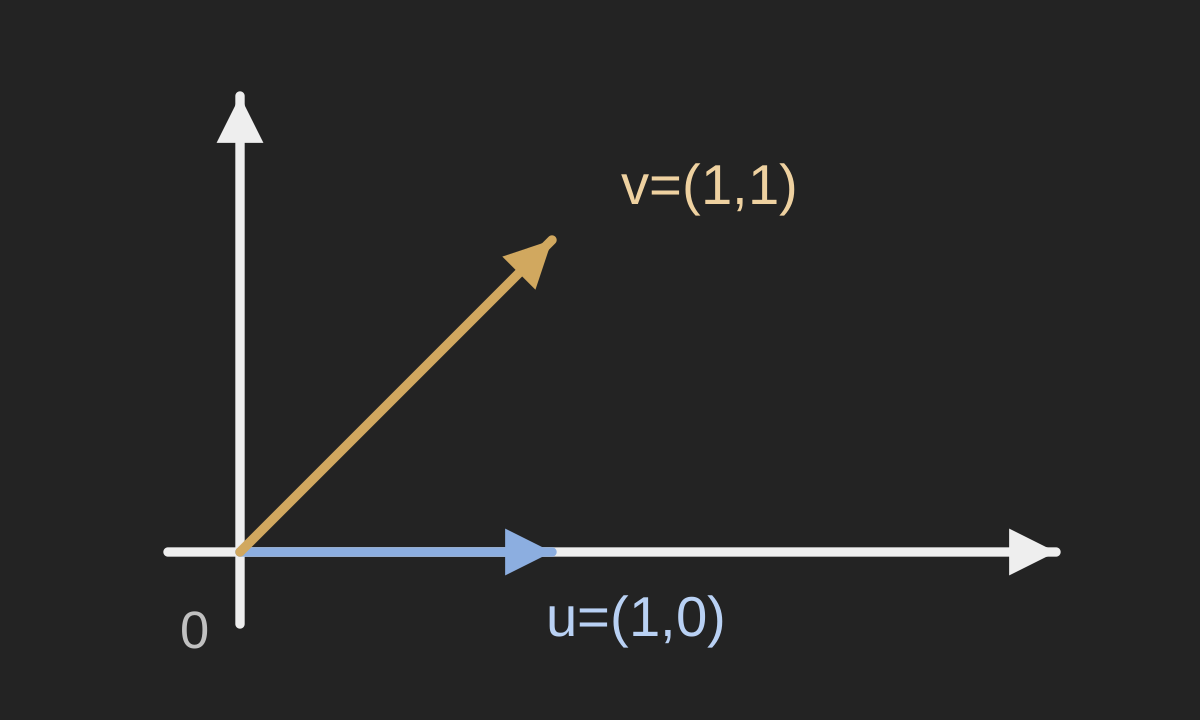
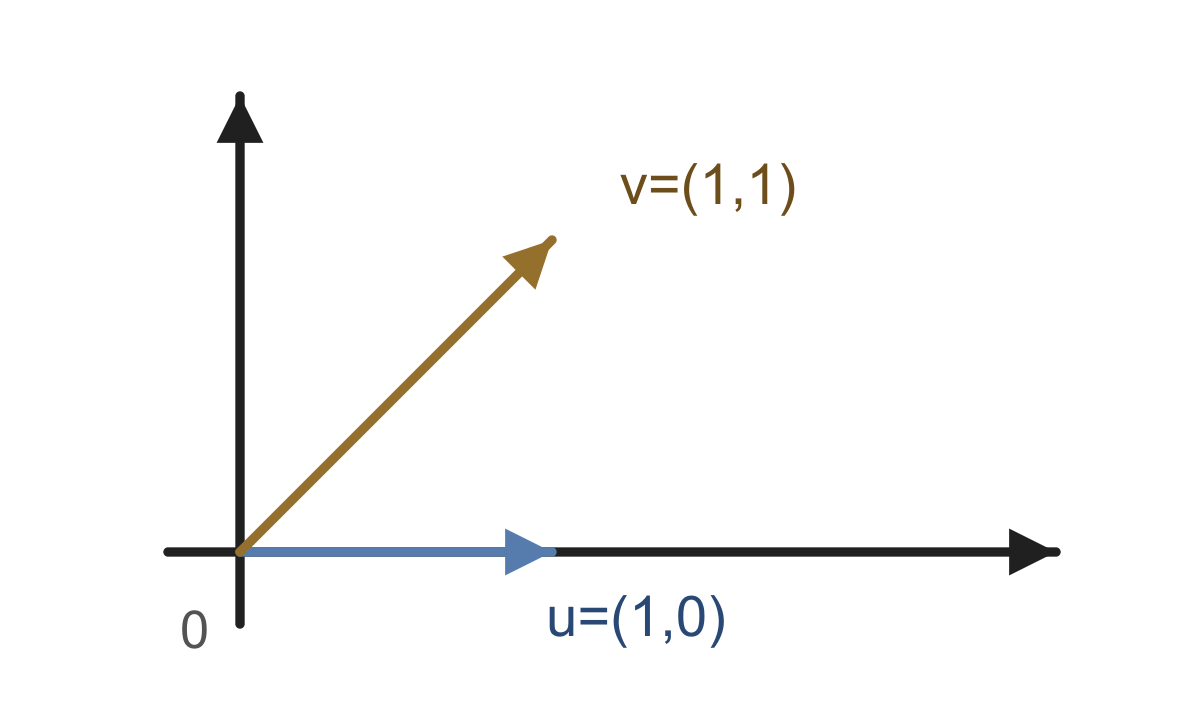
For u=(1,0) and v=(1,1), any (s,t) can be built with these weights:
If au+bv=(0,0), the second coordinate forces b=0; then a=0. These vectors span the plane and are independent.
For , is a basis?
Show answer and explanation
The two independent axes span the plane.
02The list (1,0), (0,1), (1,1) spans the plane#
The list (1,0), (0,1), (1,1) spans the plane. Its third vector is the sum of the first two, so the list is dependent. It fails the basis test.
Repair this basis claim for : .
Show answer and explanation
Remove (4,0), twice (2,0).
03An output subspace is spanned by p=(1,0,1) and q=(0,1,1)#
An output subspace is spanned by p=(1,0,1) and q=(0,1,1). Replacing p by p+q keeps a basis: recover p by subtracting q. No direction is lost or added.
is a basis for an output space. Is also a basis?
Show answer and explanation
The second vector is twice the first.
A basis must span the specified space and contain no redundant vector. Spanning alone is not enough.
- Verify a basis for a specified finite-dimensional subspace.
Sources & further reading
- [1]Interactive Linear Algebra, section 2.7: Basis and Dimension ↗Georgia Tech · Article