Linear algebraConcept reference
Vector differences
The displacement from an initial coordinate vector to a final coordinate vector is final minus initial.
On this page 8 sections
01Displacement is the coordinate change from a stated start to a stated end#
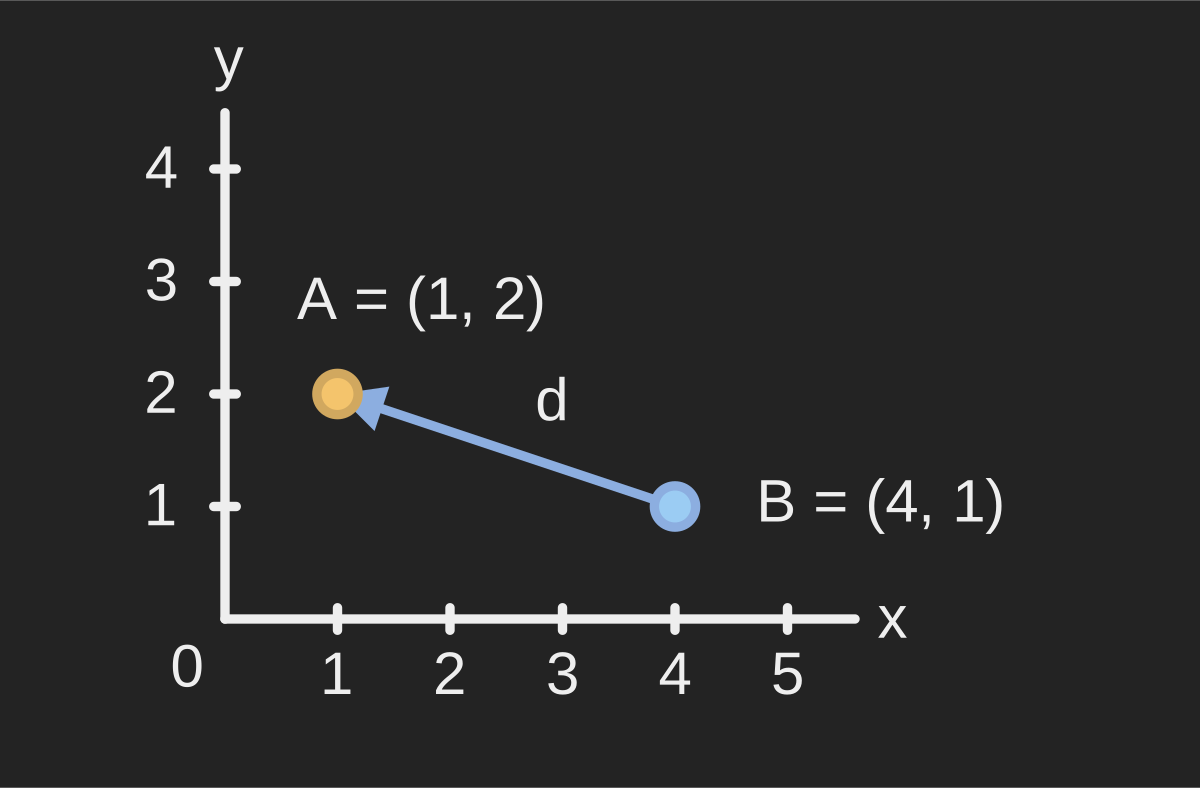
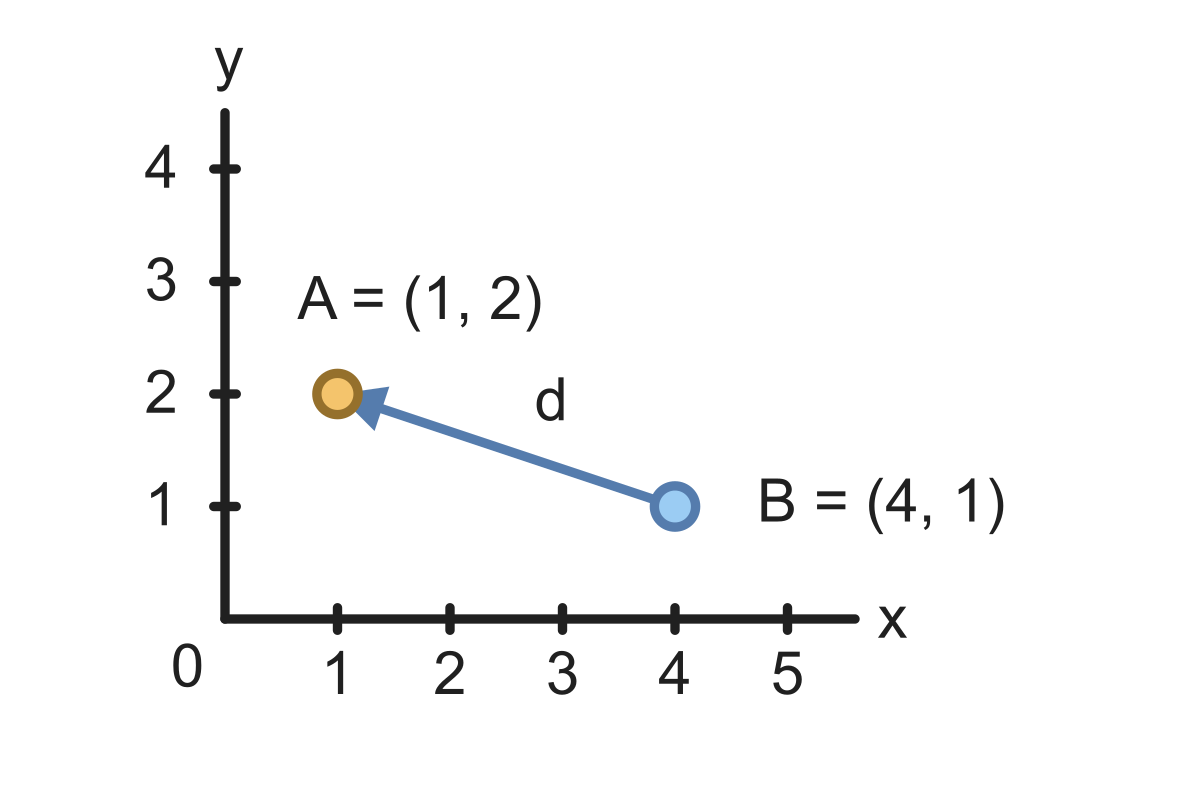
Displacement is the coordinate change from a stated start to a stated end. From to , the arrow points three units right and one down.
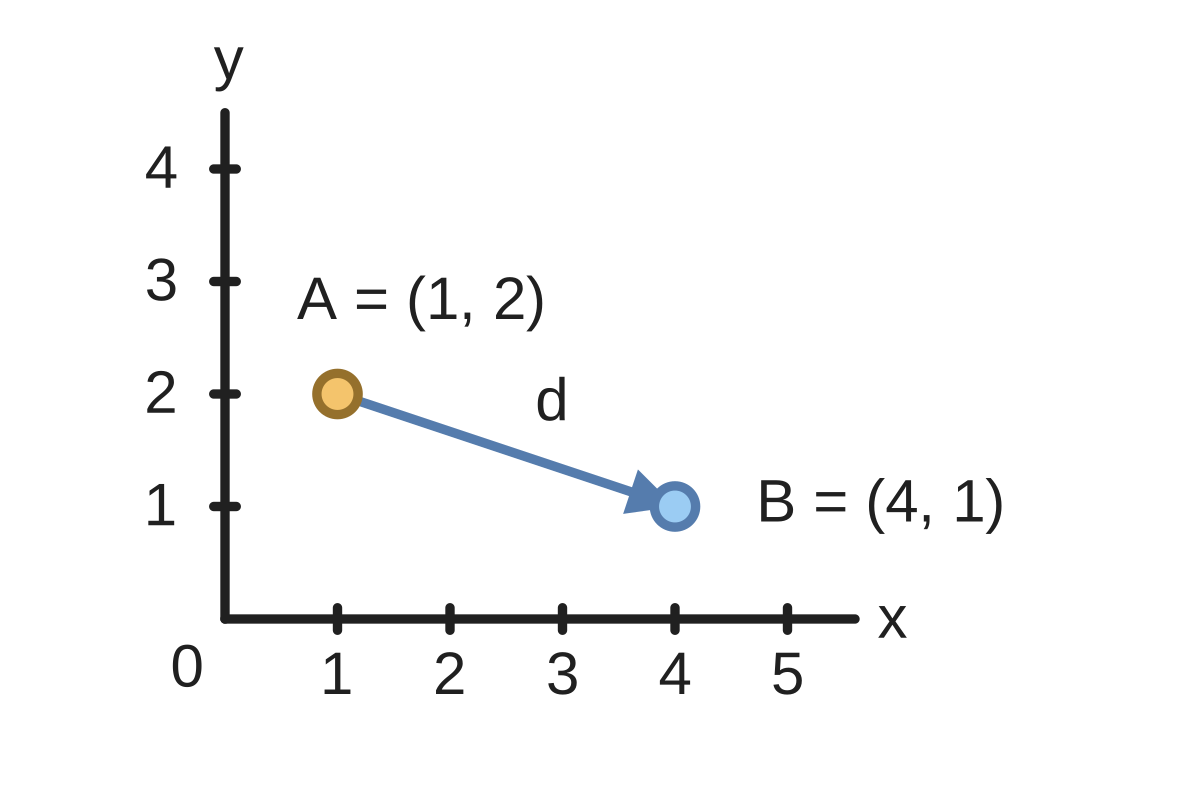
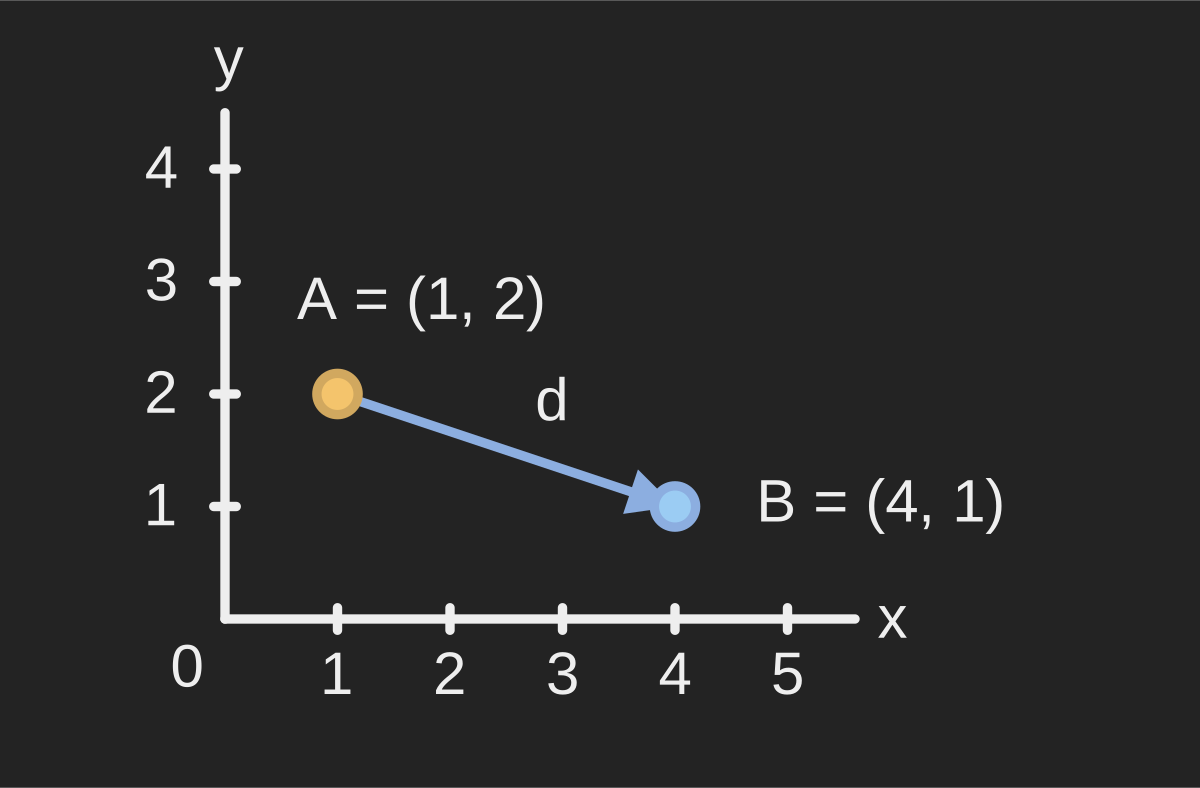
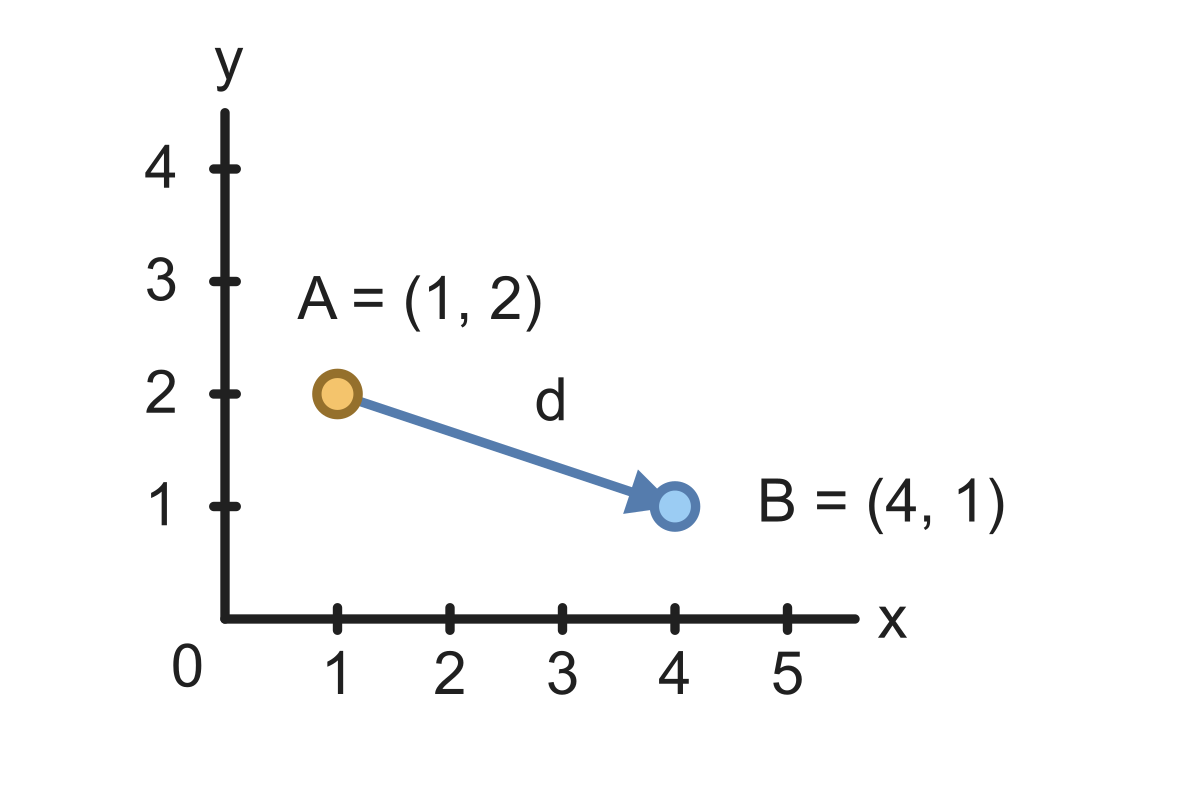
For start and end , compute . The opposite of A is . Add it to B to get . This is written , or end minus start.
Check your reasoning
From to . Find displacement.
Show answer and explanation
End minus start gives .
02From to , displacement is #
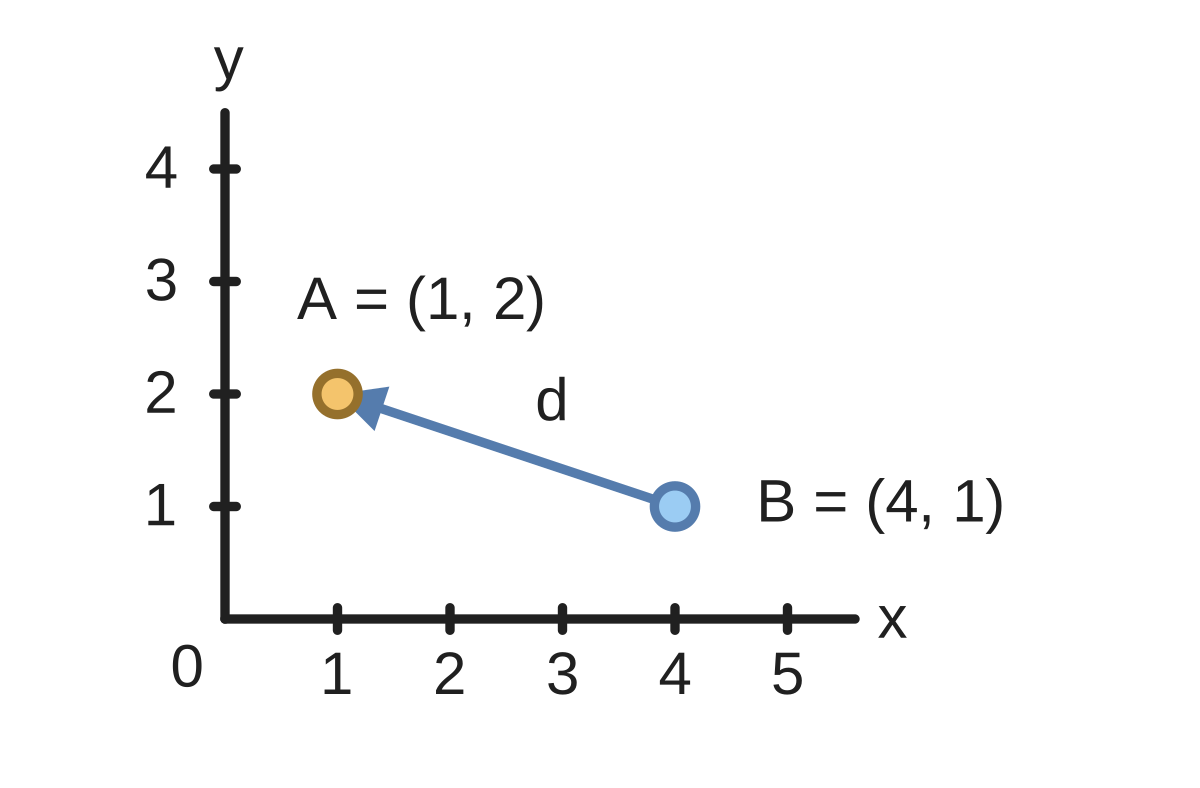
From to , displacement is . Reversing endpoints reverses every sign. Matching endpoints give zero change.
Check your reasoning
From to . Fill displacement .
Show answer and explanation
6
The vertical change is .
03Check your understanding#
Check your reasoning
Counts (red, green, blue). Before: . After: . Change vector?
Show answer and explanation
After minus before gives .
Key takeaway
Compute end minus start; reversing the trip reverses every sign.
- Compute an ordered displacement between two vectors
Further questions
Is displacement the length of the journey?
Displacement records signed coordinate change from start to end. It does not record the route taken. Its length is a separate quantity.
Sources & further reading
- [1]Boyd and Vandenberghe: Introduction to Applied Linear Algebra, Chapter 1 ↗vmls-book.stanford.edu · Article
- [2]OpenStax Calculus Volume 3: Vectors in the Plane ↗openstax.org · Article