Euclidean distance
Euclidean distance between two vectors is the Euclidean length of their difference.
On this page 7 sections
01Euclidean distance measures straight-line separation#
Euclidean distance measures straight-line separation. View the vectors as points, and connect the first point to the second.
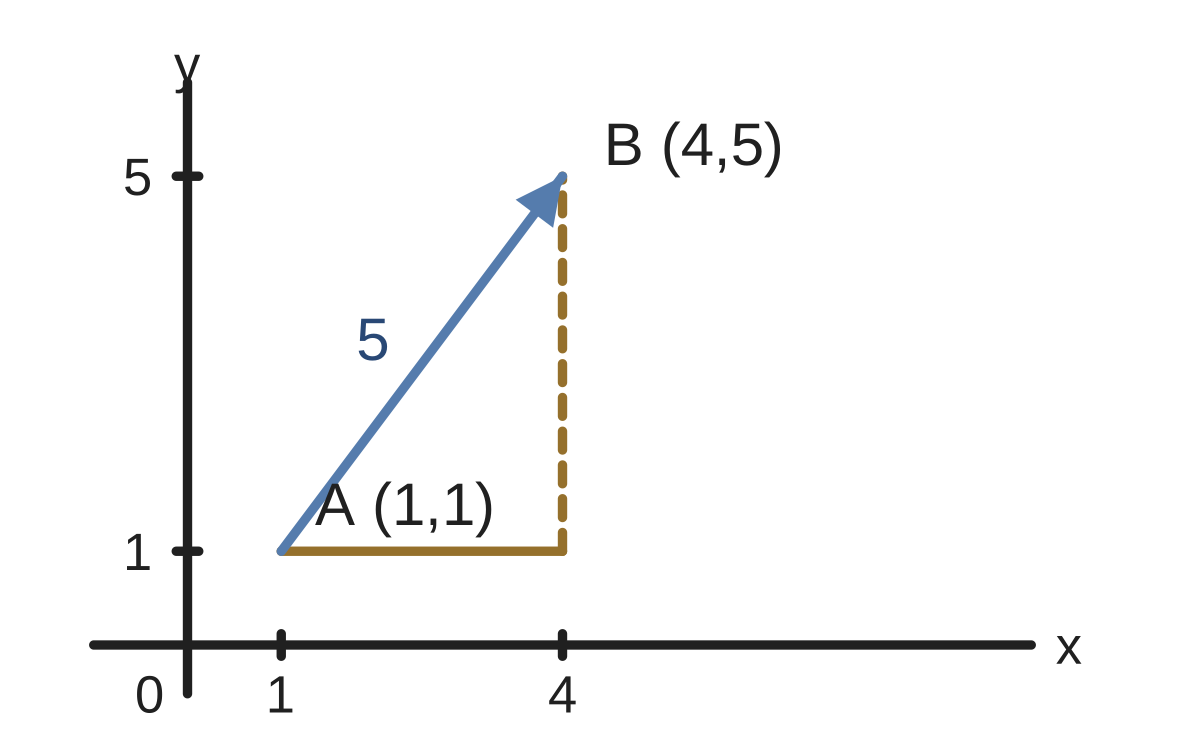
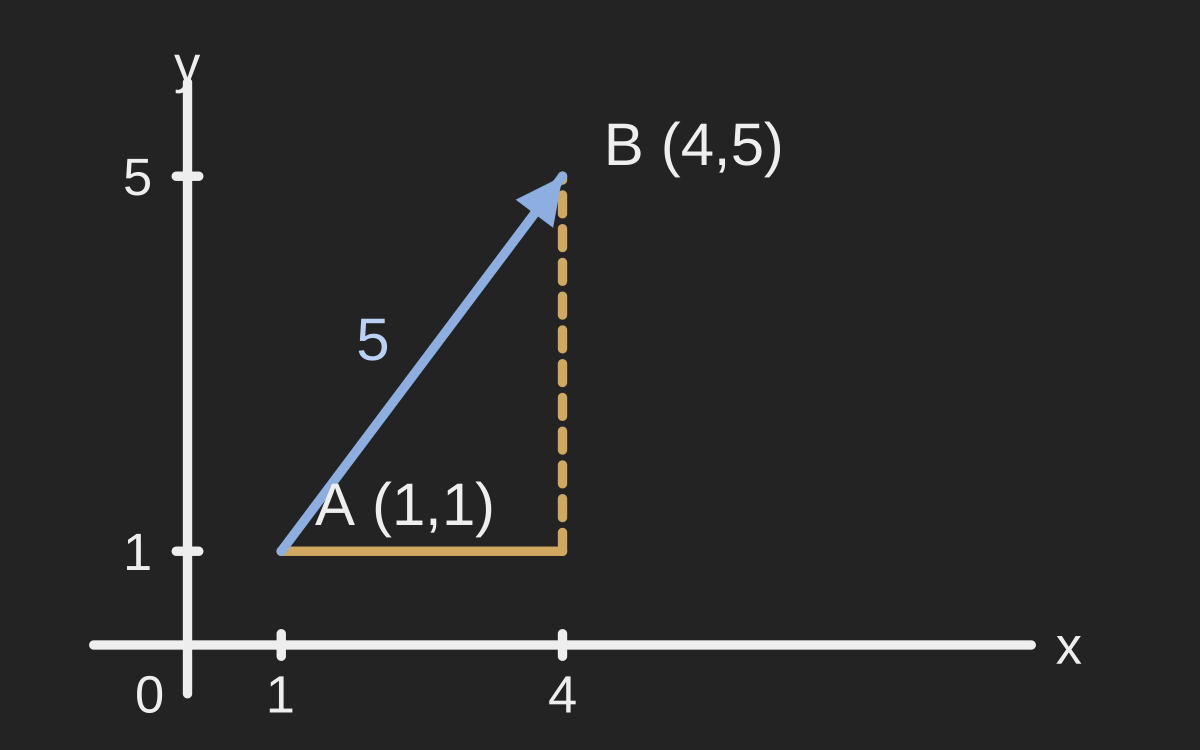
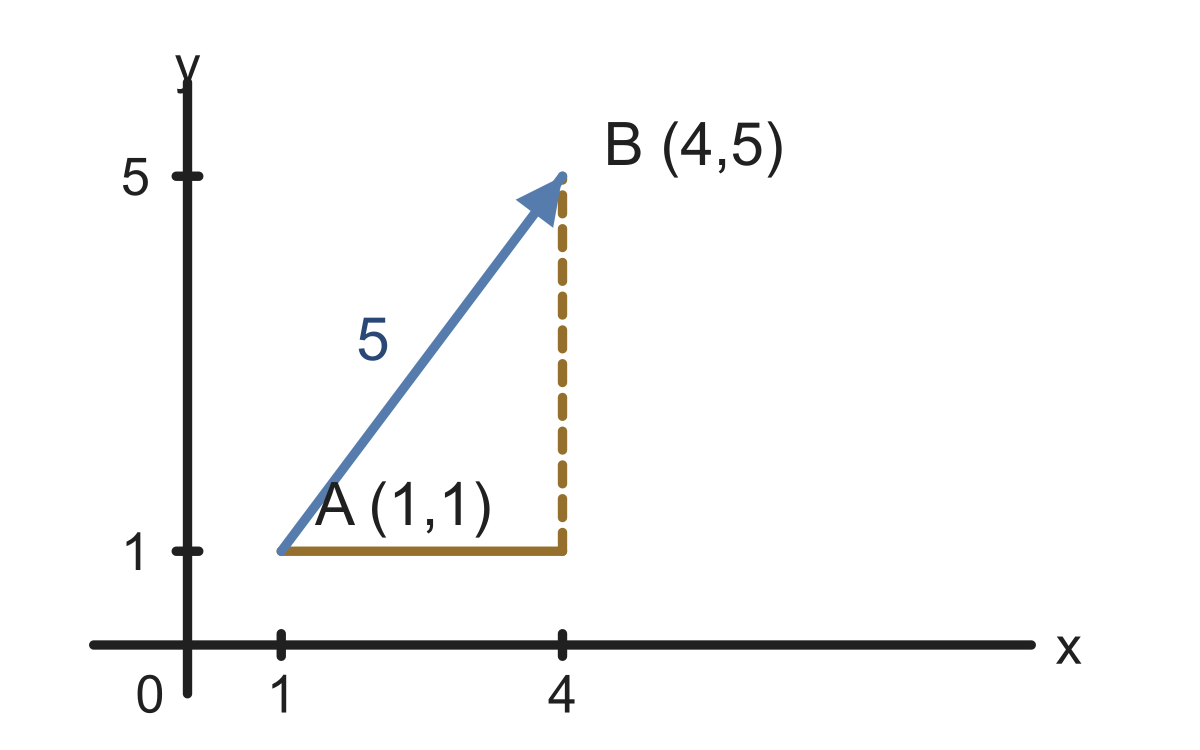
For and , subtract the start from the end in each coordinate. The connecting displacement is .
The displacement’s length is the distance.
For any same-dimension vectors, subtract corresponding coordinates first. Then compute the Euclidean length of the difference.
Distance is the length of the connecting displacement.
Find the Euclidean distance from to .
Show answer and explanation
The difference is . Its length is .
02Reversing the endpoints negates every difference, but squaring removes those signs#
Reversing the endpoints negates every difference, but squaring removes those signs. Distance is therefore the same in both directions. Identical endpoints have distance zero.
From (4,5) back to (1,1).
A map places P at (2,3) and Q at (8,11). What is their straight-line separation?
Show answer and explanation
The displacement is , whose length is .
03Check your understanding#
For and , a learner reports distance . What fixes it?
Show answer and explanation
The difference is ; the distance is .
Subtract the coordinates, then measure the difference. Reversing the endpoints preserves distance.
- Compute the Euclidean distance between two vectors
Sources & further reading
- [1]
- [2]OpenStax Calculus Volume 3, 2.1 Vectors in the Plane ↗OpenStax · Book