Skip to content
Glacius
Linear algebraConcept reference

Scalar multiplication

Scalar multiplication forms a vector by multiplying every coordinate by one common number.

On this page 8 sections
  1. Overview
  2. A scalar is one number
  3. Scaling preserves the number of entries
  4. Check your understanding
  5. Key takeaway
  6. Further questions
  7. Sources & further reading
  8. Concept connections

01A scalar is one number#

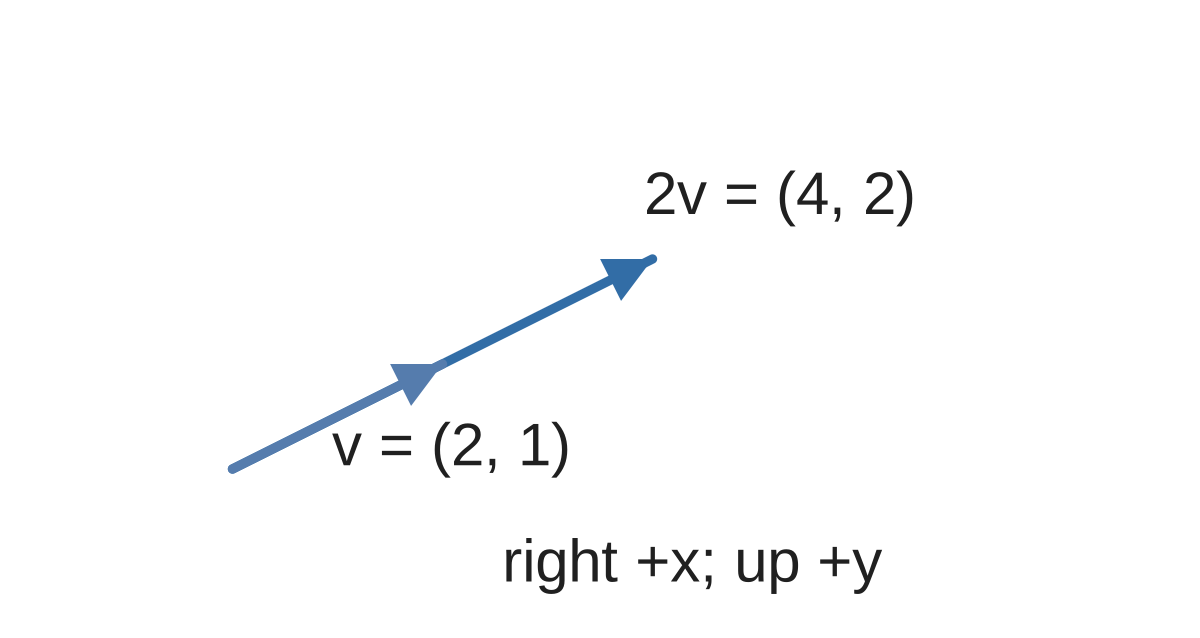
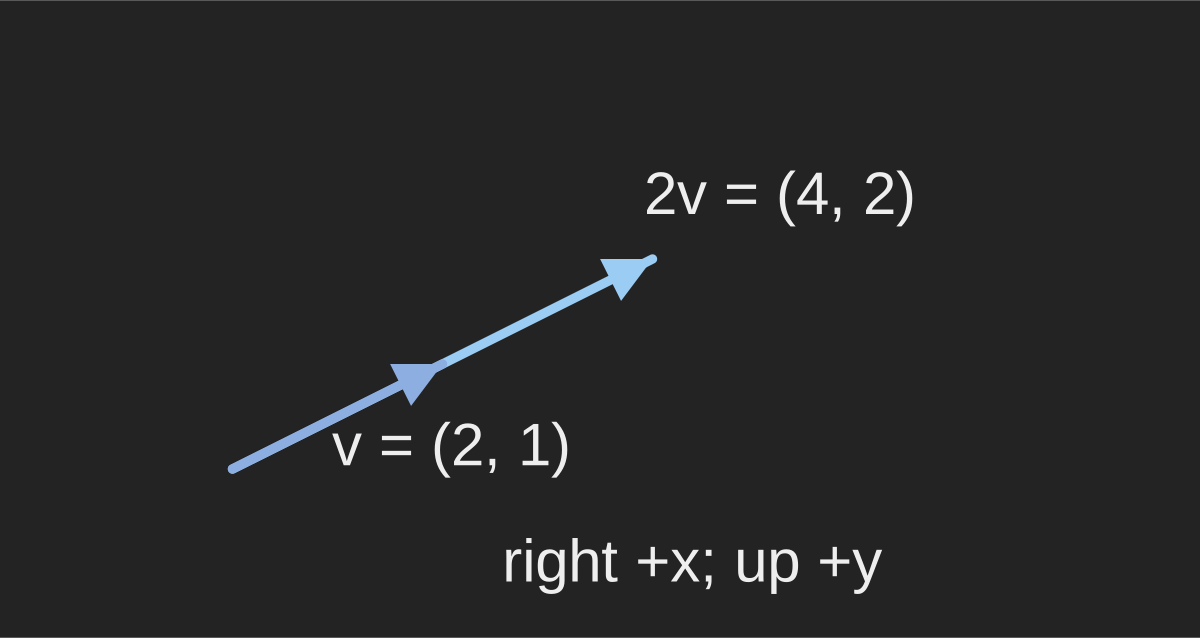
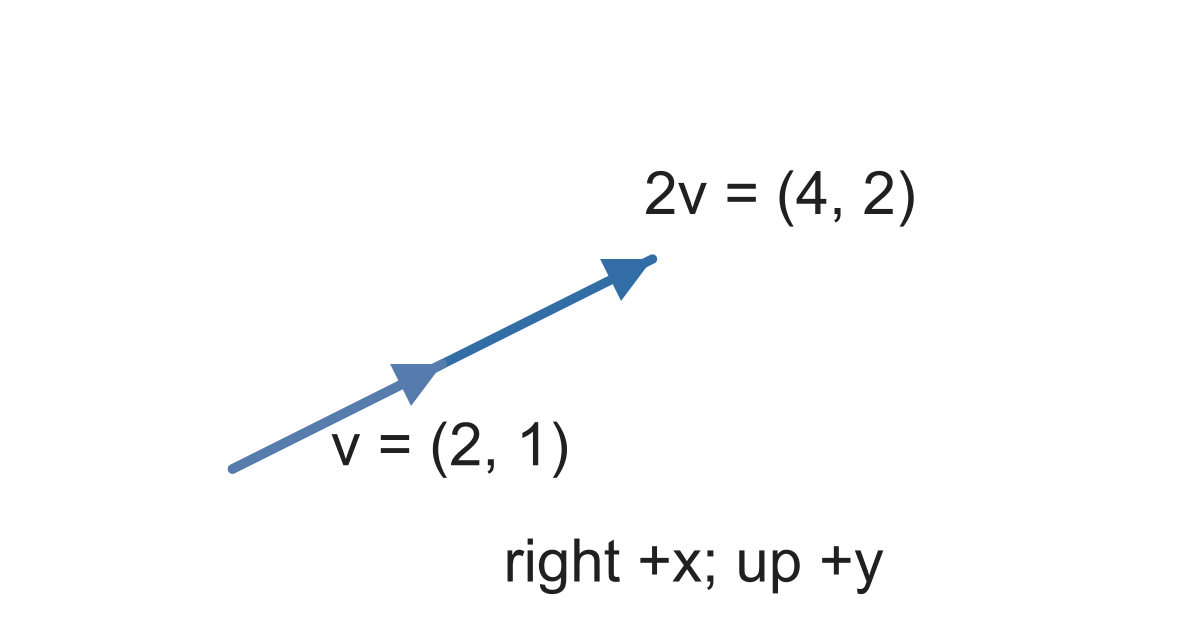
A scalar is one number. Multiplying a vector by a scalar applies that number to every entry. For 2(2,1)2(2,1), the entries become 2×2=42\times2=4 and 2×1=22\times1=2.

From a shared origin, v=(2,1) ends two units right and one up. The vector 2v=(4,2) doubles both coordinate changes and has twice the length. Units use 28 SVG pixels in both directions.From a shared origin, v=(2,1) ends two units right and one up. The vector 2v=(4,2) doubles both coordinate changes and has twice the length. Units use 28 SVG pixels in both directions.
Figure 1From a shared origin, v=(2,1) ends two units right and one up. The vector 2v=(4,2) doubles both coordinate changes and has twice the length. Units use 28 SVG pixels in both directions.
Link to this figure ↗Download SVGDownload PNG

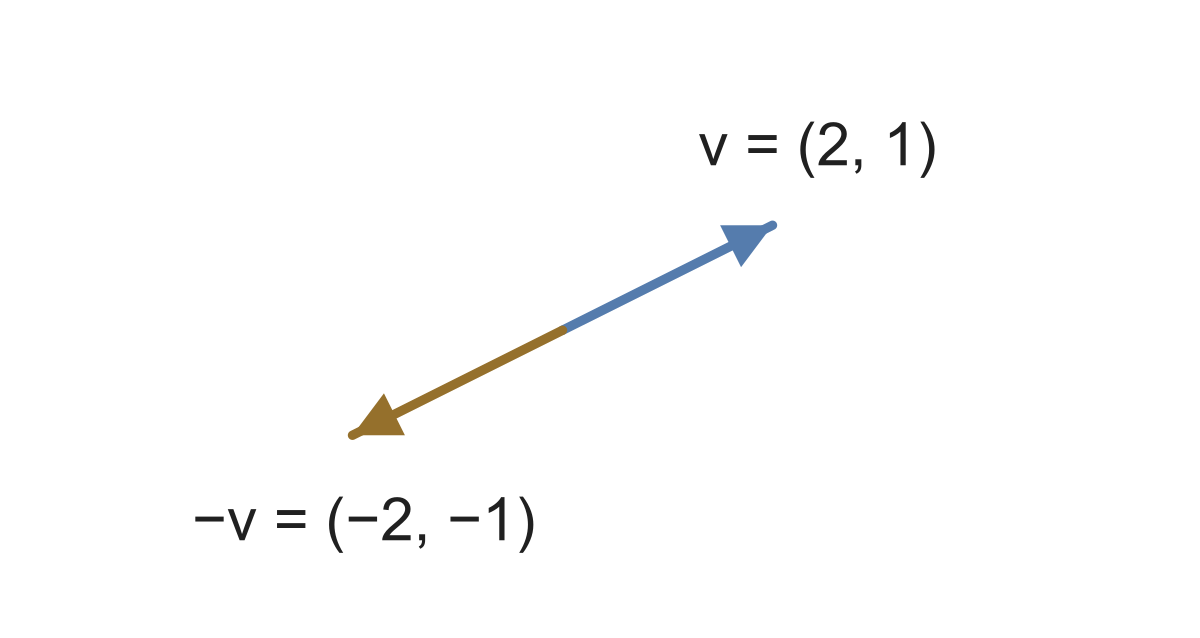
For v=(2,1)v=(2,1), multiplying by 1-1 gives (2,1)(-2,-1). Both coordinate changes reverse, so the arrow reverses direction. Every entry receives the minus sign.
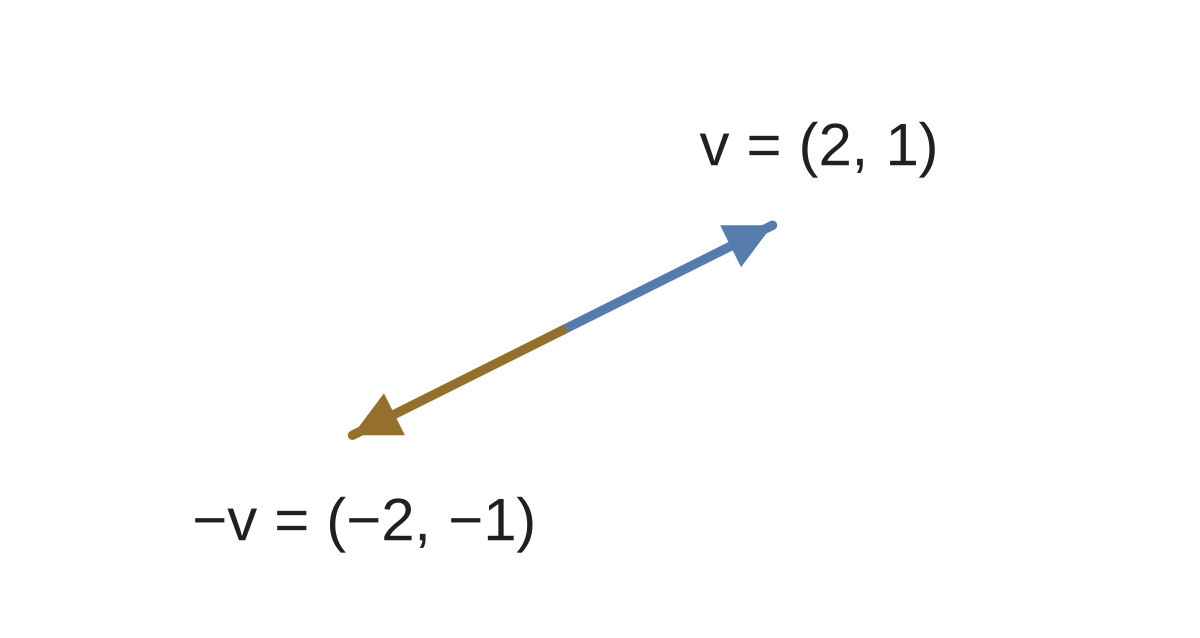
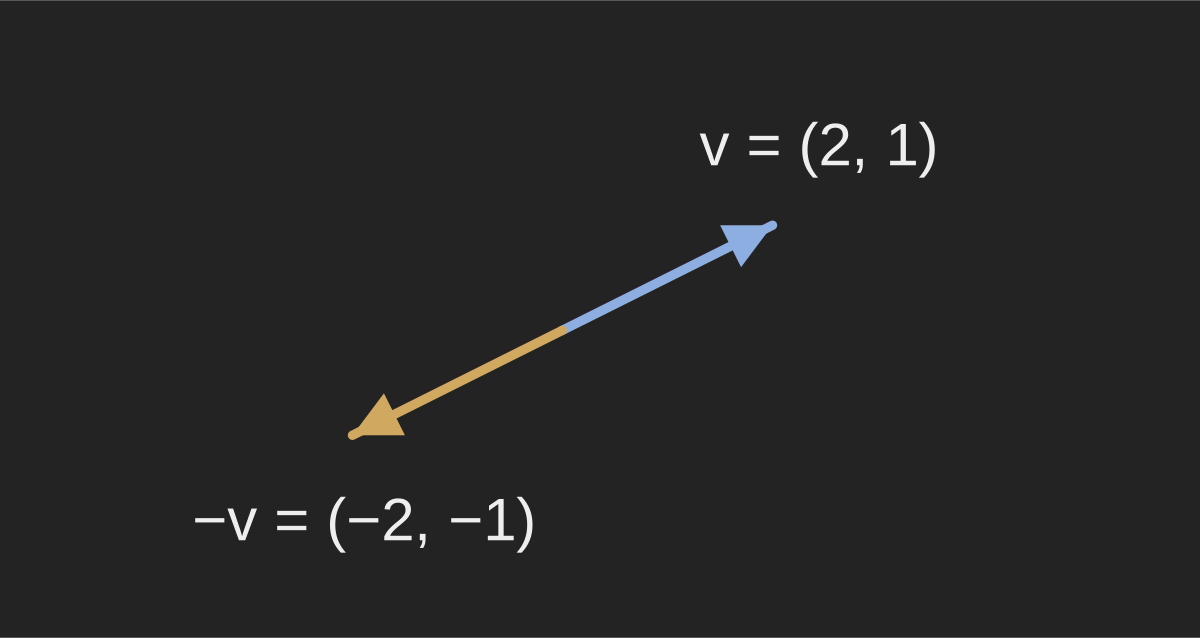
At equal scale from a shared origin, v=(2,1) points right/up, while -v=(-2,-1) points left/down with equal length.At equal scale from a shared origin, v=(2,1) points right/up, while -v=(-2,-1) points left/down with equal length.
Figure 2At equal scale from a shared origin, v=(2,1) points right/up, while -v=(-2,-1) points left/down with equal length.
Link to this figure ↗Download SVGDownload PNG
Check your reasoning

Compute 2(1,4)-2(1,-4).

  1. A(2,8)(-2,-8)
  2. B(2,4)(-2,-4)
  3. C(2,8)(-2,8)
Show answer and explanation
(2,8)(-2,8)

Both entries multiply by 2-2, giving (2,8)(-2,8).

02Scaling preserves the number of entries#

Scaling preserves the number of entries. Multiplication by zero makes every entry zero: 0(3,2,5)=(0,0,0)0(3,-2,5)=(0,0,0). Multiplication by one leaves every entry unchanged.

Check your reasoning

Compute 3(1,2,4)3(-1,2,4). Fill (3,6,)(-3,6,\square).

Show answer and explanation
12

The third entry is 3×4=123\times4=12.

03Check your understanding#

Check your reasoning

Each kit has counts (pens, pads): (2,1)(2,1). Make 55 copies. Totals?

  1. A(10,1)(10,1)
  2. B(10,5)(10,5)
  3. C(7,6)(7,6)
Show answer and explanation
(10,5)(10,5)

Multiply both per-kit counts by 55: (10,5)(10,5).

Key takeaway

Apply the scalar to every entry, keeping the coordinate order.

  • Scale every coordinate, including zero and negative entries

Further questions

Does zero have a direction?
The zero vector represents no directed change. Scaling any vector by zero makes every coordinate zero.

Sources & further reading

  1. [1]
  2. [2]

Reference this concept

Link to this page, a section, or an individual figure.

Glacius. “Scalar multiplication.” Math behind ML. /learn/la-scale