Systems as matrices
A linear system is encoded by a coefficient matrix, an ordered unknown vector and a vector of right-hand constants.
On this page 7 sections
01A linear system asks the same unknowns to satisfy several linear equations#
A linear system asks the same unknowns to satisfy several linear equations. In , A holds coefficients, holds the unknowns, and b holds constants.
For and , use unknown order . Row 1 of A is ; row 2 is . The constants stay in .
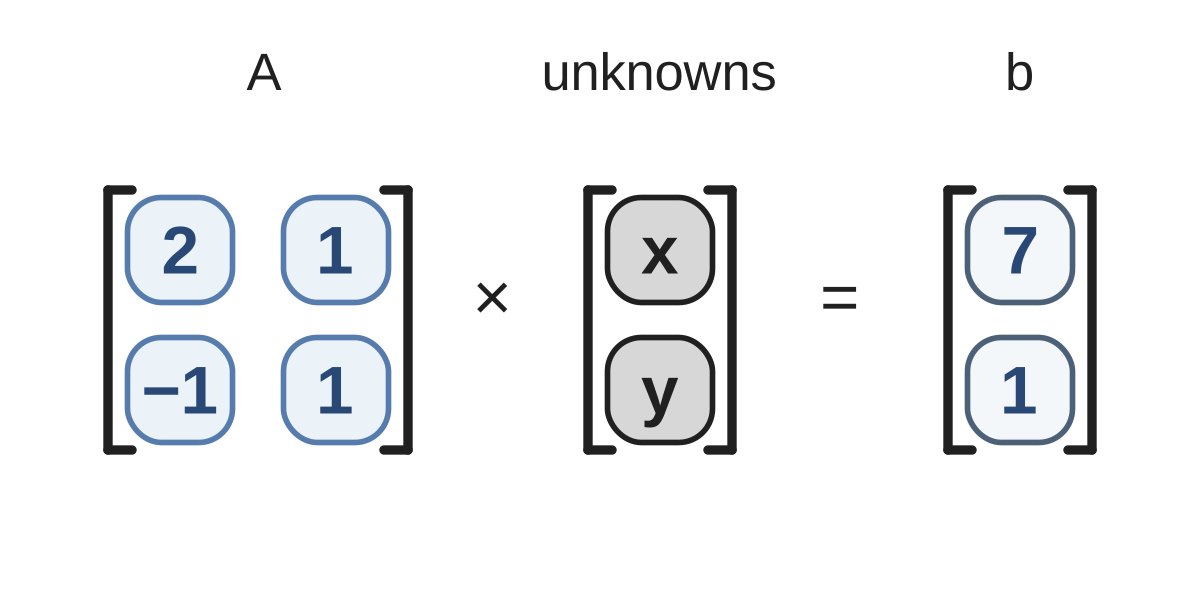
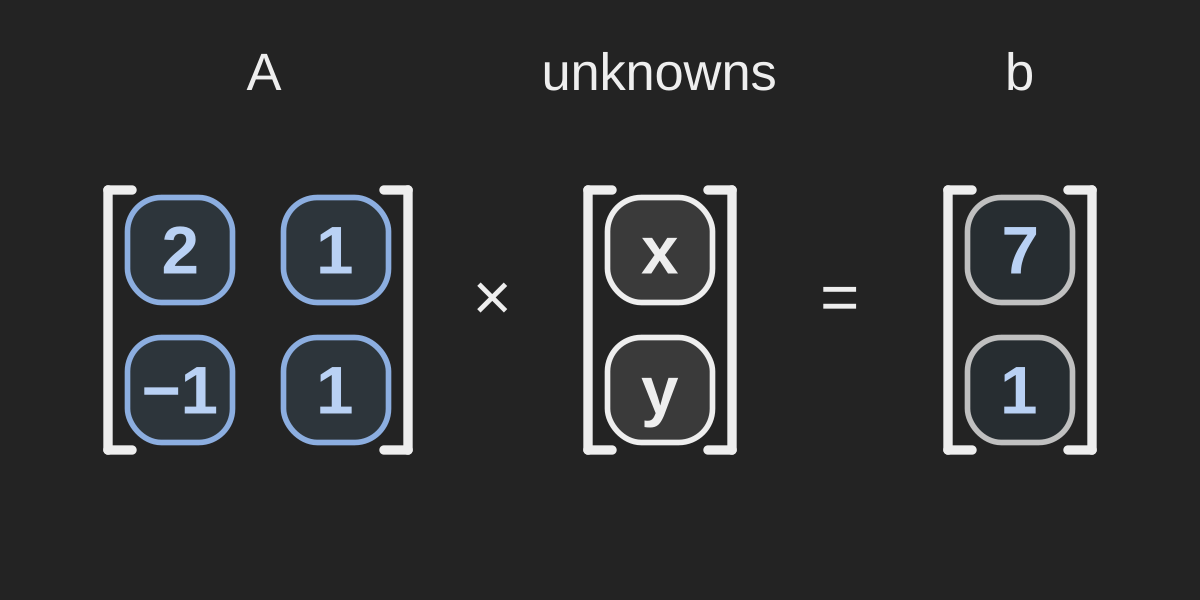
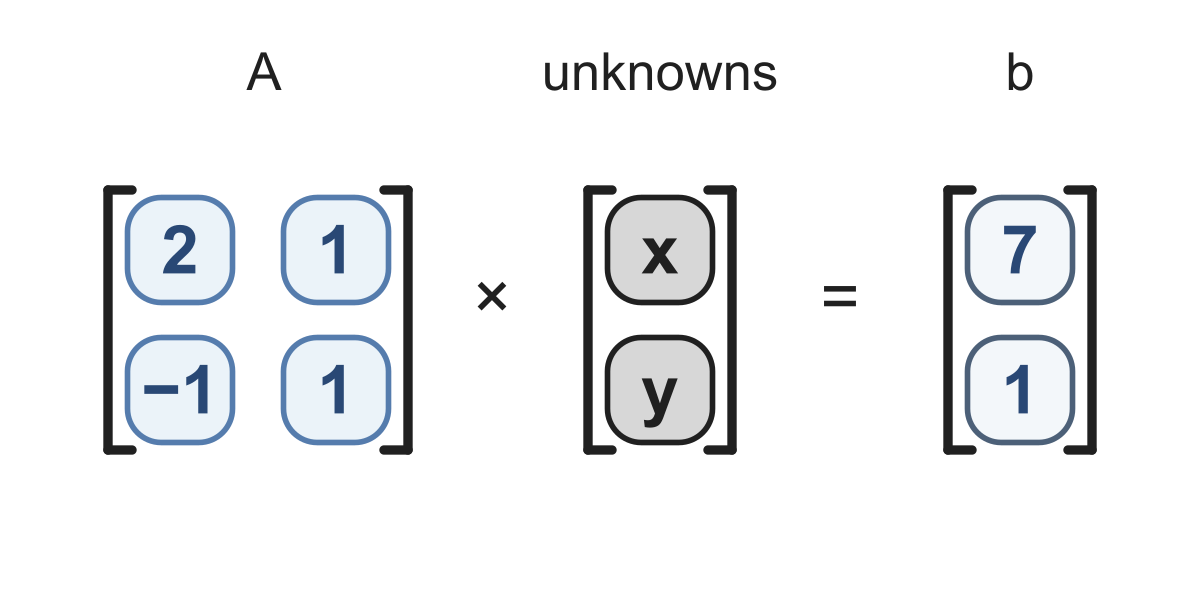
Order . Encode:
Show answer and explanation
Coefficients go in A; constants go in b.
02Keep one column per unknown, even when a term is missing#
Keep one column per unknown, even when a term is missing. With order , contributes coefficient row and constant 8.
Order . Encode . What is the y coefficient in A?
Show answer and explanation
A missing y term has coefficient 0.
03Each row dot product recreates its original left side#
Each row dot product recreates its original left side. Keep equation order fixed in both A and b. The constants are separate from A; a system can have different numbers of equations and unknowns.
Order for prices. Orders: (2,3) costs 11. Pair = quantities. Encode A and b.
Show answer and explanation
A uses .
One row per equation; one column per unknown. Keep constants in b.
- Encode a finite linear system as Ax=b.
Sources & further reading
- [1]Margalit and Rabinoff: Interactive Linear Algebra, 2.3 Matrix Equations ↗Margalit and Rabinoff · Book
- [2]OpenStax Algebra and Trigonometry 2e: 11.6 Solving Systems with Gaussian Elimination ↗OpenStax Algebra and Trigonometry 2e · Book