Sample spaces
A sample space is the set of possible outcomes for a specified experiment.
On this page 7 sections
01A sample space lists the possible records of one experiment#
A sample space lists the possible records of one experiment. Decide what each record must preserve before listing it.
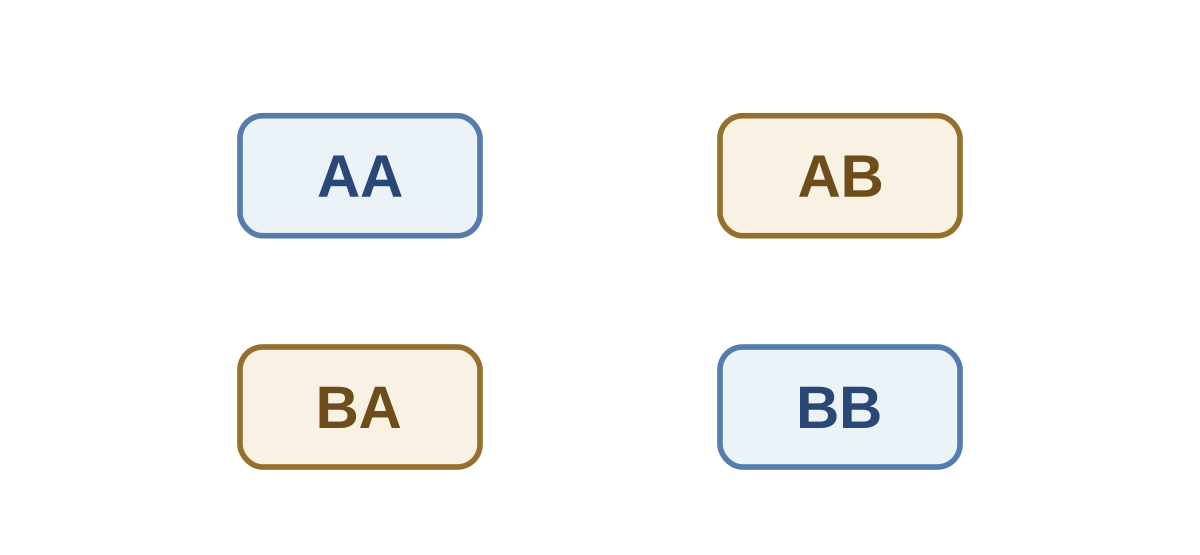
Record two A/B positions in order. Starting with A gives AA or AB; starting with B gives BA or BB.
First: A, B. Second: 0, 1. Repeats allowed. Choose the full ordered sample space.
Show answer and explanation
Keep {A0, A1, B0, B1}.
02A count is a different record#
A count is a different record. For two A/B positions, the number of A symbols can be 0, 1 or 2. The count 1 merges AB with BA, so it cannot tell you the first symbol.
Two positions, each S or F; store the count of S. Which pair hides the first symbol?
Show answer and explanation
Same count; first differs.
03Two ordered choices can forbid repeats#
Two ordered choices can forbid repeats. With L and R, only LR and RL then remain. Naming outcomes does not make them equally likely; their chances require a separate assignment.
First: U, D. Second: U, D. Repeats forbidden. Missing DU: repair the space.
Show answer and explanation
Keep UD, DU; no repeats.
Define what one outcome records, then include every permitted result. Preserve any distinction the question needs.
Sources & further reading
- [1]Pishro-Nik, Introduction to Probability, 1.3.1 Random Experiments ↗Pishro-Nik, Introduction to Probability · Book