Standard deviation
Standard deviation is the nonnegative square root of variance.
On this page 7 sections
01Variance has squared measurement units#
Variance has squared measurement units. Standard deviation takes its nonnegative square root, putting spread back in the units of the original variable.
If variance is seconds squared, standard deviation is seconds. The square root changes both the numerical scale and the units.
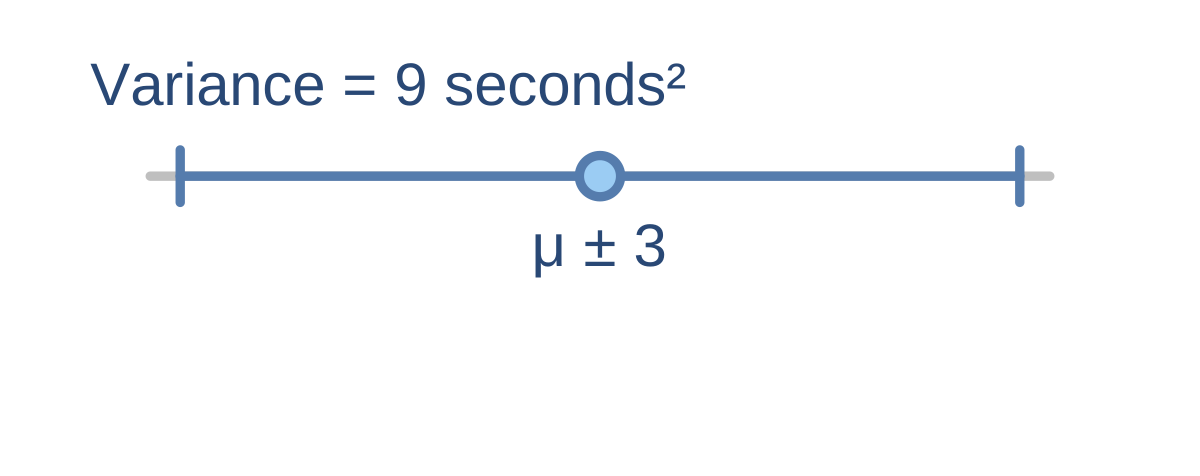
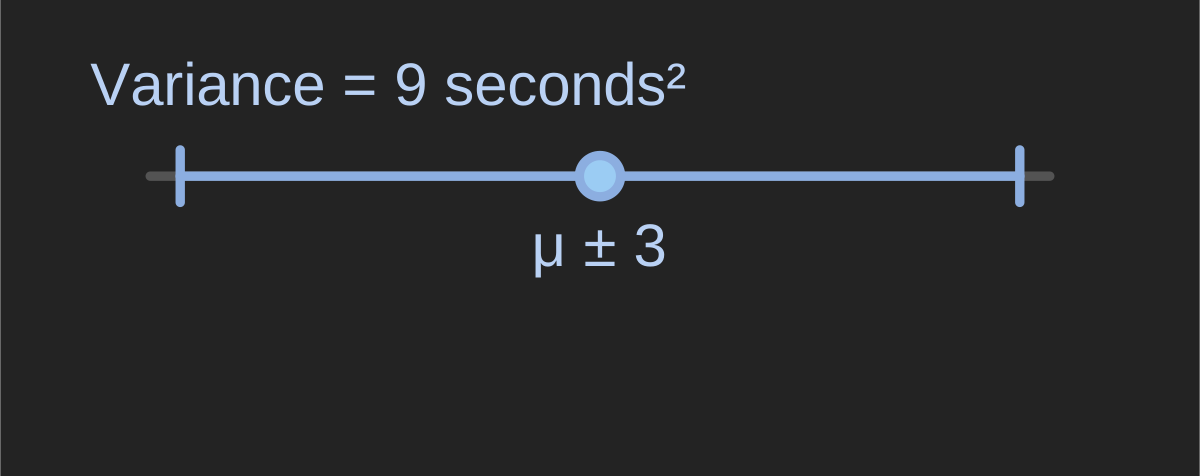
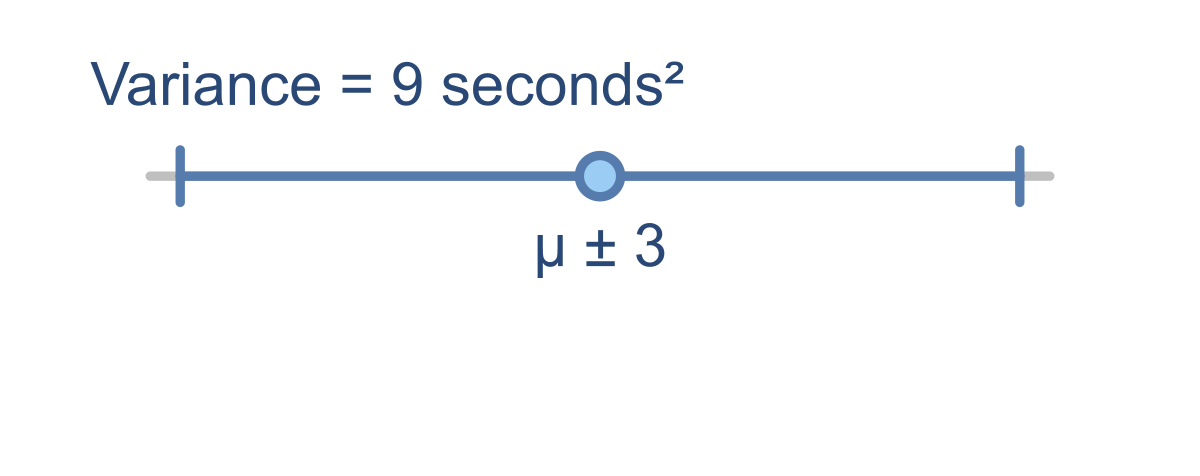
Variance is cm². Give the standard deviation with units.
Show answer and explanation
Take the nonnegative square root: cm.
02Compare quantities in the same form and units#
Compare quantities in the same form and units. A standard deviation of 4 meters is greater than the spread represented by a variance of 9 meters squared, because its standard deviation is 3 meters.
Comparing the raw numbers 4 and 9 would mix different quantities.
A has standard deviation s. B has variance s². Whose spread is greater?
Show answer and explanation
B: s. A: s.
03Use the nonnegative root#
Use the nonnegative root. Standard deviation describes a size of spread, so it cannot be negative.
It is not a guaranteed distance for each observation. A zero variance gives zero standard deviation; all probability is at the mean.
A report labels variance kg² as standard deviation. Give the corrected standard deviation.
Show answer and explanation
kg.
Take the nonnegative square root and return to the variable’s original units.
- Express spread in the original variable's units.
Sources & further reading
- [1]Pishro-Nik, Introduction to Probability: Variance ↗Pishro-Nik: Introduction to Probability · Article