Standard errors
Standard error is the standard deviation of an estimator’s sampling distribution.
On this page 8 sections
- Overview
- A standard error is the standard deviation of an estimator’s sampling distribution
- A closer look
- An estimate’s actual error compares that one value with its target
- An estimate of average model error needs uncertainty as well as a central value
- Key takeaway
- Sources & further reading
- Concept connections
01A standard error is the standard deviation of an estimator’s sampling distribution#
A standard error is the standard deviation of an estimator’s sampling distribution. It describes how much an estimate varies across repeated samples. The sample standard deviation instead describes how spread out individual observations are within the sample.
Standard error is the standard deviation of an estimator’s sampling distribution. It describes how the estimate varies across new samples taken by the same procedure. It is not the spread of individual observations.
If IID readings have standard deviation , averaging gives mean variance . Its square root is : the standard error of that mean.
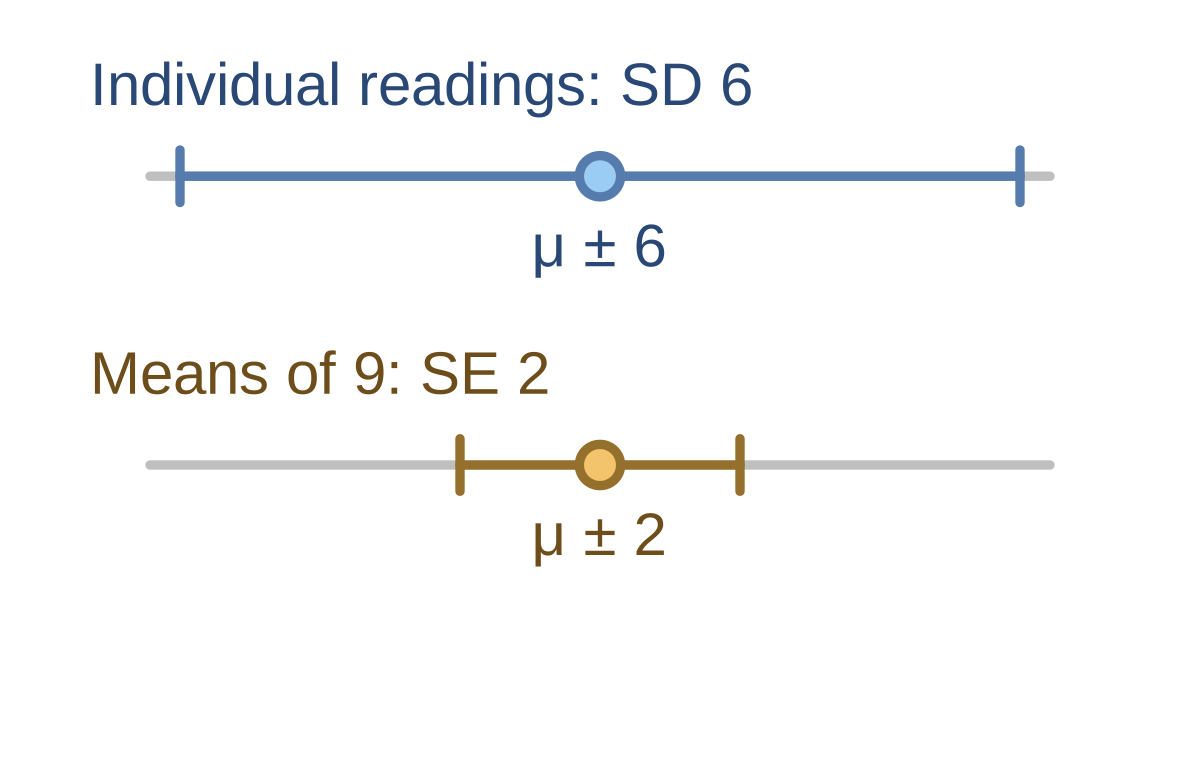
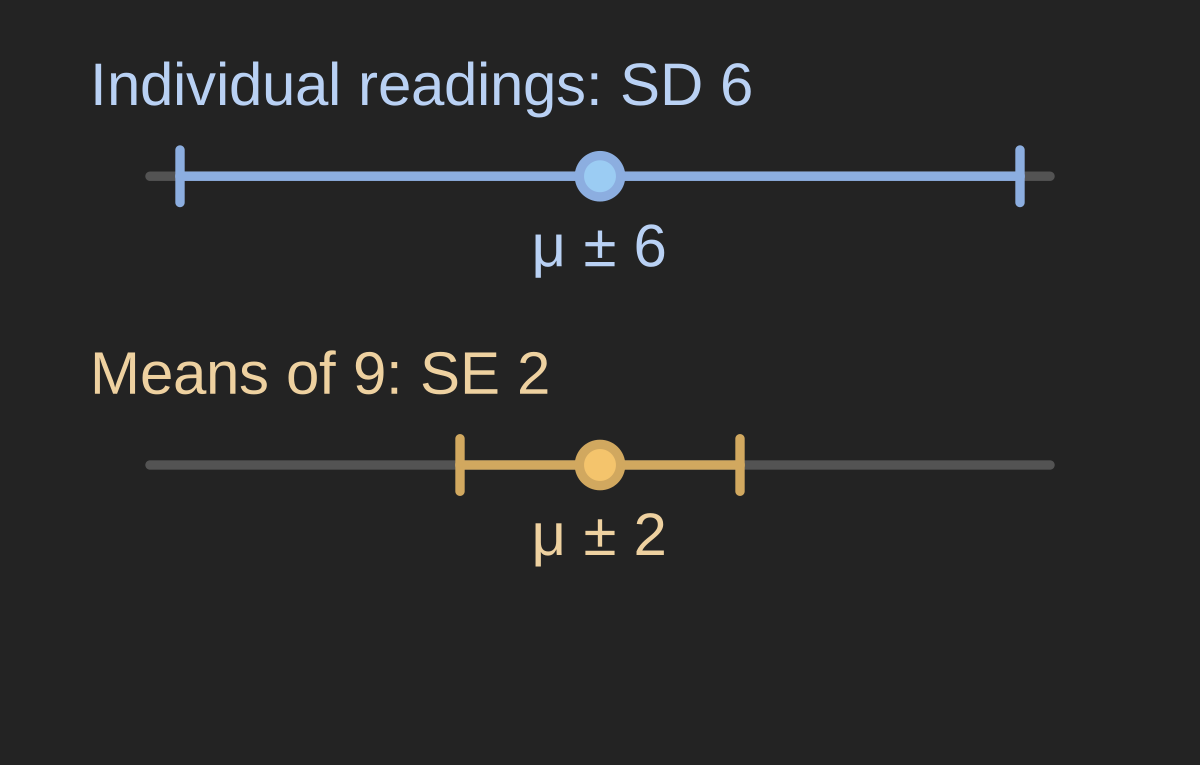
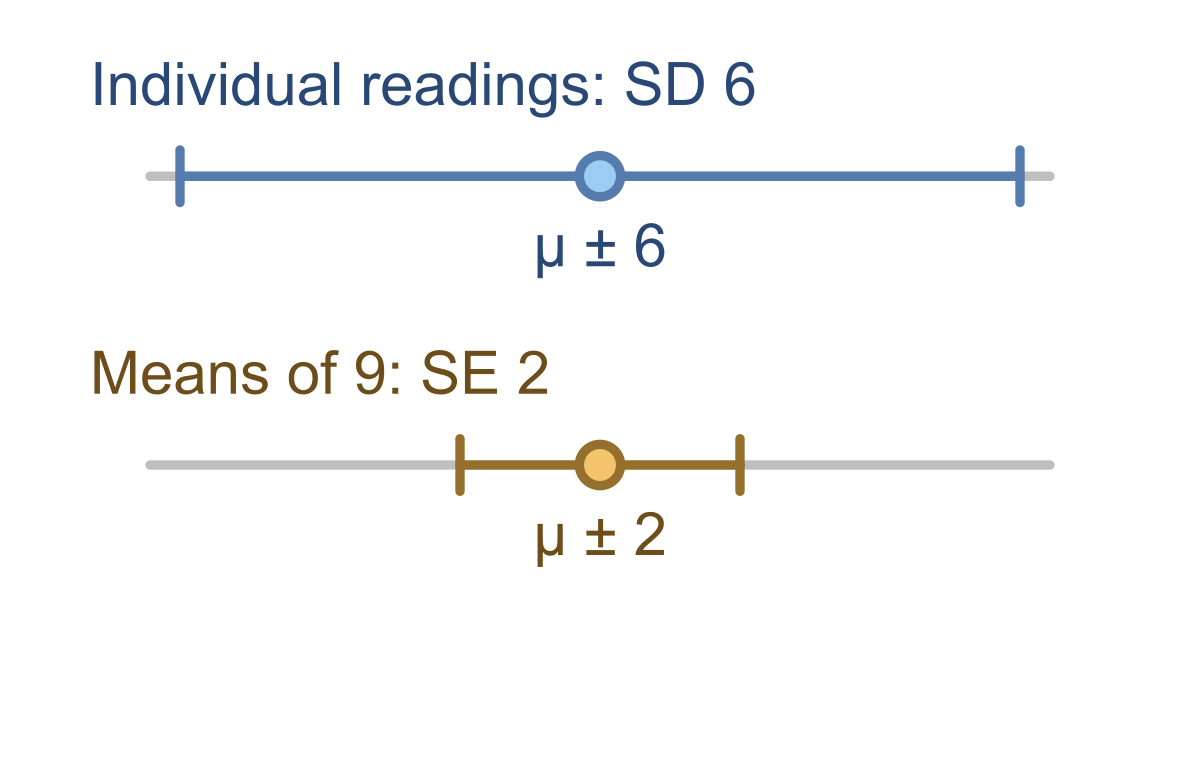
For 9 IID observations with estimated SD 6, the mean has estimated standard error . Individual readings still vary on a scale of 6; averaging makes their mean more stable. With the same SD and assumptions, four times the sample size halves the mean’s SE.
Observation SD: 9. Repeated-estimate SD: 3. Current absolute error: 2. Which is the standard error?
Show answer and explanation
Estimator SD is 3.
02A closer look#
For an IID mean with finite individual standard deviation , take the square root of . The result is , in the original measurement units.
IID readings: SD=8, n=4, finite variance. SE of their mean?
Show answer and explanation
8/√4 = 4.
03An estimate’s actual error compares that one value with its target#
An estimate’s actual error compares that one value with its target. Standard error instead summarizes variation over repeated estimates. An estimator can have little spread while consistently missing the target.
A standard deviation is not a maximum distance. Knowing the standard error alone does not guarantee a bound on one estimate’s error or assign it a coverage percentage.
An estimator has SE=2. “This estimate’s error is exactly 2.” Repair.
Show answer and explanation
SD is not one error.
04An estimate of average model error needs uncertainty as well as a central value#
An estimate of average model error needs uncertainty as well as a central value. The rule relies on the sampling assumptions. Repeated measurements from one source may be dependent, so extra rows need not bring proportionally more information.
Standard error describes repeated-estimate spread in the estimator’s units. It is neither raw-observation spread nor a guarantee about one estimate’s error.
- Identify repeated-estimator standard deviation.
Sources & further reading
- [1]
- [2]Pishro-Nik, Introduction to Probability, 8.1.1 Random Sampling ↗Pishro-Nik, Introduction to Probability · Book