Normal distributions
A normal model has mean mu and positive standard deviation sigma, often written N(mu, sigma squared).
On this page 8 sections
01Center, spread, and notation#
A normal distribution is a symmetric, bell-shaped model for a numerical quantity. Its mean locates the center and its standard deviation sets the horizontal spread. Specifying these two parameters determines the model, but choosing it for real data still requires justification.
This normal curve is centered at . One standard deviation is a horizontal distance of .
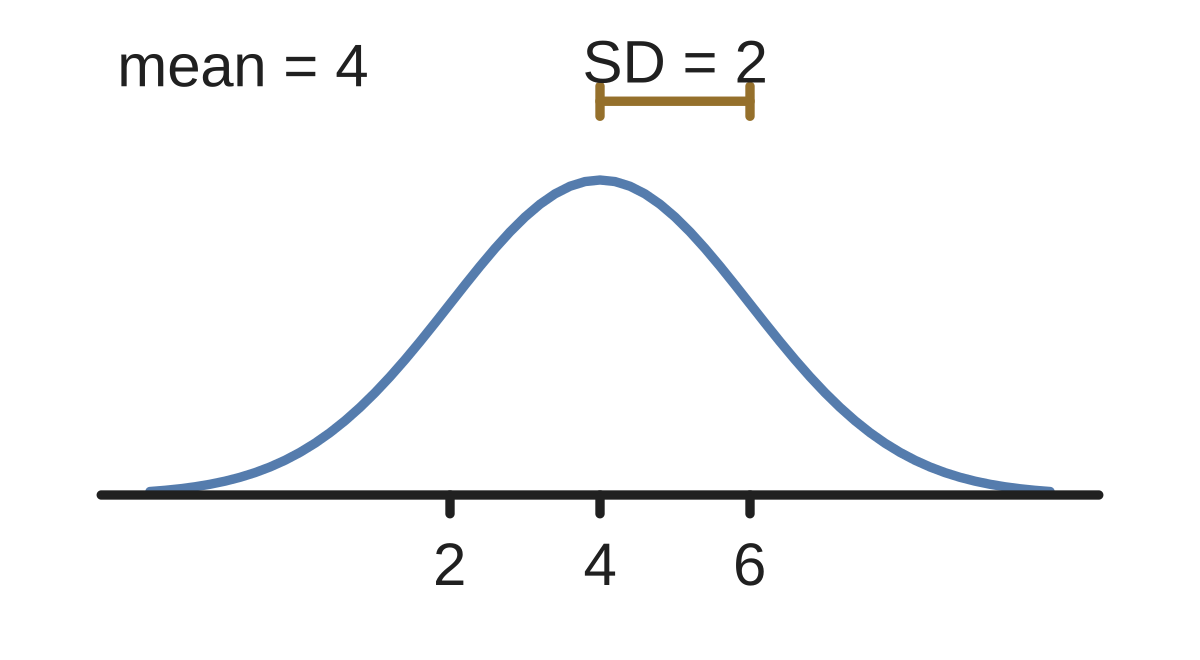
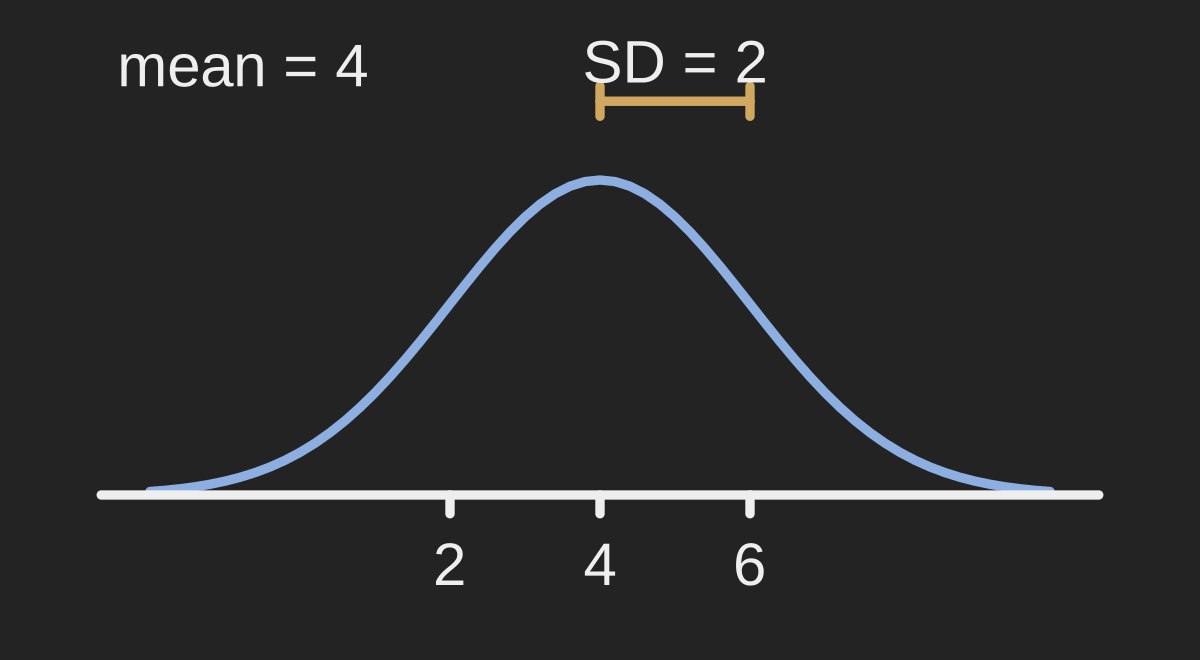
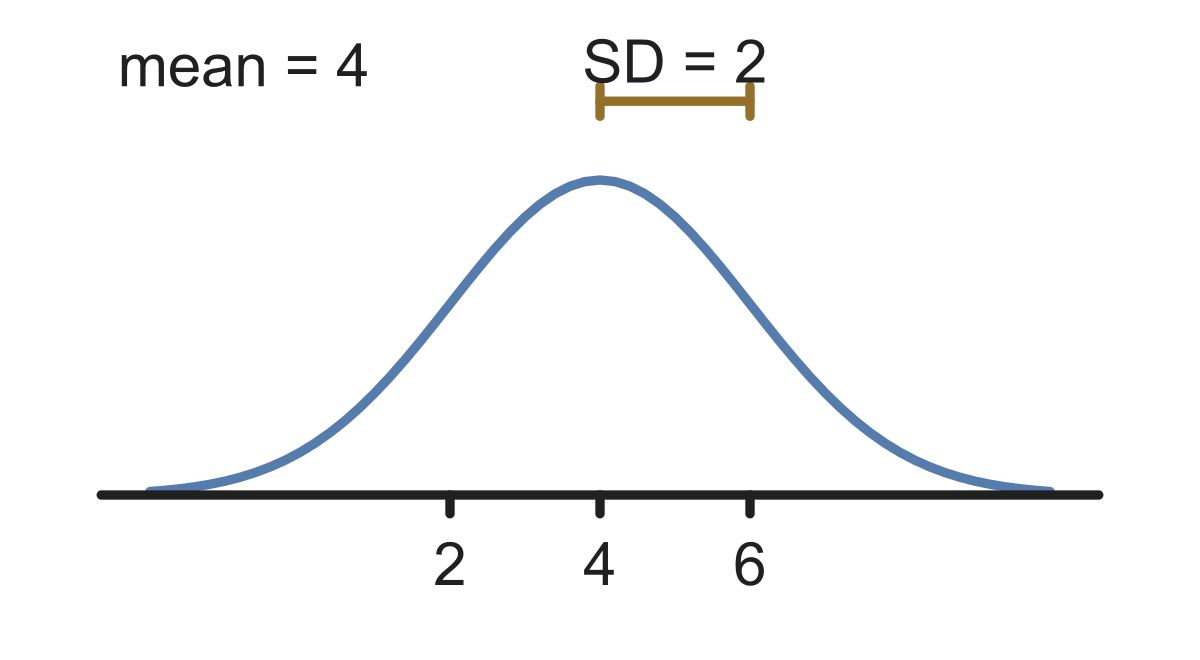
We write here: the first parameter is the mean, and the second is the variance. The SD is the positive square root of variance.
Under the convention , means mean 4 and variance 4. The standard deviation is . One standard deviation above the mean is 6 and one below is 2. The second argument is not a second center or the curve’s height.
uses (mean, variance). Give (mean, SD).
Show answer and explanation
Mean ; SD .
02Read the parameter convention#
The convention belongs to the notation or tool. If a library says its arguments are (mean, SD), its second number is already the SD. Read that declaration before taking a square root.
uses (mean, SD). Reported SD . Give (mean, SD).
Show answer and explanation
Mean ; SD .
03Specify a normal model#
To encode a normal model with mean and SD in our variance convention, keep the center and square the scale.
Reading model. Normal mean , SD . Choose .
Show answer and explanation
Variance is .
Normal models appear in measurement-error and sampling calculations. A normal model has support on the whole real line, so it may be a poor literal model for a strictly positive quantity near zero. Read both the modeling assumptions and the parameter convention.
Read the declared convention. The mean gives the center; SD gives scale, and variance is SD squared.
- Identify a normal model's location and scale parameters.
Further questions
How can a threshold be measured in standard deviations?
Sources & further reading
- [1]Pishro-Nik, 4.2.3 Normal Distribution ↗Textbook · Book