Effect sizes
An effect size expresses a difference in a stated scale and unit.
On this page 7 sections
01An effect size describes how much a quantity differs#
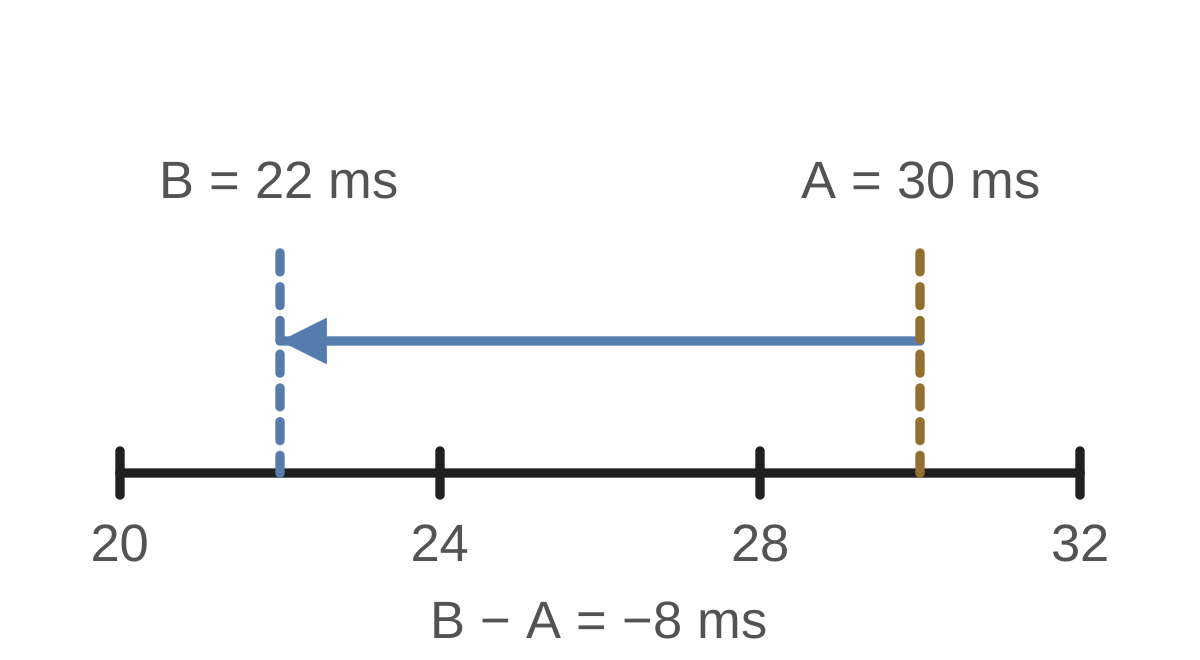
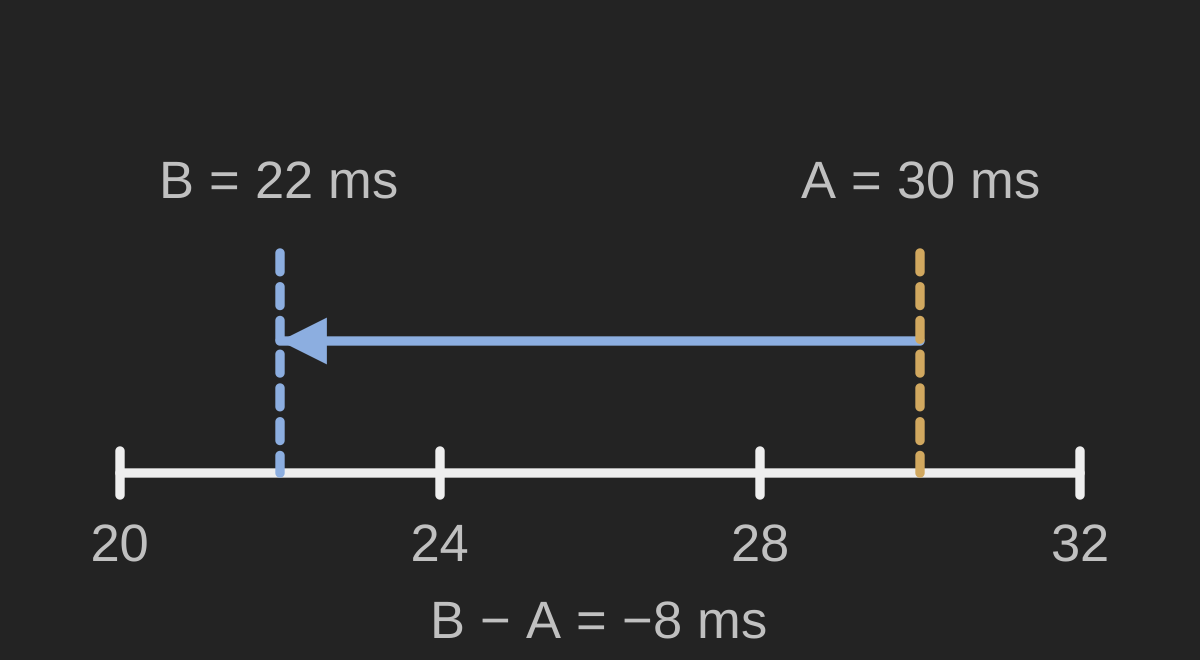
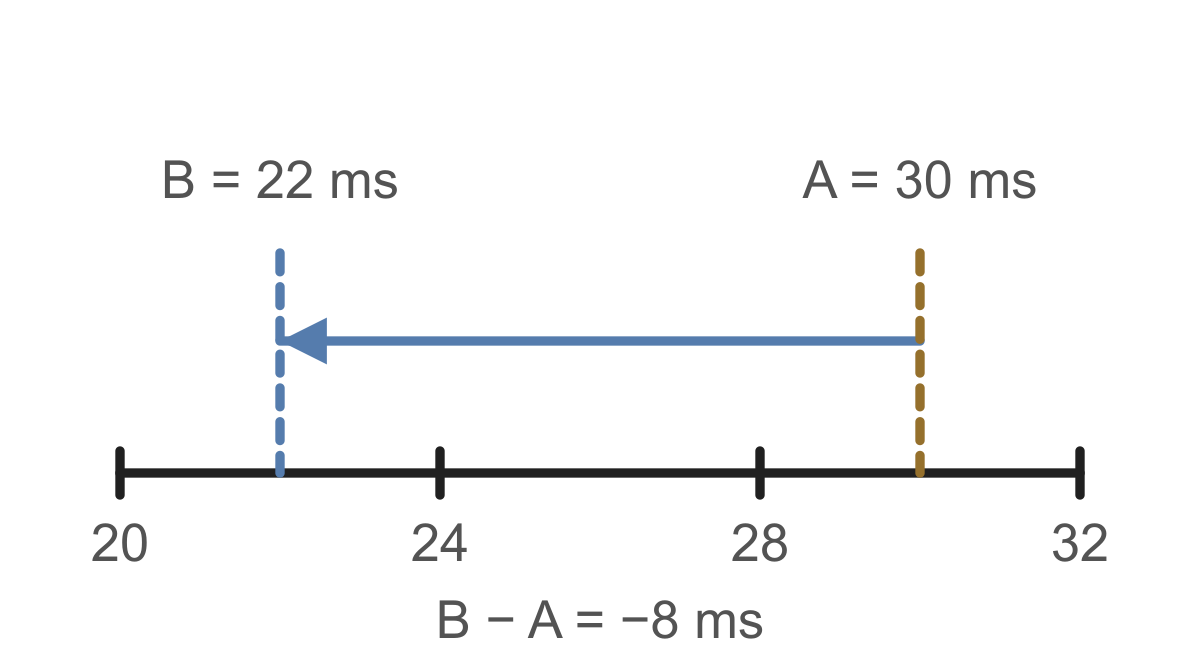
An effect size describes how much a quantity differs. Here, define the effect as mean B minus mean A. Keep the measurement unit. A negative value means B is lower; zero means the means match.
Mean A is 30 ms and mean B is 22 ms. Subtract in the declared order: ms. B is eight milliseconds lower.
Means in ms: A=40, B=34. Effect δ=mean B−mean A. Find δ in ms.
Show answer and explanation
34−40=-6 ms.
02With samples A = 2, 4 and B = 5, 7, the group means are 3 and 6#
With samples A = 2, 4 and B = 5, 7, the group means are 3 and 6. Their difference is in the original unit. A difference of means alone does not establish that changing groups caused it.
Practical importance needs a context. Suppose an increase of at least 4 points matters. A supplied confidence interval includes effects both below and above 4. Its positive values alone do not settle that practical threshold.
Effect δ in points. Supplied confidence interval [2,6]. Meaningful increase: δ≥4. Which interval values meet it?
Show answer and explanation
Compare [2,6] with 4.
03A report may call an effect statistically detectable#
A report may call an effect statistically detectable. That label does not state its size or importance. Compare the estimate and uncertainty with a threshold chosen for the application. A point estimate meeting a threshold is not a guarantee about the unknown effect.
Means A=6, B=8 points. δ=B−A. Meaningful: δ≥5. “Detectable, so meaningful.” Repair.
Show answer and explanation
8−6=2, below 5.
Subtract in the declared order, keep the unit and compare the magnitude and uncertainty with a meaningful threshold.
- Interpret the signed difference in its original unit.
Sources & further reading
- [1]American Statistical Association, Statement on Statistical Significance and P-Values ↗American Statistical Association · Article