Sample means
The arithmetic mean is the sum of the observations divided by their number.
On this page 7 sections
01An arithmetic mean shares a sample’s total equally across its observations#
An arithmetic mean shares a sample’s total equally across its observations. Add every value, then divide by how many values there are.
For , the total is . Three equal shares are each, so the mean is .
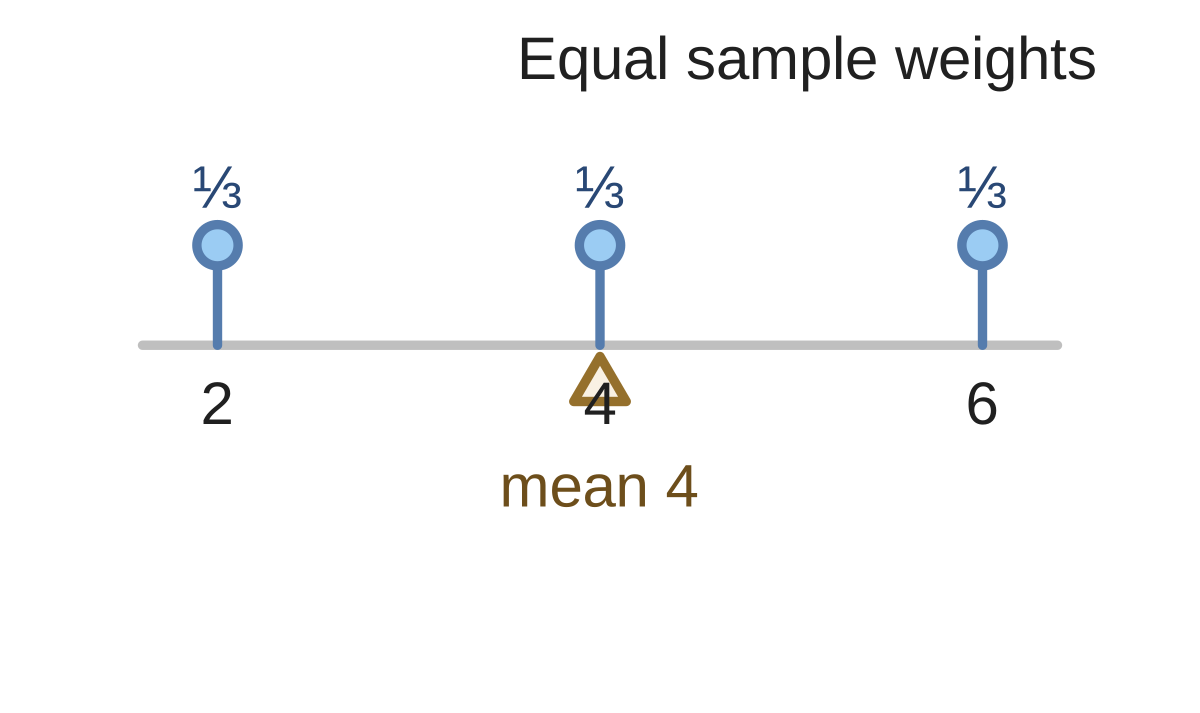
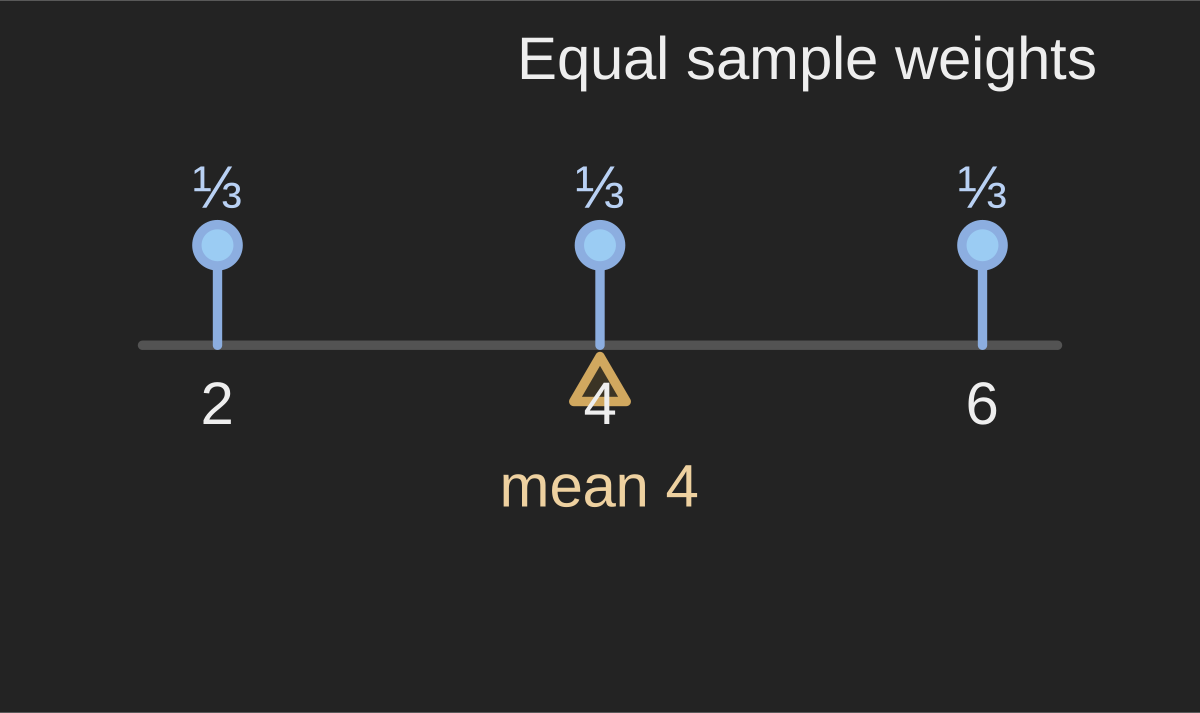
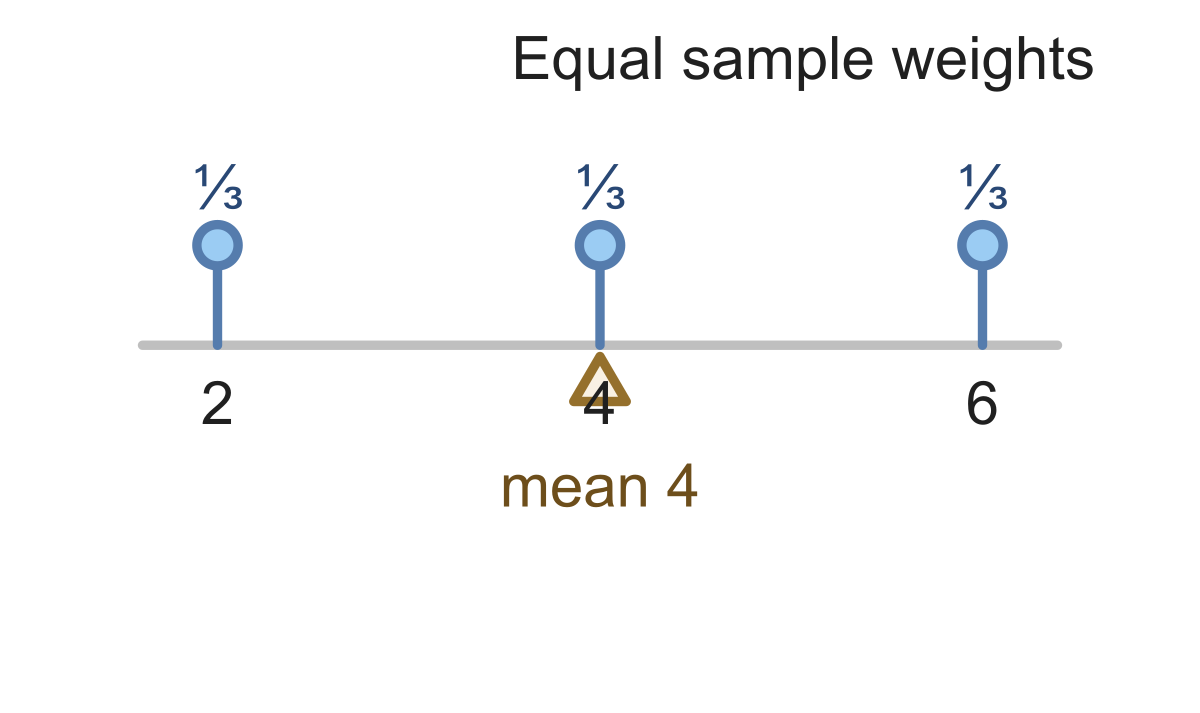
Sample: 1, 5, 12. Arithmetic mean?
Show answer and explanation
18 ÷ 3 = 6.
02Here counts observations#
For a nonempty sample:
Here counts observations. A repeated value still counts each time it appears.
If occurs twice and once, the sample is . Its total is across three observations; the mean is .
Exact counts: value 0 occurs 2 times; value 6 occurs 1 time. Mean?
Show answer and explanation
Total 6 across 3 observations: 2.
03The mean need not appear in the sample#
The mean need not appear in the sample. The values and have mean . Negative values and zeros contribute to the same sum-and-count calculation.
Sample: 3, 7. “A mean must be an observed value.” Repair the mean.
Show answer and explanation
10 ÷ 2 = 5.
Add every observation, including repeats, and divide by the count. The mean can lie between observed values.
- Compute a sample’s total per observation.
Sources & further reading
- [1]