Logarithm derivatives
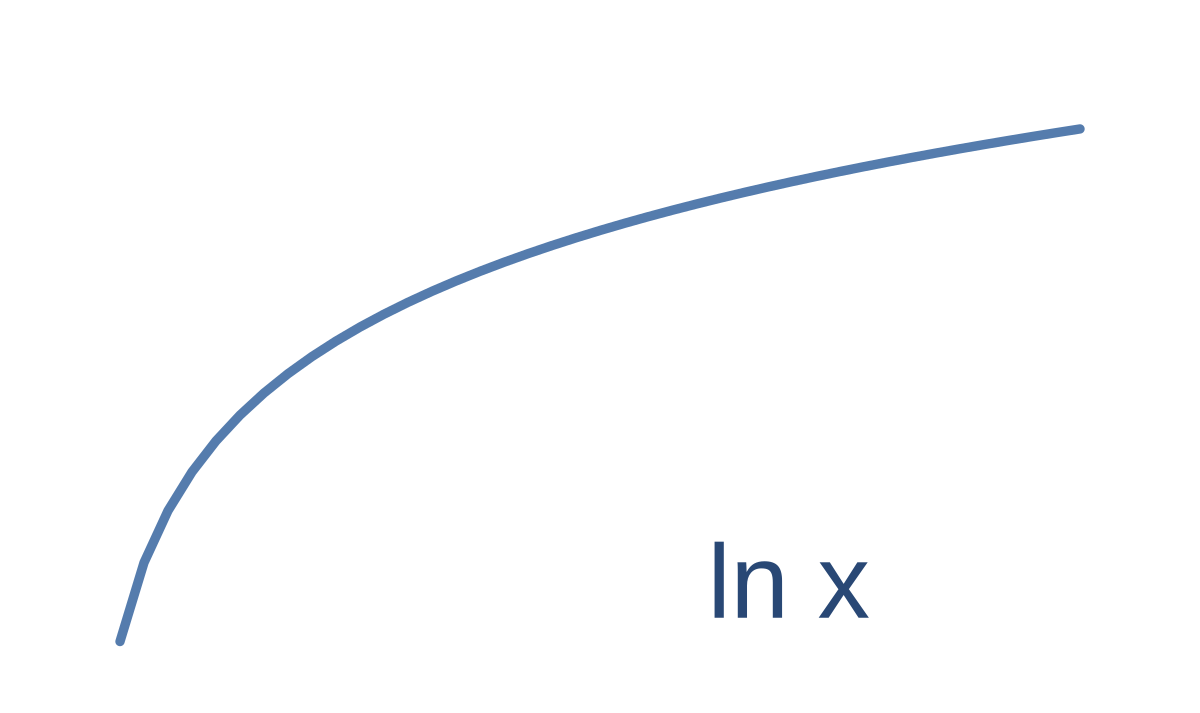
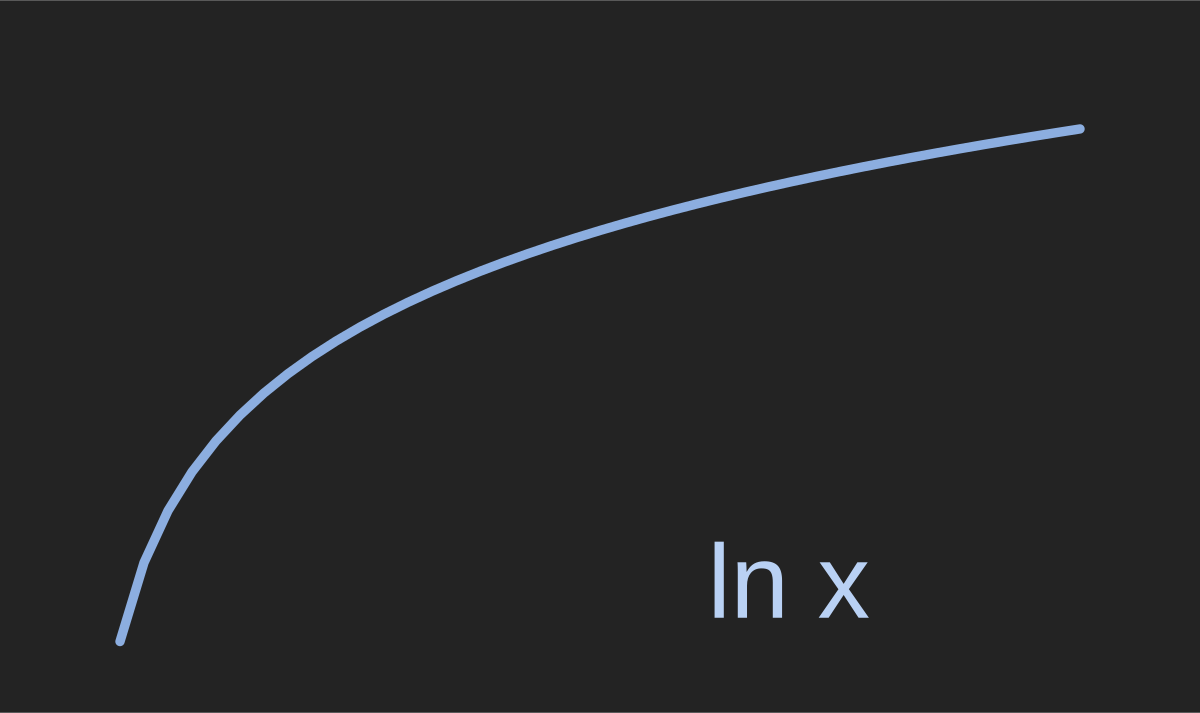
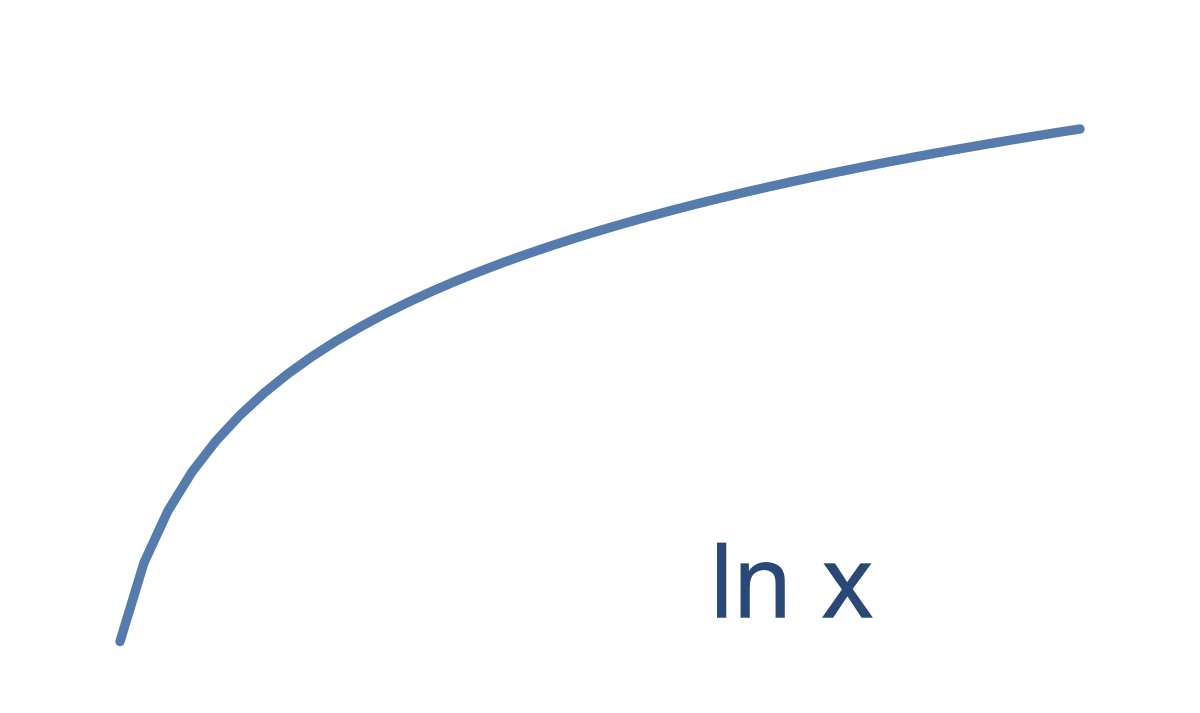
A natural logarithm changes quickly near zero and more slowly at large positive inputs.
On this page 7 sections
01A logarithm's sensitivity#
A natural logarithm changes quickly near zero and more slowly at large positive inputs. In likelihood calculations, that means an already tiny probability can have a large effect on log probability when it changes.
For , the derivative is on . One way to see the relationship is to write , so . Differentiating gives , hence .
At , the slope is . At , it is . These are slopes of the logarithm, not its output values.
02Divide the inner derivative by the inner value#
For , apply the chain rule where :
For , the inner derivative is . The derivative is and the real domain is . At , the derivative is .
Differentiate on its real domain.
Show answer and explanation
The derivative of the inner expression is 3; divide by the inner value.
For , the minus sign scales the derivative to . At , this is . Increasing a positive probability decreases its negative log loss.
03Carry the domain into the answer#
The real logarithm is undefined at zero and at negative inputs. A denominator formula alone does not extend its domain. For example, exists at , but it is not a derivative of the real function there.
A draft claims for . Repair it.
Show answer and explanation
The omitted inner derivative is 5; 5/(5x)=1/x.
Taking the logarithm of a product can simplify a later derivative, but any rewritten expression still has to respect its original domain. Check the inner value before differentiating a logarithmic expression.
Differentiate a natural logarithm on its real domain.
- Differentiate a natural logarithm on its real domain.
Sources & further reading
- [1]OpenStax Calculus Volume 1, §3.9 ↗openstax.org · Article