Set intersection
The intersection of two sets consists of objects that belong to both sets.
On this page 7 sections
01The intersection keeps objects that belong to both sets#
The intersection keeps objects that belong to both sets. Here and .
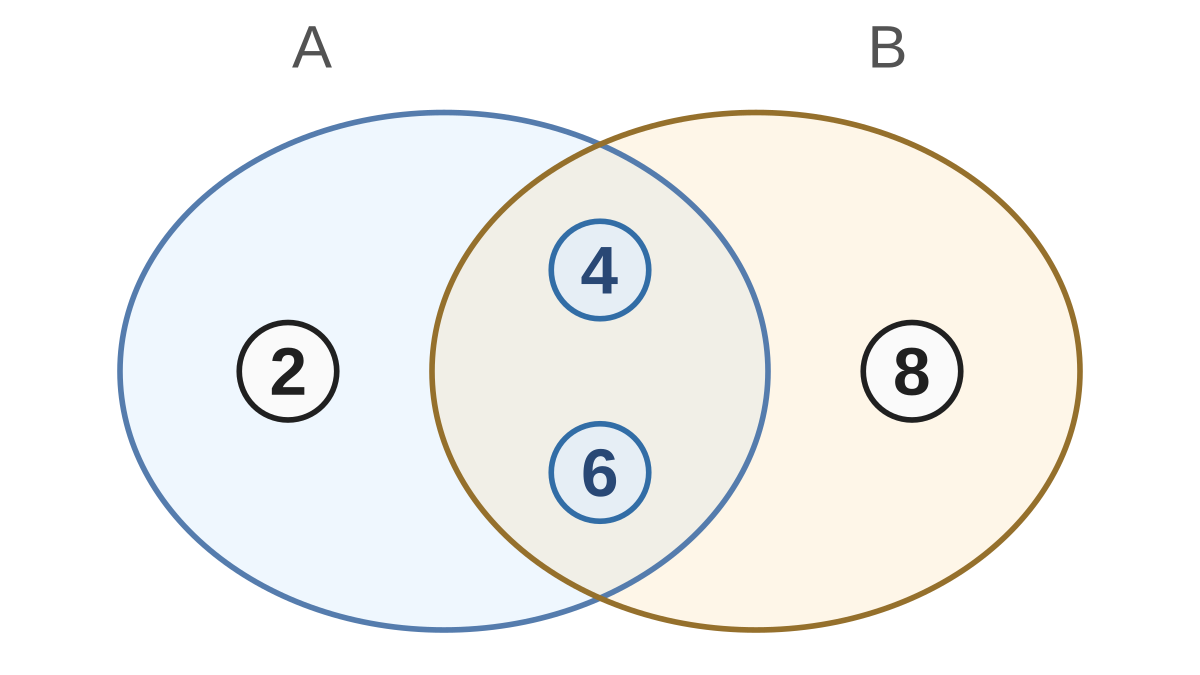
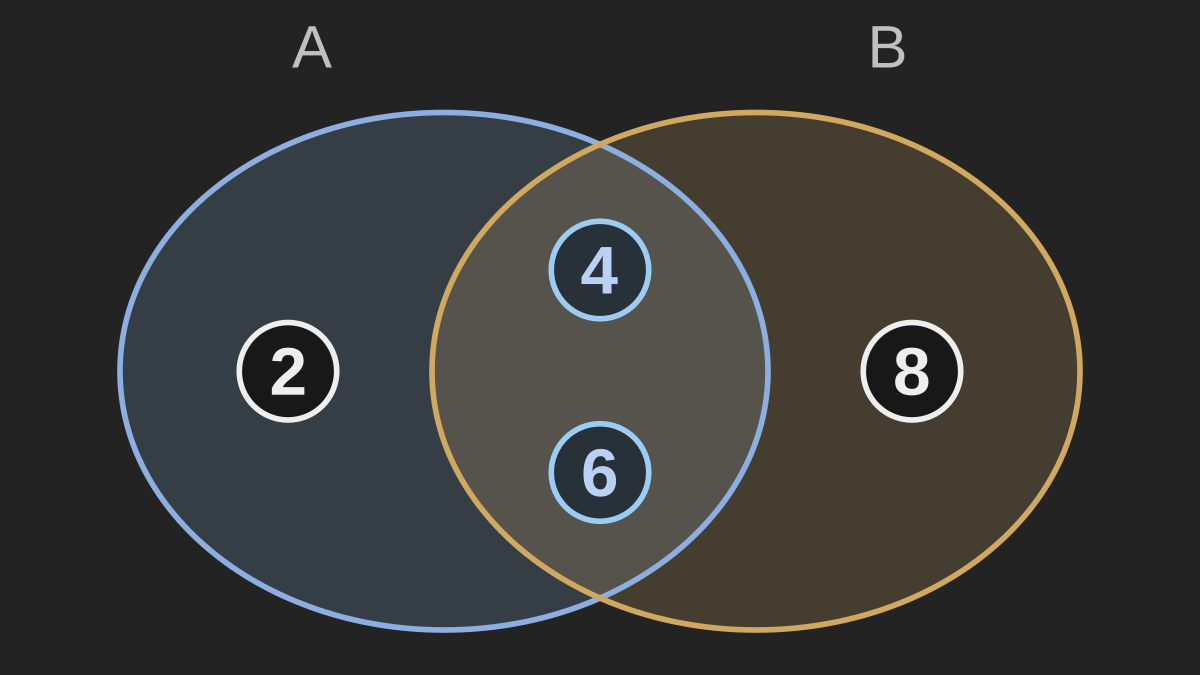
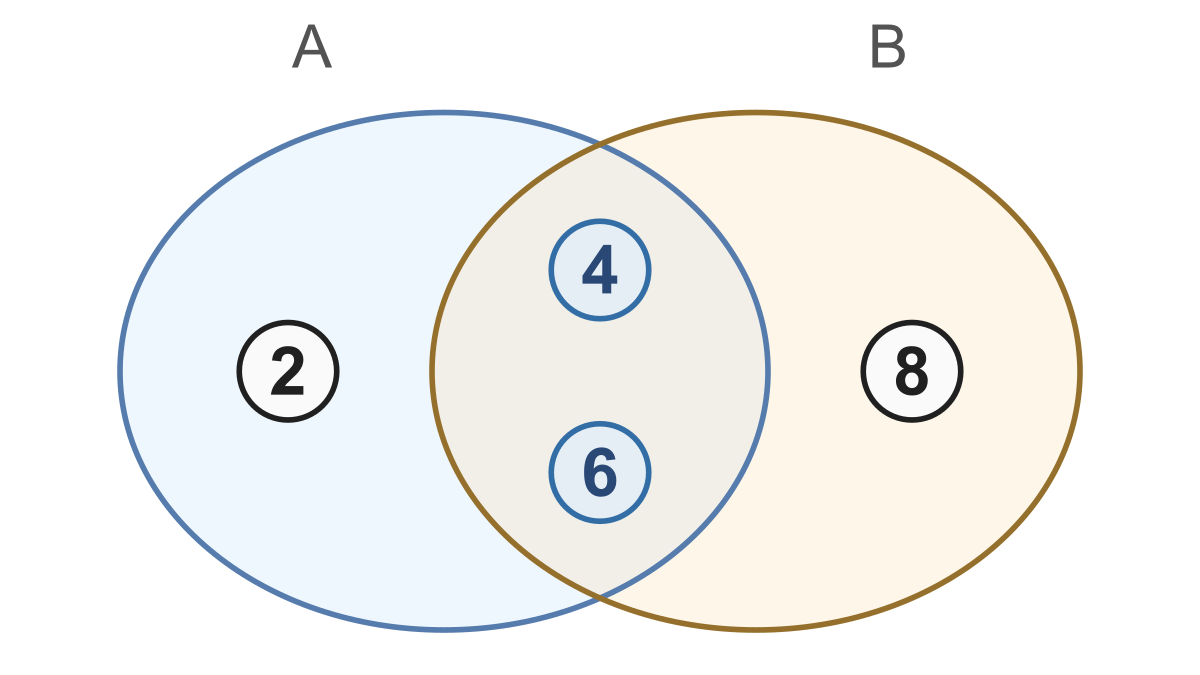
For and , the labels and are shared. The label appears only in ; appears only in .
Collect the qualifying labels.
A match in one set is not enough. Compare both rosters before keeping a label. A shared label is written once, even though it appears in both source sets.
and . Build .
Show answer and explanation
The intersection is . Check the stated membership rule for each candidate.
02If the sets share no members, the result is the empty set#
If the sets share no members, the result is the empty set. An empty result does not mean that each original set was empty.
A disjoint example.
A lists {csv, json}; B lists {json, xml}. A transfer needs support in both. Which formats work?
Show answer and explanation
Only json is shared.
03Check your understanding#
What is ?
Show answer and explanation
No object belongs to the empty set, so no object belongs to both.
Check each distinct object against the two sets. Keep an object only when it occurs in both; no shared objects gives an empty set.
- Form the intersection of two finite sets
Sources & further reading
- [1]OpenStax Contemporary Mathematics, 1.4 ↗OpenStax · Book