IID samples
IID observations are independent random variables with identical probability distributions.
On this page 7 sections
01IID means independent and identically distributed#
IID means independent and identically distributed. Check both: each draw has the same probability law, and the draws are generated independently. Matching observed values prove neither condition.
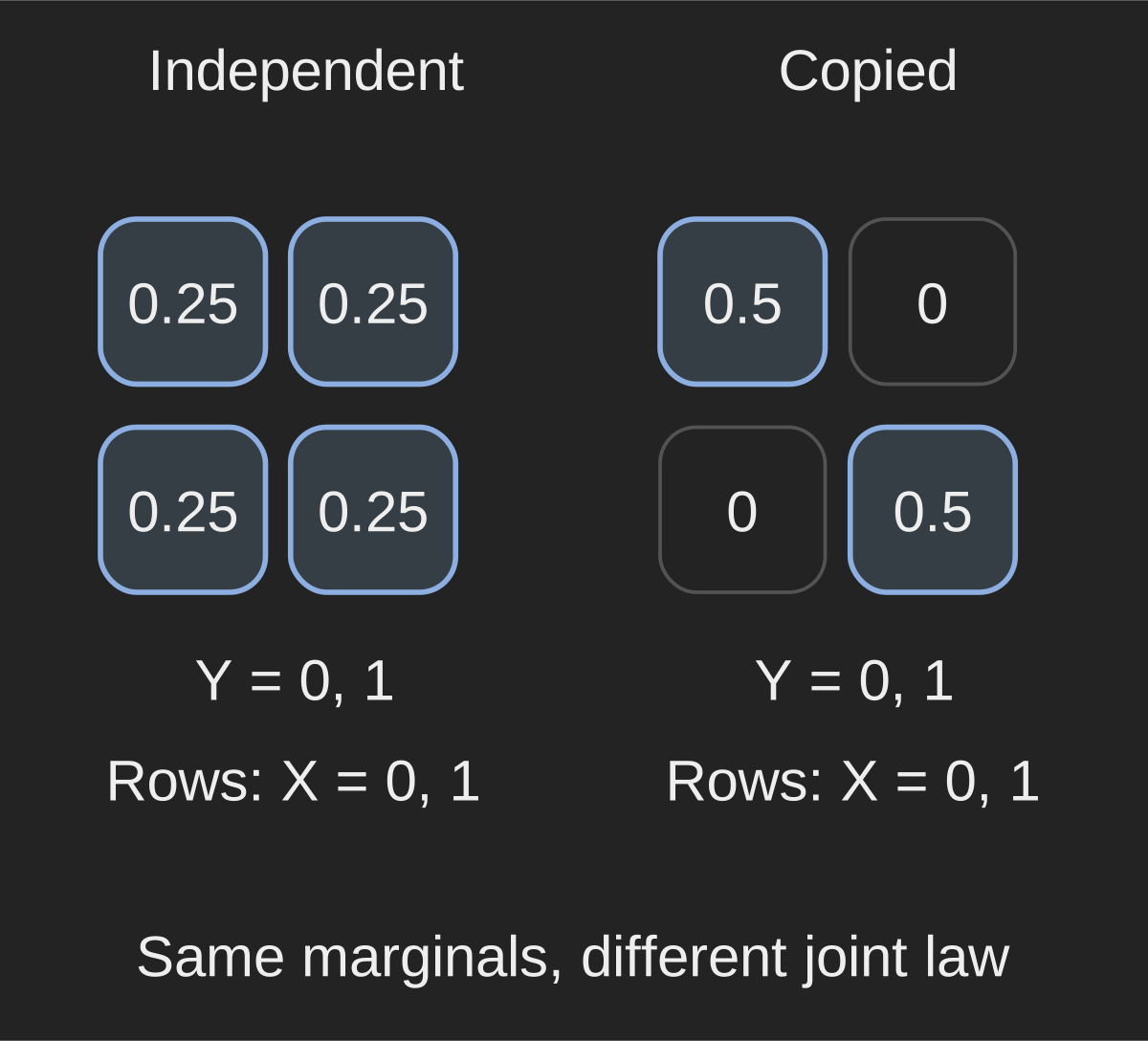
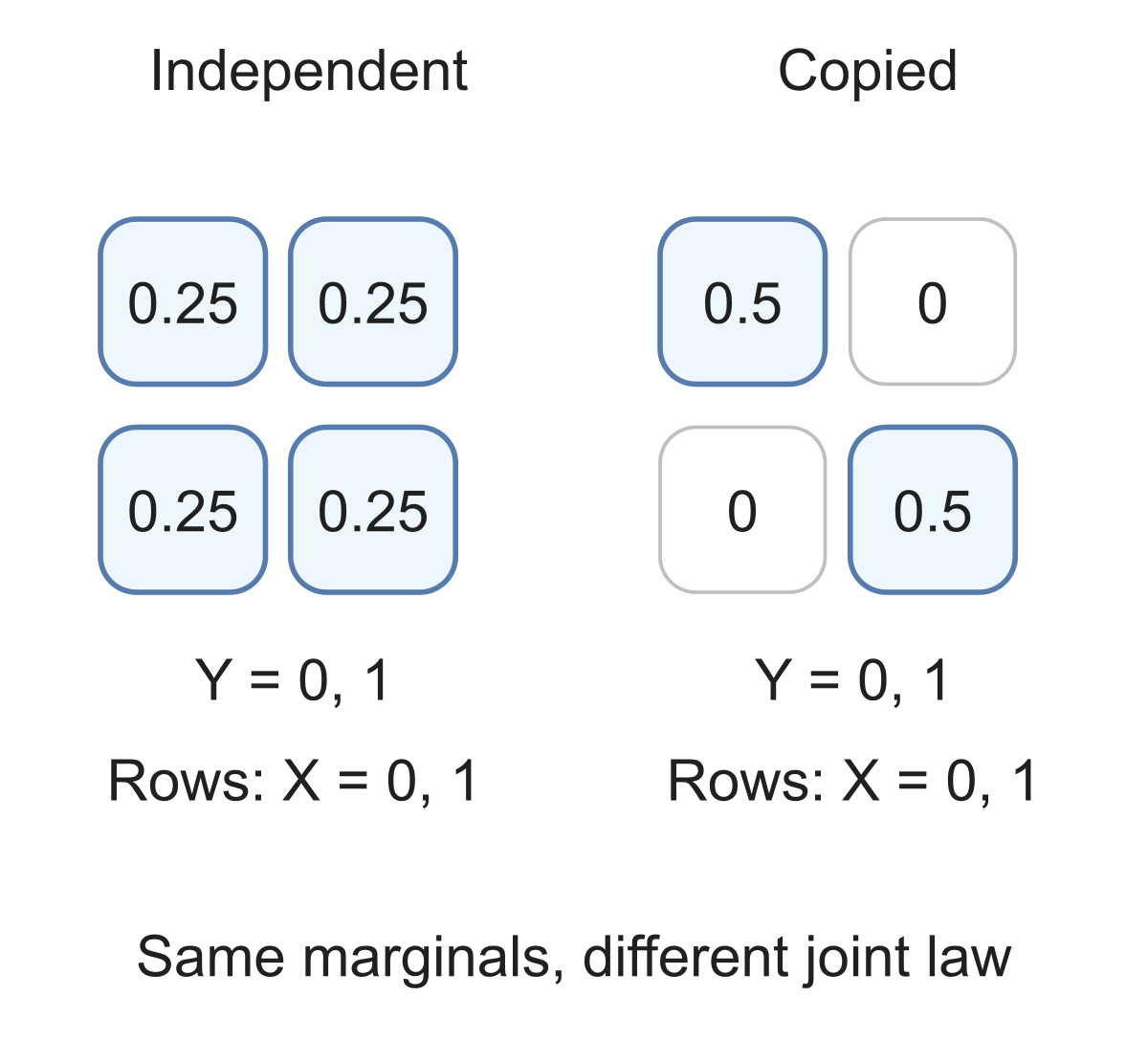
Two fresh independent fair 0/1 draws are IID. If the second instead copies the first, each is still fair, but knowing the first fixes the second.
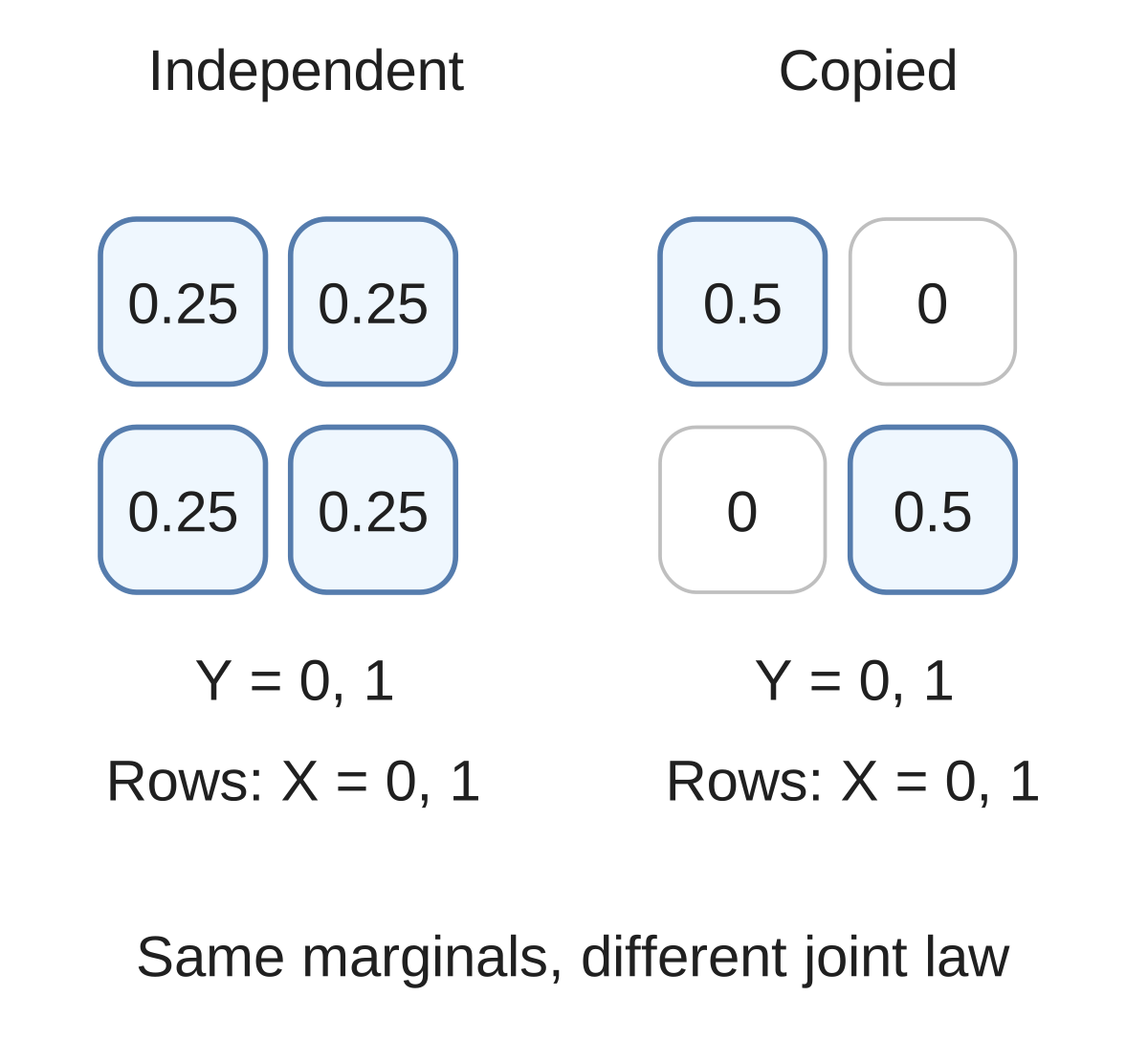
Two independent uniform draws with replacement from {red, blue}. Same law / independent?
Show answer and explanation
Both conditions hold.
02For two binary variables, compare their marginal probabilities of 1#
For two binary variables, compare their marginal probabilities of 1. Then check whether each joint mass equals the product of its marginal masses. Same marginals alone do not imply independence.
Binary X,Y. Joint masses: 00=0, 01=0.5, 10=0.5, 11=0. Same law / independent?
Show answer and explanation
P(11)=0 ≠ 0.5×0.5.
03Independent draws can have different laws#
Independent draws can have different laws. Sampling without replacement can preserve each draw’s marginal law while making later draws depend on earlier ones. Without a stated mechanism, independence may be unknown.
A fair 0/1 Z is copied: X=Z and Y=Z. “IID.” Same law / independent?
Show answer and explanation
Copying forces equality.
Check the common law and independent generation separately. Neither equal marginals nor matching observed values proves both.
- Check identical laws and independence separately.
Sources & further reading
- [1]Pishro-Nik, Introduction to Probability, 8.1.1 Random Sampling ↗Pishro-Nik, Introduction to Probability · Book