Estimators
An estimator is a data-dependent rule; an estimate is its numerical output for a realized sample.
On this page 8 sections
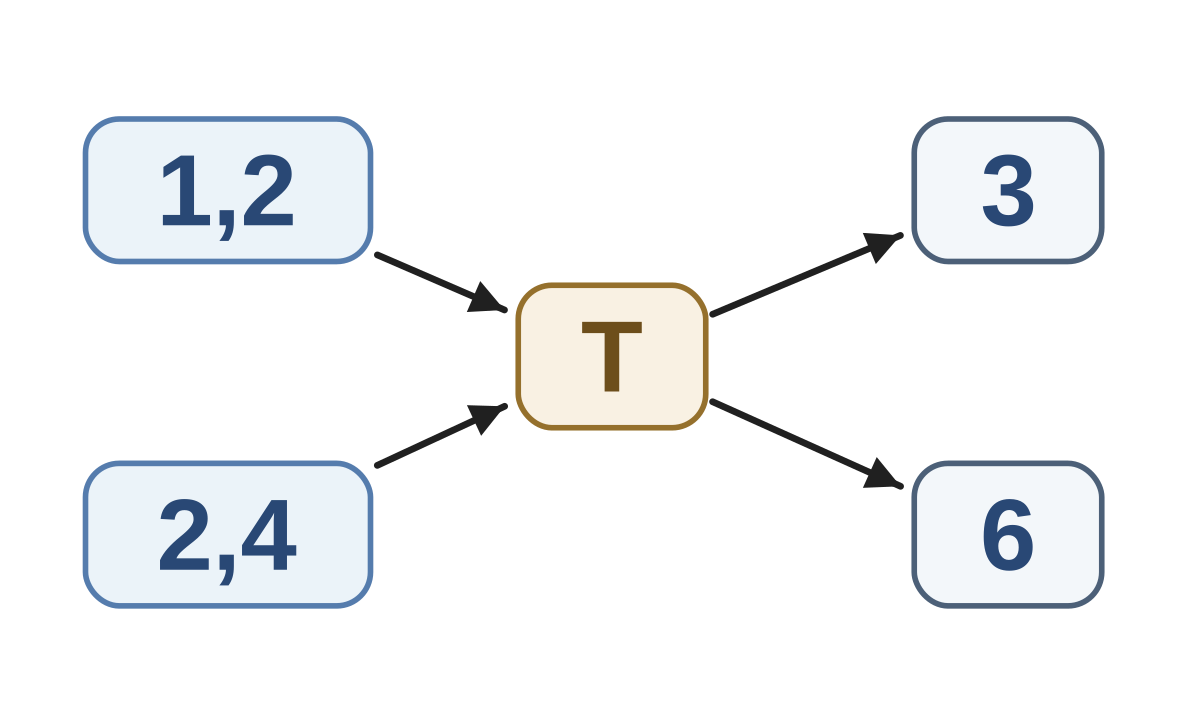
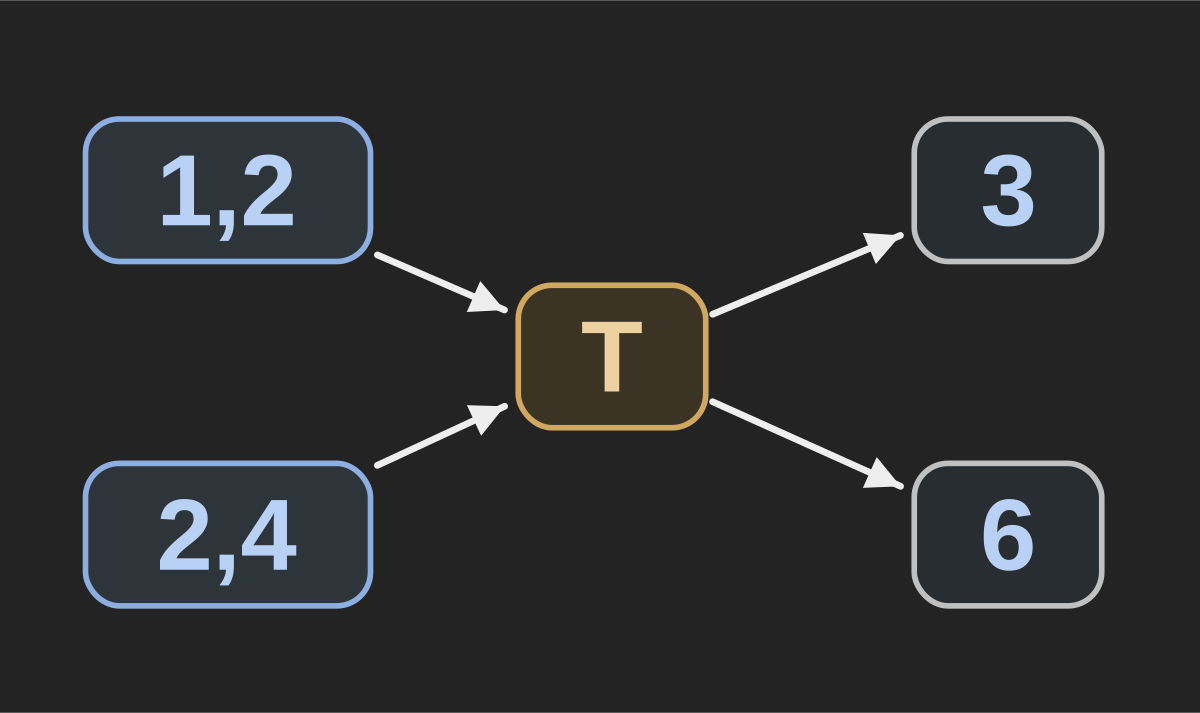
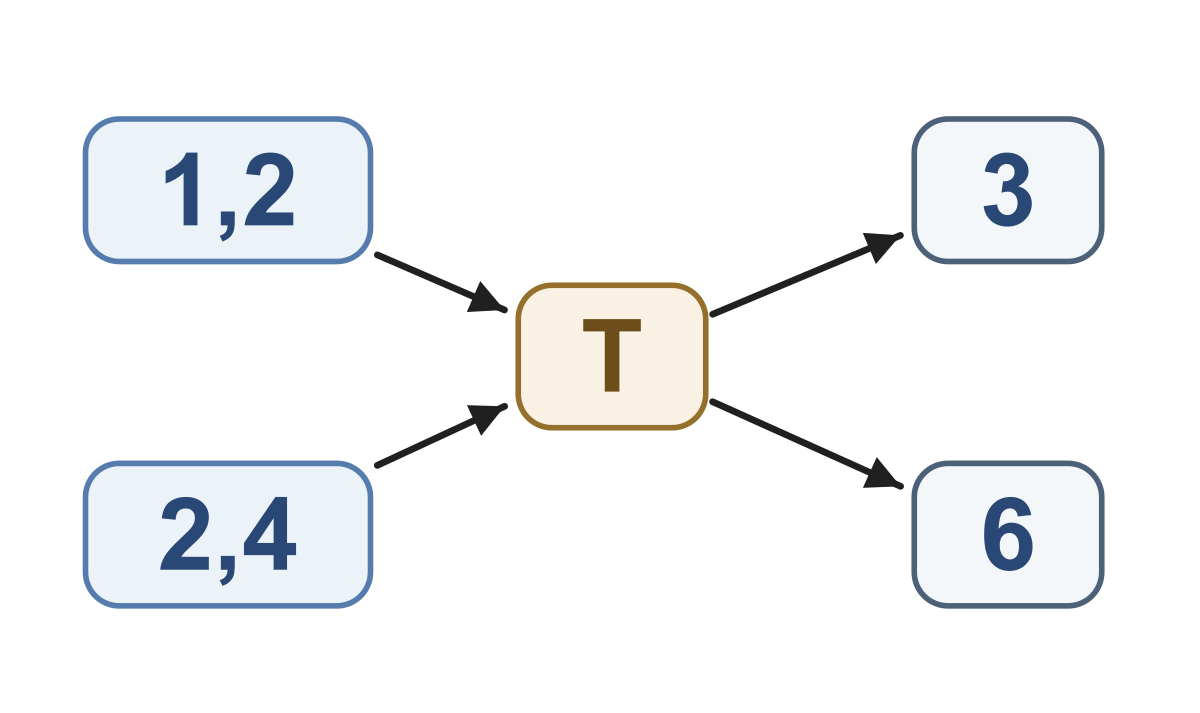
01An estimator is a rule that turns a sample into a guess about a population quantity#
An estimator is a rule that turns a sample into a guess about a population quantity. The rule exists before collecting data; an estimate is its particular numerical output afterward. Repeated samples can give different estimates even when the underlying population stays the same.
An estimator is a rule that maps sample data to a number used to estimate a population quantity. Before the data arrive, its output can vary. An estimate is the number obtained from the observed data.
Take the supplied rule . Possible data give ; data give . The rule stays the same.
For a rule that averages two observations, the sample gives estimate 4 while gives 6. These are two outputs of the same estimator. Changing from a mean to a maximum would instead change the estimation rule and generally the population quantity it is suited to estimate.
For the supplied rule , add the two inputs and divide by . With observed inputs , the estimate is . It is fixed for those data.
Rule: T(x,y)=(x+y)/2. Observed (x,y)=(6,12). Estimator / estimate?
Show answer and explanation
Fixed data give 9.
02A fresh random sample can produce a new estimate#
A fresh random sample can produce a new estimate. Re-running a deterministic rule on the same saved data produces the same value. The unknown population target does not become equal to the estimate by definition.
Add the two readings. Saved: 2, 8. New random readings. What may change?
Show answer and explanation
Fresh data may differ.
03For , choose the larger input#
For , choose the larger input. For , choose the first. Any supplied deterministic rule has the same distinction: rule before evaluation, fixed number afterward.
Rule: T(x,y)=x. Observed (x,y)=(7,3). “7 remains random.” Repair.
Show answer and explanation
Fixed data give 7.
04A closer look#
When comparing ways to estimate a model’s average error, ask both what population quantity is targeted and how the rule varies across samples. A single close estimate does not establish that the method is unbiased or reliably accurate.
Keep the reusable rule, the random sample and its fixed observed output distinct. Fresh data can yield another estimate.
- Distinguish a rule from its realized estimate.
Sources & further reading
- [1]Pishro-Nik, Introduction to Probability, 8.1.1 Random Sampling ↗Pishro-Nik, Introduction to Probability · Book